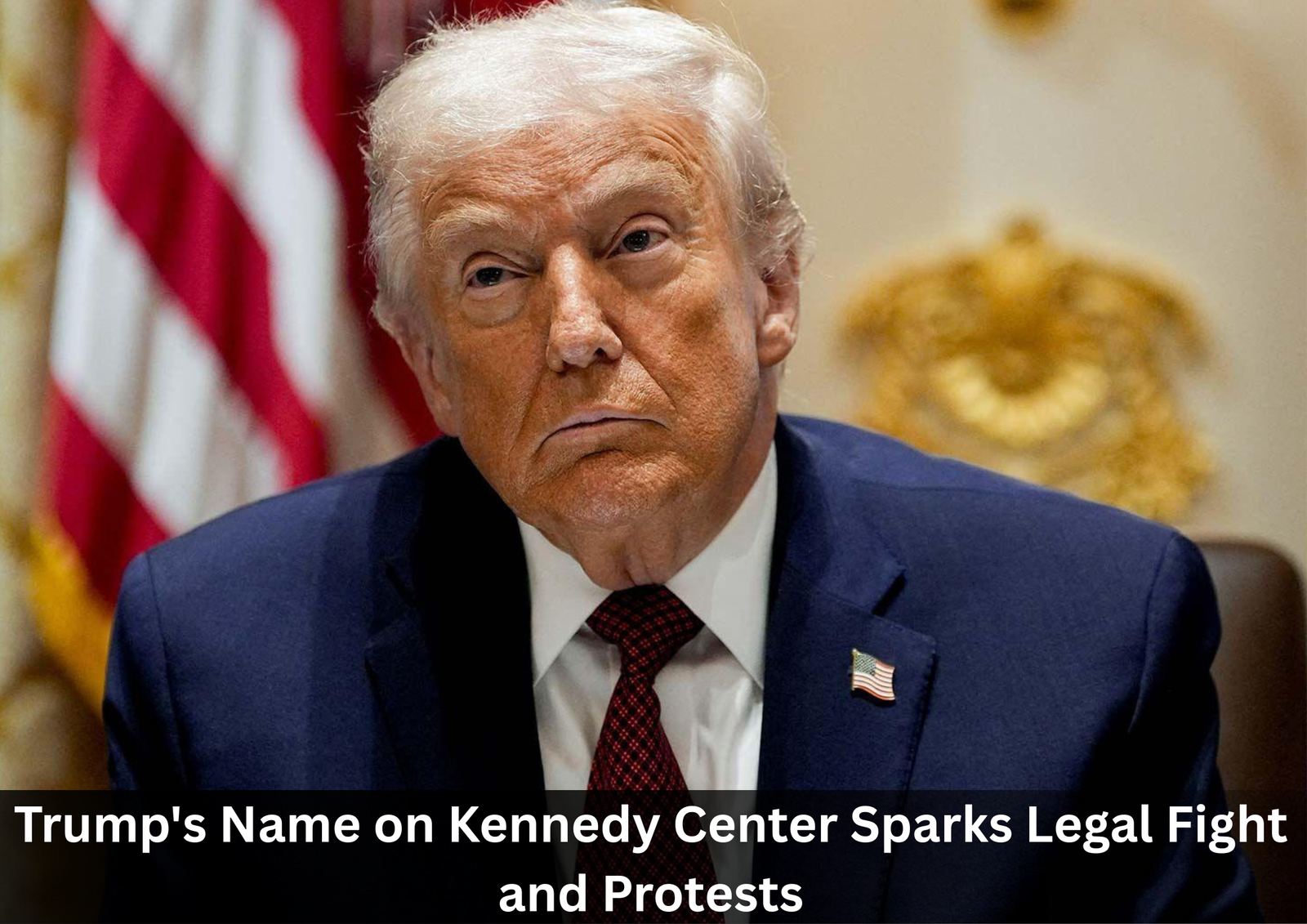
Washington, D.C.’s most prominent performing arts venue has entered a new chapter after its governing board approved a controversial name change that adds President Donald J. Trump to the institution’s title. The venue, historically known as the John F. Kennedy Center for the Performing Arts, is now officially designated the Donald J. Trump–John F. Kennedy Memorial Center for the Performing Arts, according to announcements from the White House.
New signage reflecting the updated name began appearing around the complex Friday morning, just one day after the board’s vote. The decision has quickly sparked legal questions, political criticism, and renewed debate over how the nation honors its presidents.
Questions Over Congressional Authority
At the center of the controversy is whether the board had the legal authority to rename the institution without approval from Congress. The performing arts center was established by a 1964 act of Congress as a national memorial to President John F. Kennedy following his assassination. Several lawmakers argue that altering the memorial’s name requires legislative action, not simply a board resolution.
Legal experts note that while the center operates with a degree of independence, its original designation as a presidential memorial may limit unilateral changes to its identity.
Reaction From the Kennedy Family and Arts Community
Members of the Kennedy family voiced strong opposition. Maria Shriver, President Kennedy’s niece, criticized the move publicly, calling it disrespectful to the historical purpose of the memorial and to Kennedy’s legacy in advancing arts and culture in the United States.
Arts advocates and cultural historians have also expressed concern, arguing that the renaming risks politicizing an institution long viewed as a unifying national cultural space.
Trump Defends the Decision
President Trump, who recently assumed the role of chairman of the center’s board after returning to office, defended the change. Speaking to reporters, he said the institution had suffered from years of neglect and financial instability.
According to Trump, recent leadership changes have led to increased donor interest and improved finances. He also indicated plans to seek additional congressional funding, framing the renaming as part of a broader effort to revitalize the center.
A Break From Presidential Tradition
Historically, sitting presidents have avoided naming federal landmarks or cultural institutions after themselves. Scholars point out that the move represents a departure from long-standing norms, though not without precedent. Washington National Airport’s renaming for President Ronald Reagan in the late 1990s was initially contentious but is now widely accepted.
Pulitzer Prize–winning architecture critic Philip Kennicott noted that public resistance to name changes often fades with time. He suggested that, regardless of today’s controversy, the new name could become commonplace within a generation as people adapt to it through everyday use.
A Legacy Rooted in Presidential Vision
The performing arts center traces its origins to President Dwight D. Eisenhower’s mid-1950s vision of a national cultural hub. President Kennedy later championed the project, emphasizing the arts as a pillar of democratic life and global cultural influence. After Kennedy’s death in 1963, Congress formally dedicated the center as his living memorial, a role it has served since opening in 1971.
As debate continues, the future of the center’s name may ultimately be decided in Congress or the courts. For now, the renaming has reopened broader questions about history, politics, and who gets to define the symbols of America’s cultural identity.