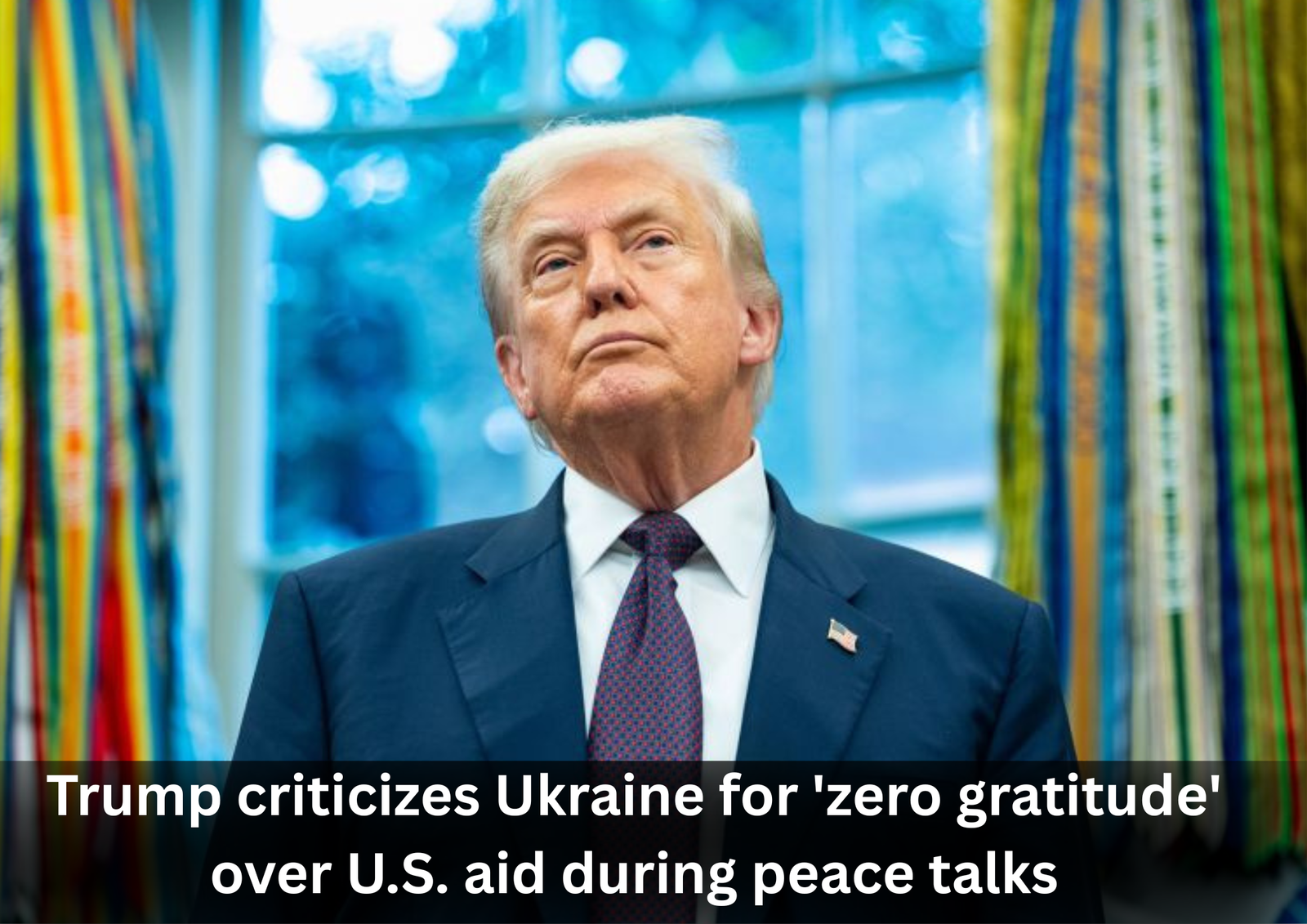
U.S. President Donald Trump sparked fresh controversy this week after accusing Ukraine of showing “zero gratitude” for years of American military and financial support. His comments, delivered both online and to reporters, came as diplomats from Washington, Kyiv, and several European capitals gathered in Geneva for a new round of high-level peace discussions aimed at ending the war with Russia.
Trump’s Remarks Ignite Tensions
Trump argued that Ukraine has not sufficiently acknowledged what he described as “hundreds of billions of dollars” in aid provided by the United States since the war began. The remarks drew widespread attention, as they signal a visible shift from Washington’s prior stance of unwavering backing for Kyiv. Critics noted that such comments could weaken Ukraine’s negotiating position at a critical moment in diplomatic efforts.
Geneva Talks Enter Difficult Phase
Inside the Geneva conference rooms, U.S. Secretary of State Marco Rubio, head of the Ukrainian delegation Andriy Yermak, and senior envoys from France, Germany, and the United Kingdom examined a U.S.-led proposal to establish a ceasefire and begin formal peace negotiations. One of the most contentious elements of the plan is the suggestion that some sanctions on Russia could be eased if Moscow takes measurable steps toward de-escalation.
European officials have voiced concern that prematurely relaxing sanctions could send the wrong message and potentially reward territorial aggression. Multiple diplomats described the sessions as “cautious” and “high-pressure,” with participants urging safeguards that ensure any agreement maintains Ukraine’s sovereignty and long-term security.
Kyiv and European Allies Push Back
A Ukrainian official, speaking anonymously, rejected Trump’s characterization of Ukraine’s attitude, asserting that Kyiv has consistently expressed gratitude for American support. The official added that Ukraine’s reservations relate specifically to the mechanics of the proposed peace plan, not to its partnership with the United States.
Meanwhile, European leaders remain wary of any deal seen as too quick or too lenient. Their primary concern is that a rushed agreement might freeze the conflict rather than resolve it, allowing Russia to retain influence over occupied regions.
Criticism Builds in Washington
Members of Congress from both parties have also raised objections. Several lawmakers argue that the proposal, as currently drafted, could pressure Ukraine to accept territorial concessions. Others warn that Trump’s public criticism risks undermining diplomatic unity at a sensitive moment.
Despite the backlash, officials close to the president insist that the goal is to secure a swift, negotiated end to the war and reduce the long-term burden of foreign military assistance.
A Turning Point in U.S. Policy
The combination of Trump’s remarks and the shifting tone of the Geneva talks signals a notable evolution in U.S. strategy. After years of broad bipartisan support for Ukraine, Washington appears to be testing a more transactional approach-one that places greater emphasis on immediate conflict resolution, even if it clashes with European preferences or Kyiv’s long-standing goals.
As negotiations continue, the coming weeks may determine whether this evolving strategy brings a breakthrough-or widens divisions among allies seeking a stable and lasting peace in the region.