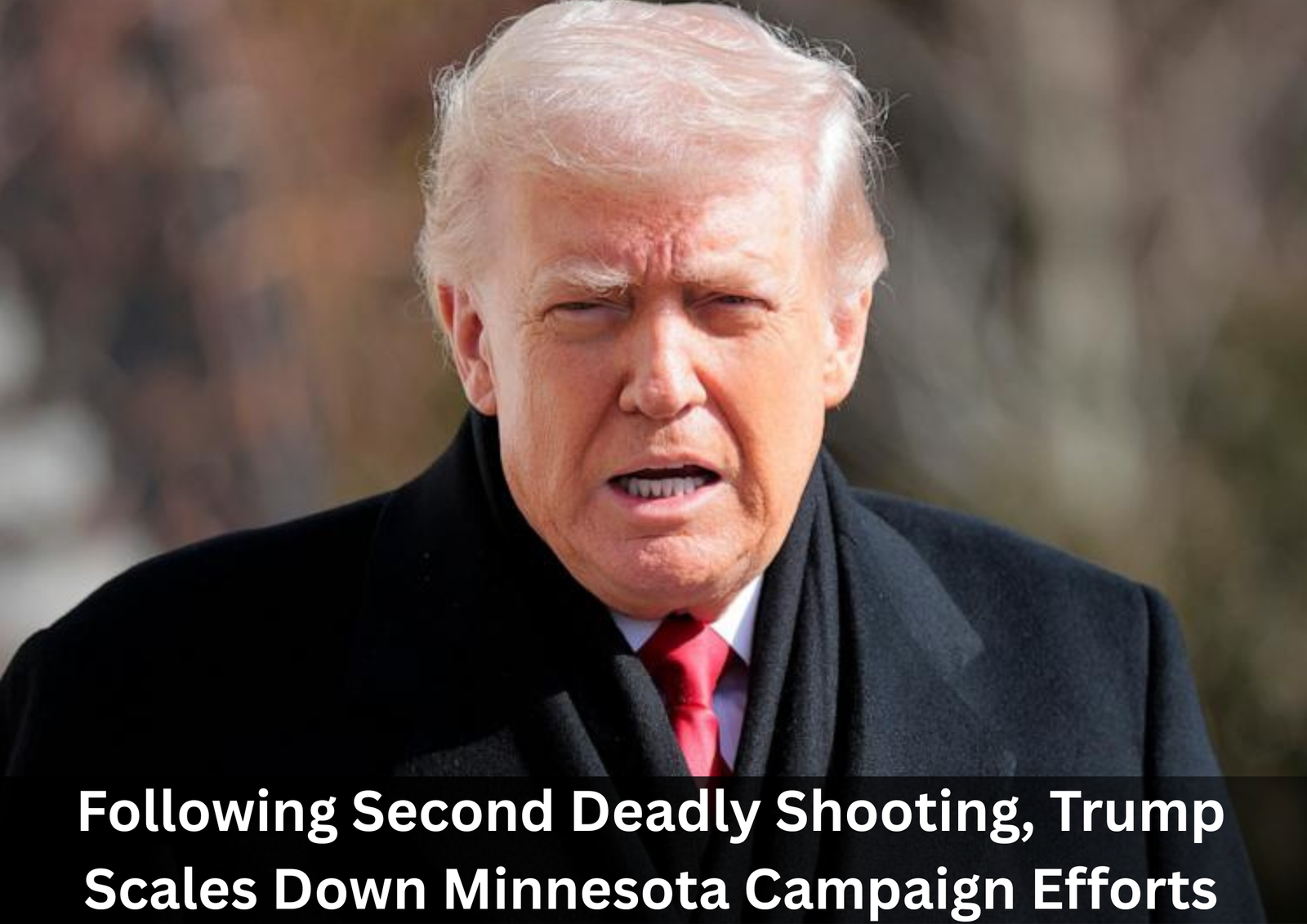
The Trump administration has indicated it will scale back federal operations in Minnesota following mounting backlash over the second fatal shooting of a civilian by immigration officers in the state this month, an incident that has intensified political, legal, and public scrutiny.
Speaking to reporters, President Donald Trump said federal authorities would “de-escalate a little bit” in Minnesota after protests reignited over the death of Alex Jeffrey Pretti, a 37-year-old Minneapolis resident who was shot and killed during a confrontation involving federal immigration agents over the weekend.
The Department of Homeland Security confirmed that two federal officers fired their weapons during the encounter. Initial statements from DHS leadership claimed Pretti posed an immediate threat by allegedly brandishing a firearm, a claim that later became a focal point of controversy. While DHS officials publicly defended the agents’ actions, a preliminary internal report sent to Congress did not explicitly state that Pretti attempted to use his weapon.
Amid growing criticism, DHS moved to replace the federal official overseeing the Minnesota mission. Border Patrol supervisor Gregory Bovino was removed from the role and replaced by White House border adviser Tom Homan, signaling a shift in operational leadership as pressure mounts.
Video Evidence Raises New Questions
The official narrative has been further complicated by video footage reviewed by independent investigators. The recordings appear to show Pretti holding a mobile phone, not a firearm, in the moments leading up to the confrontation. Witness footage suggests he was filming the scene and helping manage traffic near a protest when tensions escalated.
The videos show agents deploying pepper spray on demonstrators before engaging with Pretti. During the struggle, he was forced to the ground, restrained, and struck multiple times. Several seconds later, agents were heard shouting that he had a gun. A handgun was then pulled from the struggle, after which officers opened fire.
Authorities later confirmed the firearm was legally registered. Local officials stated that Pretti was shot after the weapon had already been removed from his possession, a detail that has intensified calls for accountability.
Republicans Split Over Gun Rights and Enforcement
The incident has triggered an unusual divide within Republican ranks. While the administration emphasized officer safety and operational authority, numerous GOP lawmakers pointed to constitutional protections surrounding firearm ownership.
Several Republican senators publicly argued that lawful possession of a gun does not, by itself, justify the use of lethal force. Others echoed concerns raised by gun-rights organizations, noting that Minnesota law permits carrying a firearm in public, including at protests.
However, not all Republicans agreed. Some party members backed President Trump’s stance, arguing that firearms should not be present in volatile situations involving law enforcement, regardless of legality.
Broader Fallout and Legal Scrutiny
Pretti’s death comes just weeks after another Minnesota resident, Renee Good, was fatally shot by a federal immigration officer, amplifying tensions between federal authorities and local officials. State and city leaders have since renewed demands for the withdrawal of thousands of federal agents from the region.
A federal judge has ordered DHS to preserve all evidence related to Pretti’s death, barring any alteration or destruction of materials connected to the investigation. Calls for transparency have come from both parties, with several Republican governors and senators urging a full and independent review.
President Trump described the shooting as “terrible” while continuing to defend the broader federal operation, citing arrests of individuals he characterized as dangerous criminals.
As investigations continue, the Minnesota incidents are shaping into a broader national debate over immigration enforcement, use of force, and the limits of federal authority-one that is unlikely to fade as election-year pressures intensify.
Don’t miss this in-depth analysis on “Social Media Companies Enter Historic Court Battle Over Teen Mental Health”-a must-read blog that unpacks the case and its far-reaching impact.