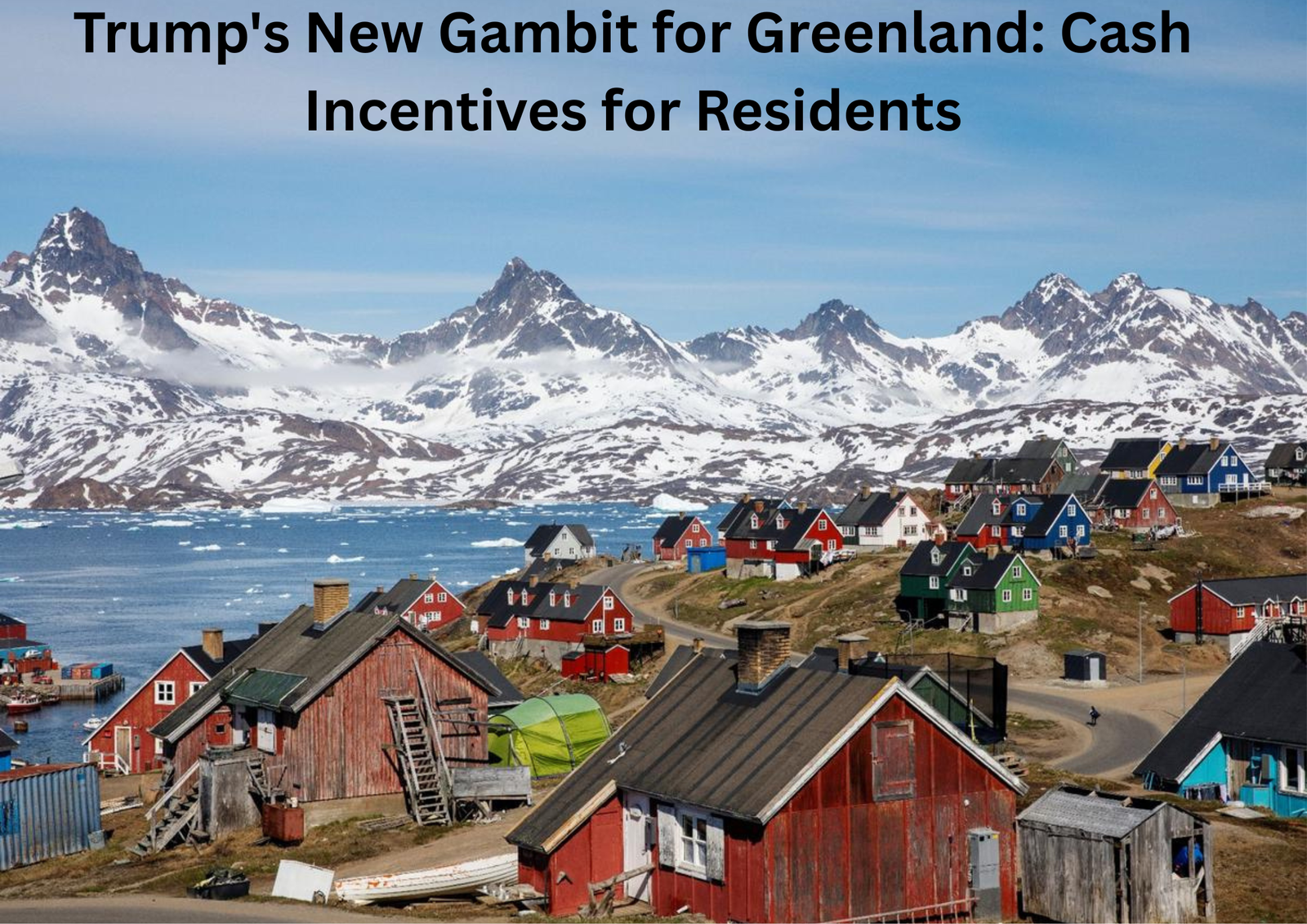
In Washington, discussions inside the Trump administration have shifted toward a controversial strategy: providing direct financial incentives to the people of Greenland in hopes of securing closer ties with the United States. The renewed effort comes as international pressure mounts and diplomatic conversations grow increasingly tense.
Cash Offers Emerge as Possible Tactic
According to individuals briefed on internal debates, officials have floated proposals to offer sizable payments to Greenland’s roughly 57,000 inhabitants. Suggested amounts range from $10,000 up to $100,000 per person, potentially costing the U.S. government several billion dollars if implemented. Such payments would be intended to encourage Greenlanders to pursue greater political separation from Denmark and potentially enter into a new arrangement with the United States. While purchasing the island remains Washington’s preferred outcome, discussions have reportedly not ruled out other means of securing the territory.
Diplomatic Pushback and International Reactions
Representatives of both Denmark and Greenland have responded firmly, reiterating their position that the territory is not for sale. Senior diplomats met with U.S. National Security Council officials in Washington this week to register their objections and urge a retreat from annexation-focused rhetoric. Europe’s major powers joined Denmark in a recent joint declaration asserting that decisions involving Greenland’s status rest solely with Copenhagen and Nuuk. French President Emmanuel Macron also criticized the notion of territorial pressure in the Arctic, warning against what he described as a growing disregard for established international norms.
Strategic Justifications Behind the Campaign
From the administration’s perspective, Greenland holds enormous strategic value. The island’s mineral resources, proximity to Arctic shipping lanes, and access to the polar region provide significant military and economic incentives. Although the U.S. already maintains military rights via a 1951 defense agreement with Denmark, the administration argues full ownership or a new political status would offer greater security guarantees. Officials have explored the possibility of a Compact of Free Association similar to agreements held with Pacific nations, a framework that would require Greenland to obtain full independence from Denmark before implementation.
Republican Hesitation and NATO Implications
The proposal has divided Republicans on Capitol Hill. Several senior lawmakers, including defense-focused conservatives, have expressed unease about coercive tactics or military threats involving a NATO ally. Political strategists warn that a forced takeover would strain alliances and isolate the United States within NATO. Public polling also indicates limited domestic support for acquiring the island. A separate resolution has begun circulating in the Senate aimed at preventing the use of military force in Greenland, adding to the legislative complications facing the administration.
Perspective from Greenland and Regional Security Measures
Greenlandic leaders have emphasized that any long-term change must reflect the will of the island’s population. Many residents favor expanded autonomy but have criticized foreign narratives portraying Greenland as vulnerable to outside powers. Danish officials, meanwhile, have highlighted the existing defense treaty that already provides the U.S. with broad access for military operations, including at the Pituffik Space Base. Copenhagen recently approved increased defense spending focused on Arctic surveillance and maritime monitoring, signaling its intent to remain an active security player in the region.
Lebanese Army Marks Major Step in Disarmament Push, Begins Planning for Next Phase – a critical development you shouldn’t miss, so make sure to read this blog till the end!