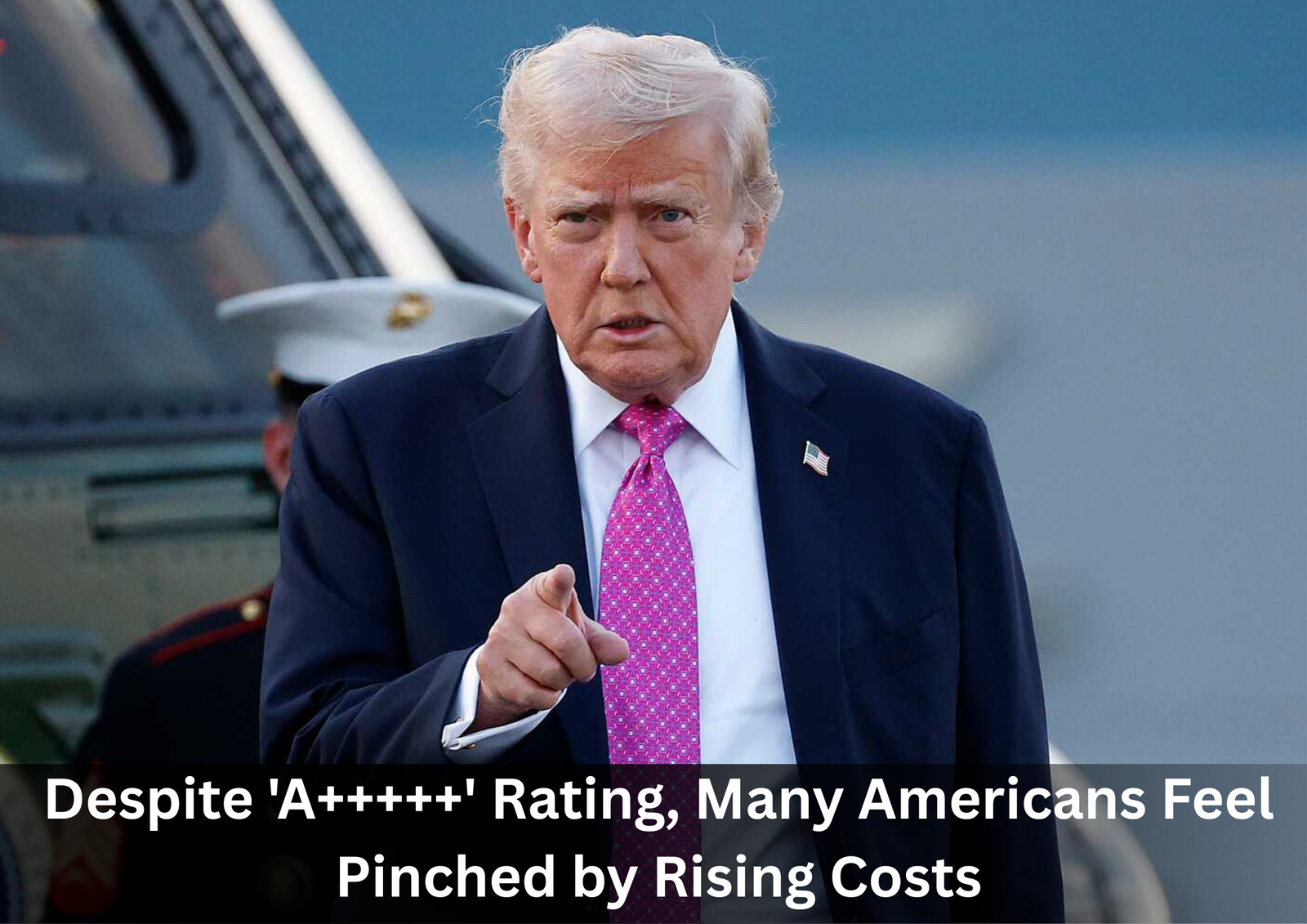
President Donald Trump’s recent claim that the U.S. economy deserves an “A+++++” rating – paired with his assertion that the nation’s affordability concerns are a political exaggeration – is drawing sharp criticism from economists, voter surveys, and even some within conservative policy circles. With midterm elections approaching, growing public frustration over living costs is emerging as a key political challenge for the administration.
Economic Data Paints a More Complicated Picture
Speaking to supporters in Mount Pocono, Pennsylvania, Trump dismissed rising cost worries as a manufactured narrative. However, federal statistics indicate persistent price pressures across essential goods and services.
Government data shows consumer prices rising 3% over the 12 months ending September 2025, with notable increases in everyday expenses such as groceries and electricity. The annual inflation rate remains unchanged from early 2025, suggesting that the affordability strain predates the current administration but has not eased during the past year.
Economists – Including Some Allies – Raise Doubts
A number of economists have questioned Trump’s rosy assessment. Some conservative policy veterans argue that growth indicators are mixed and that labor market conditions have softened compared with earlier years.
One former senior Trump administration adviser, speaking anonymously, described economic performance as “far from perfect,” adding that the president may not be receiving candid assessments from his inner circle.
Others, such as supply-side advocate Arthur Laffer, maintain that Trump’s confidence should not be dismissed outright, but acknowledge the president’s grading may be more rhetorical flourish than analytical evaluation.
Voters See a Disconnect Between Messaging and Reality
Polling underscores a widening gap between the administration’s optimistic messaging and public sentiment.
A recent national survey found that a majority of voters believe the government is losing ground in the fight against inflation. Another poll reported that nearly seven in ten Americans rate current economic conditions as “poor” or “very poor.”
Political strategists warn that dismissing affordability concerns outright could backfire. Some experts liken the moment to past eras when leaders underestimated economic anxiety, cautioning that voters expect concrete solutions rather than reassurances.
Tariffs and Policy Moves Add to the Debate
Economists continue to highlight the role of tariffs in elevating prices for consumer goods, from clothing and food items to furniture. While the administration argues these measures protect American manufacturing, they also generate billions each month in tariff revenue – costs largely absorbed by consumers and businesses.
In response to mounting criticism, the White House has taken limited steps to soften the financial strain. Recent decisions include removing tariffs on products that are seldom produced domestically and announcing emergency relief payments for U.S. farmers facing higher operational costs.
A Political Crossroads Ahead
As the affordability debate intensifies, the administration faces pressure to demonstrate tangible progress rather than rely on confident rhetoric.
For many voters, the question is no longer whether inflation exists – but whether leadership can offer solutions that bring relief. With the midterm cycle gaining momentum, the disconnect between official optimism and public experience may become a central issue shaping the months ahead.