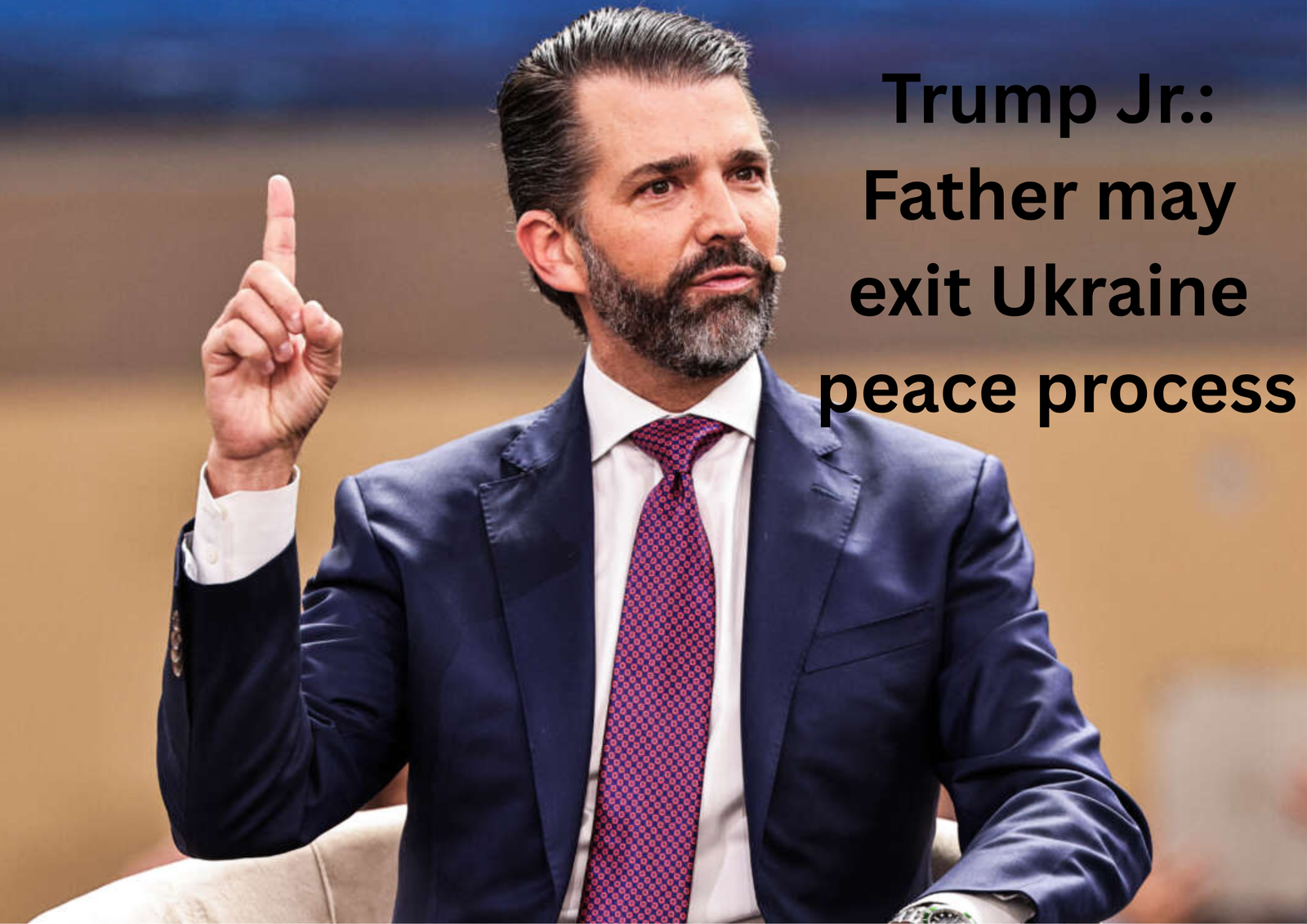
Remarks made by Donald Trump Jr. during an international forum in the Middle East have sparked renewed debate over the future of American involvement in the war in Ukraine. Speaking at the Qatar Economic Forum in Doha, the president’s eldest son suggested that a second Trump administration could sharply scale back U.S. support for Kyiv.
Trump Jr., known as a close political confidant of his father, Donald Trump, told a gathered audience of global business and political leaders that continued American funding of the conflict is no longer guaranteed. He indicated that the White House may reconsider both military assistance and diplomatic leadership in the war moving forward.
Strong Words on Aid and Responsibility
During the discussion, Trump Jr. questioned the scale of U.S. financial involvement in the conflict, arguing that American taxpayers have already contributed an extraordinary amount. He suggested that the burden of supporting Ukraine should rest more heavily on European nations, many of which are geographically closer to the conflict.
He also issued pointed remarks aimed at Ukrainian leadership, implying that the level of assistance Ukraine has received would not have materialized under the current administration. His comments were widely interpreted as a warning to Volodymyr Zelenskyy that Washington’s future backing may no longer be unconditional.
European Burden-Sharing Returns to the Spotlight
A recurring theme of Trump Jr.’s appearance was the idea that Europe must assume greater responsibility for regional security. He argued that while European countries face direct consequences from the conflict, the United States has absorbed a disproportionate share of the financial and military costs.
This viewpoint echoes long-standing critiques from President Trump regarding NATO funding and alliance obligations. Trump Jr. emphasized that future U.S. cooperation may depend on whether European governments significantly expand their own defense contributions.
Potential Impact on Diplomatic Efforts
In addition to military aid, Trump Jr. raised doubts about Washington’s continued leadership in peace negotiations. He suggested that the U.S. could step away from its central role as a broker in any future settlement if allies fail to demonstrate stronger commitment.
According to reporting, Trump Jr. implied that diplomatic disengagement could be used as a form of leverage in negotiations involving European partners.
Broader Political and Diplomatic Context
Trump Jr.’s Doha appearance was part of a wider international outreach effort by the Trump family focused on energy, security, and economic relationships in the Gulf region. Politico reported that the visit included private meetings with Qatari officials, highlighting the growing geopolitical role of the Gulf states amid shifting global power dynamics.
Meanwhile, The Guardian noted that the current U.S. administration has already delayed portions of foreign assistance to Ukraine that were authorized by Congress earlier, reinforcing concerns that policy changes may already be underway.
A Signal of What May Come
While Trump Jr. holds no official government role, his influence inside Republican circles and close advisory relationship with the president give his public statements added political weight. Analysts say the comments represent one of the clearest public indications yet that U.S. strategy toward Ukraine could undergo a significant recalibration.
As the war enters another uncertain phase, allies across Europe and beyond are closely watching how Washington’s policy evolves-and whether American leadership in the conflict will continue or begin to recede.