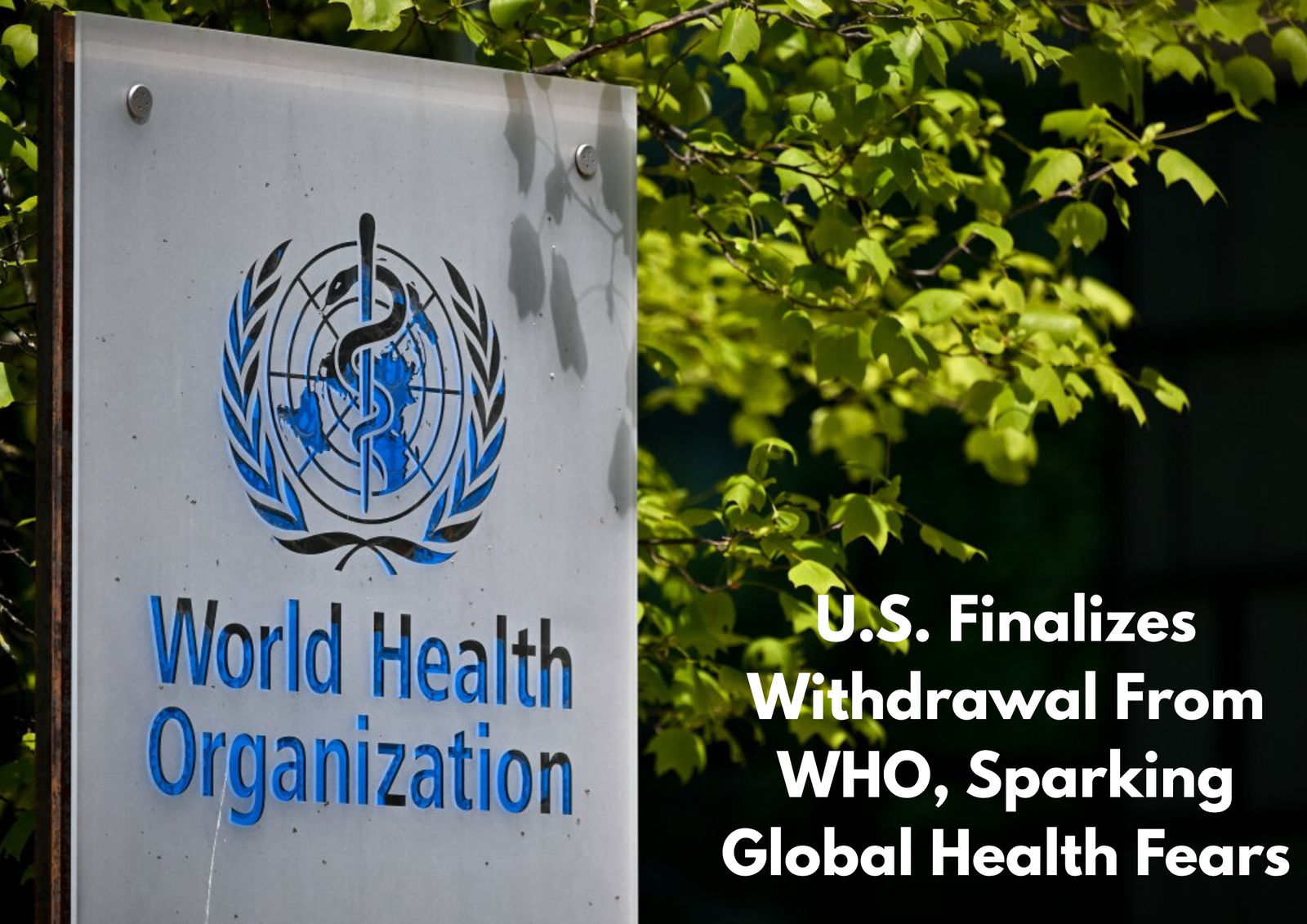
The United States has officially completed its withdrawal from the World Health Organization, ending decades of participation in the global public health body and triggering widespread concern among international health experts.
The decision, finalized this week, follows an executive order signed by Donald Trump at the start of his second term. The announcement was confirmed by the U.S. Department of Health and Human Services, which stated that all formal ties between the U.S. government and the Geneva-based organization have now been severed.
Reasons Cited by the Administration
U.S. officials said the withdrawal was driven primarily by dissatisfaction with the WHO’s handling of the COVID-19 pandemic. According to administration statements, concerns included delays in declaring a global health emergency, messaging around virus transmission, and what officials described as a lack of accountability within the organization.
Senior health officials argued that continued membership limited U.S. decision-making and claimed American financial contributions were disproportionate to the benefits received. The administration emphasized that future public health policies would be developed independently, without oversight from international bodies.
Financial and Legal Questions
The move has raised unresolved financial and legal issues. The United States reportedly owes hundreds of millions of dollars in outstanding membership contributions from prior years. While U.S. officials dispute whether payment is legally required to complete the withdrawal, legal scholars have questioned the interpretation, noting that U.S. law traditionally requires both notice and settlement of dues.
WHO officials confirmed that the matter will be reviewed by internal governing bodies in the coming months, though no formal enforcement mechanism currently exists.
Immediate Policy Changes
Following the withdrawal, all U.S. personnel assigned to WHO offices were recalled, and American participation in WHO committees, advisory panels, and technical working groups was halted. The administration stated it does not intend to rejoin the organization or participate even as an observer.
However, officials acknowledged that limited technical cooperation could continue on specific issues, such as influenza strain monitoring, through informal scientific channels and bilateral agreements coordinated by the Centers for Disease Control and Prevention.
Impact on the WHO
The departure of the United States, historically one of the WHO’s largest contributors, has placed significant strain on the organization’s budget. WHO leadership has announced internal restructuring, including staff reductions and scaled-back programs, as it adjusts to the loss of funding.
WHO Director-General Tedros Adhanom Ghebreyesus warned that the funding gap could weaken global disease surveillance and emergency response efforts, particularly in lower-income regions.
Global Reaction and Expert Warnings
Public health experts across the world criticized the decision, warning that reduced international cooperation could leave countries more vulnerable to future pandemics. Former U.S. and international health officials stressed that infectious diseases do not recognize borders and that global data sharing is essential for early detection and response.
Several experts also noted that other nations, including China and India, are likely to expand their influence within global health institutions as a result of the U.S. exit, potentially reshaping international health priorities.
Philanthropist Bill Gates reiterated support for the WHO, stating that global health challenges require coordinated international solutions and urging continued collaboration despite political divisions.
Broader Implications
Analysts warn that the U.S. withdrawal may weaken global preparedness for future outbreaks, reduce American influence in setting international health standards, and complicate responses to cross-border health emergencies. Critics also caution that long-term effects could include increased instability in vulnerable regions and diminished trust in global health partnerships.
While the administration maintains that a new, bilateral-focused health strategy will be more effective, many experts argue that the loss of a centralized global health framework represents a significant shift with uncertain consequences.
Don’t miss this detailed report, “Winter Weather Brings Ice Risk to Texas, but Officials Say 2021-Style Freeze Is Unlikely,” for crucial updates, expert insight, and what residents should realistically expect.