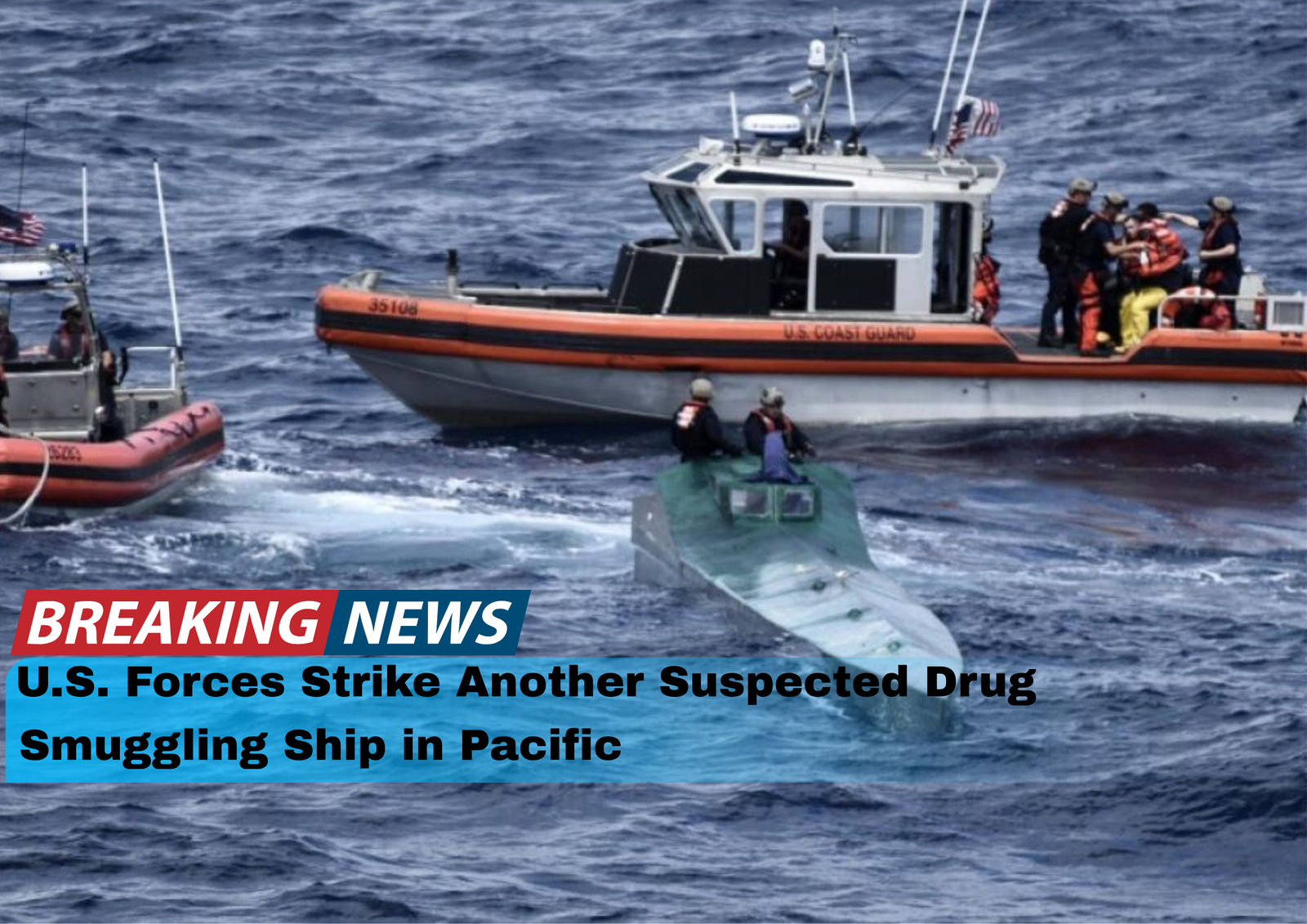
The U.S. military has carried out another strike against what officials described as a suspected drug-smuggling vessel operating in the eastern Pacific Ocean, marking the latest action under a recently expanded maritime enforcement policy.
According to U.S. Southern Command, the incident took place on Saturday when a U.S. fixed-wing aircraft targeted a high-speed “go-fast” boat believed to be involved in trafficking operations. Military officials noted that assessments are still underway to determine the full impact of the strike, including whether the vessel was disabled or destroyed.
This weekend’s operation follows a similar strike earlier in the week in the Caribbean Sea, which became the 21st action against suspected maritime drug-smuggling activity in recent months. The rise in these missions is tied to newly authorized guidelines that grant commanders the ability to strike clearly identified trafficking vessels considered a potential threat.
U.S. Southern Command says the updated policy aims to curb the flow of illicit narcotics moving through maritime routes, particularly in regions where criminal networks use high-speed boats to evade traditional interdiction operations. While officials have not disclosed the nationalities of those aboard Saturday’s vessel, they emphasized that the mission was carried out in accordance with international law and regional security agreements.
Defense analysts note that drug-trafficking organizations have increasingly relied on small, fast boats to move cocaine and other narcotics from Central and South America toward North American markets. The U.S. military’s use of precision airstrikes represents a notable escalation in counter-drug efforts, traditionally dominated by interdictions, seizures, and joint patrols.
More details are expected once the strike assessment is complete, though officials say the operation reflects a continued focus on disrupting maritime supply chains used by transnational criminal groups.