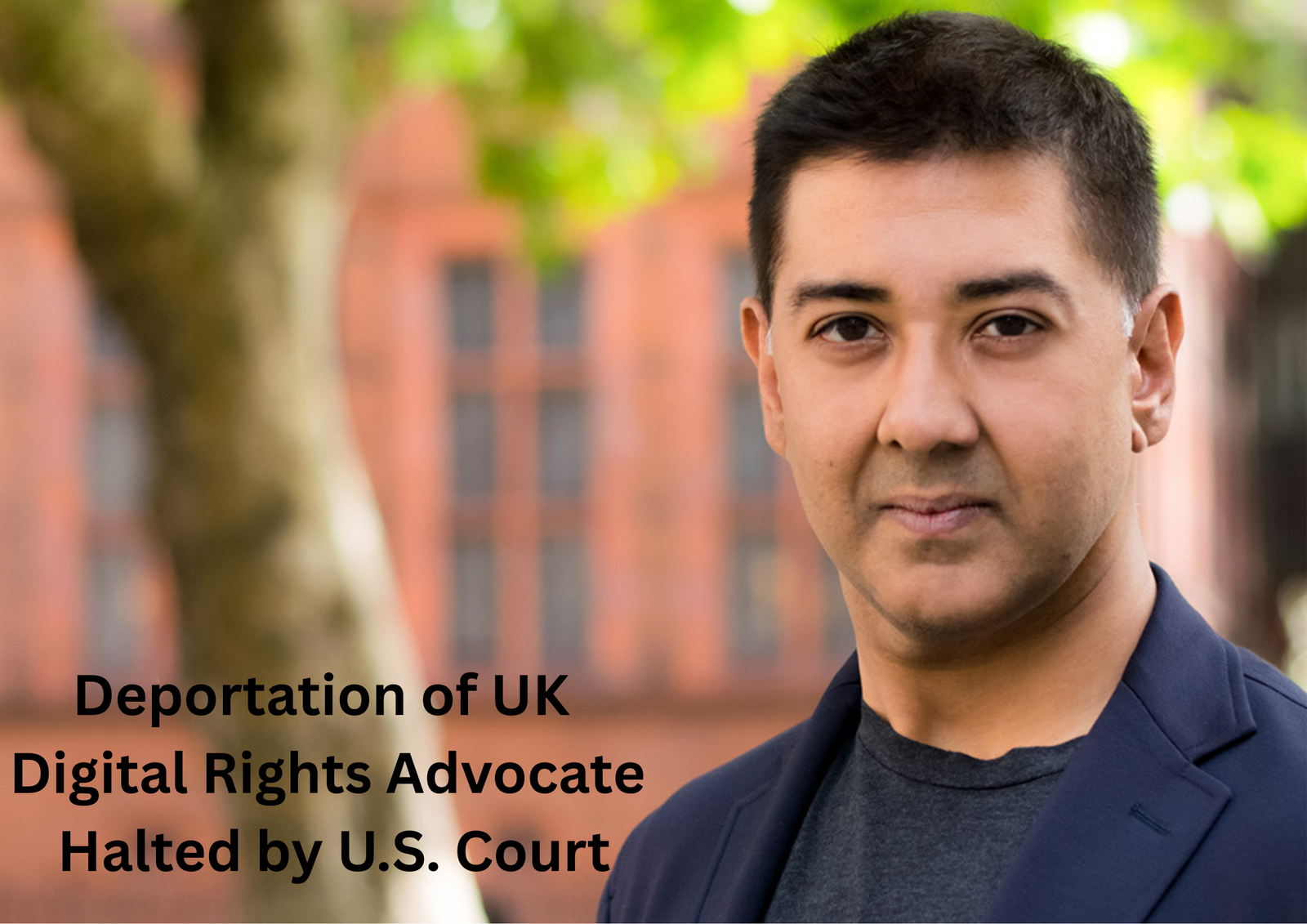
A federal court in the United States has temporarily stopped the deportation of a British digital rights advocate after he challenged a recent visa restriction imposed by the U.S. government, raising constitutional and free-speech concerns.
The ruling, issued by a judge in New York, prevents federal authorities from detaining or removing Imran Ahmed, a well-known campaigner against online misinformation, while his legal case moves forward. The court order ensures that no immigration action can be taken against him until a formal hearing is held later this month.
Ahmed, who lives in the United States with his American family, filed suit after being notified that his legal status could be revoked under a new visa ban affecting several European nationals. U.S. officials have argued that the individuals targeted by the policy pose potential foreign policy risks due to their involvement in campaigns aimed at regulating or influencing digital platforms.
In his court filing, Ahmed contends that the government’s actions violate constitutional protections, including freedom of expression and the right to due process. His legal team argues that the visa restriction is being used as a punitive measure linked to his advocacy work rather than any violation of immigration law.
The case has drawn international attention, with European officials and digital rights groups expressing concern that immigration enforcement is being used to discourage research and activism related to misinformation, hate speech, and online safety. Supporters say such work is essential to protecting users-especially children-from harmful digital content.
Following the court’s decision, Ahmed welcomed the temporary relief, stating that the ruling allows him to remain with his family while defending his right to continue his professional work. He emphasized confidence in the U.S. judicial system and said the case reflects broader debates about speech, technology, and government power.
The Department of Homeland Security has not issued a public response to the ruling. Legal experts say the outcome of the case could have lasting implications for how immigration laws intersect with political expression and international advocacy.
A follow-up court conference is scheduled in the coming days, where both sides are expected to present arguments on whether the visa restriction can lawfully be enforced.