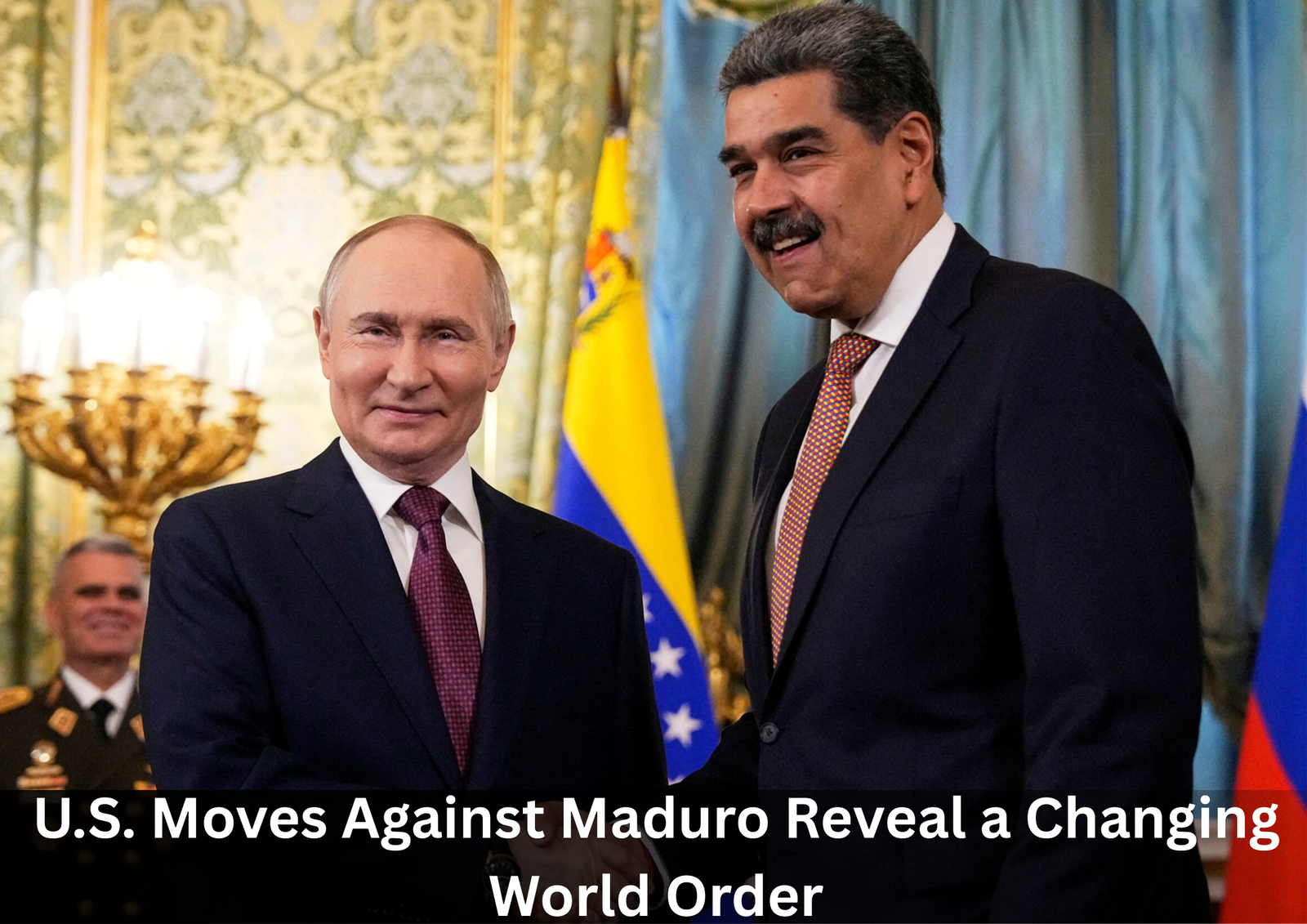
The recent apprehension of Venezuelan leader Nicolás Maduro by U.S. forces has sent shockwaves through global diplomatic circles, raising fresh questions about the reach of American power and the reliability of Russia as a strategic ally in the Western Hemisphere.
The operation, carried out earlier this month in Caracas, resulted in Maduro being transferred to the United States, where he later appeared before a federal court in New York. While U.S. officials have provided limited details about the mission itself, the geopolitical consequences have been swift and far-reaching.
For Moscow, the episode has proven particularly uncomfortable. Russia has long positioned itself as a key backer of the Venezuelan government, supplying weapons, financial assistance, and political support over the past two decades. Yet when the U.S. moved decisively, Russia’s response was largely rhetorical, exposing what many analysts describe as a widening gap between its global ambitions and its actual capacity to defend partners abroad.
Russian officials publicly condemned the U.S. action, calling it a violation of Venezuelan sovereignty and international norms. Diplomatic statements emphasized solidarity with Caracas, and senior figures exchanged calls reaffirming political support. However, no concrete countermeasures followed, underscoring the limits of Russia’s influence far from its immediate sphere.
Observers note that this restraint is closely tied to Russia’s current strategic burdens. With significant military and economic resources tied up in Eastern Europe, Moscow appears reluctant to escalate tensions elsewhere. The prolonged conflict in Ukraine has strained Russia’s armed forces and economy, making large-scale responses in distant regions increasingly difficult.
Within Russia, reactions have ranged from frustration to public self-criticism. Commentators across the political spectrum questioned why years of investment in Venezuela failed to prevent such an outcome. Some nationalist voices openly contrasted Washington’s rapid execution with Moscow’s slower, more cautious approach in recent conflicts, fueling debate over Russia’s global standing.
The incident has also revived discussion of earlier geopolitical understandings. In past years, analysts have pointed to informal discussions suggesting mutual restraint between major powers in each other’s traditional zones of influence. The latest developments suggest such unwritten rules may no longer hold, especially as U.S. policy under President Donald Trump emphasizes direct action and visible results.
Beyond diplomacy, the situation carries economic implications. The U.S. administration has signaled interest in restoring Venezuelan oil output and reintegrating it into global markets. If realized, such a move could ease global energy prices but would also intensify competition for major exporters, including Russia, whose budget remains heavily dependent on hydrocarbon revenues.
Energy markets are already watching closely. Any rapid increase in Venezuelan production could reshape supply dynamics, particularly if accompanied by broader changes in sanctions policy. For Moscow, this adds another layer of concern at a time when its own energy infrastructure faces mounting pressure.
In Latin America, reactions have been mixed. Some governments view the event as a warning about the consequences of international isolation, while others worry about the precedent it sets for external intervention. Regional organizations have called for calm, emphasizing the need for diplomatic solutions and respect for national sovereignty.
For Washington, the operation reinforces a message of renewed assertiveness. Supporters argue it demonstrates decisive leadership and the ability to act beyond traditional constraints. Critics, however, caution that such actions risk escalating tensions and undermining international norms if not accompanied by transparent legal processes.
As Maduro’s legal case proceeds in the United States, attention is shifting to the broader implications. The episode has challenged narratives about an emerging multipolar world, instead highlighting how power remains unevenly distributed. It has also forced allies and adversaries alike to reassess assumptions about protection, influence, and strategic commitment.
Ultimately, the capture of Venezuela’s longtime leader may be remembered less for its immediate legal outcome and more for what it revealed about the current global order-one in which decisive action, rather than long-standing alliances, increasingly shapes geopolitical reality.
Don’t miss this compelling read on “Historic Vatican Jubilee Draws Unprecedented 33.5 Million Faithful to Rome”, offering rare insights and key moments-click through to explore the full story.