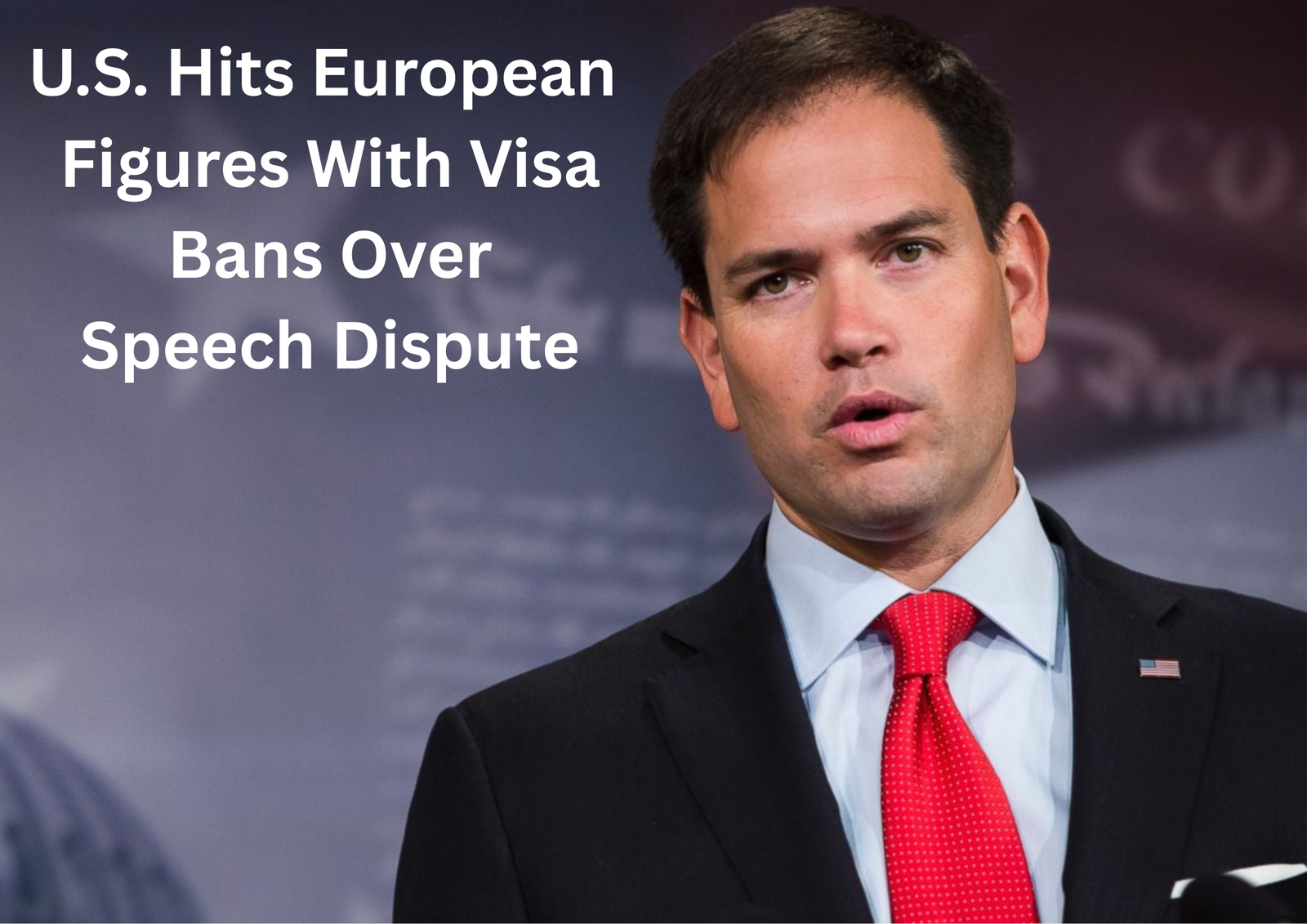
The United States government has announced visa restrictions against several European figures, escalating a growing transatlantic dispute over digital regulation and freedom of expression. The move targets individuals accused by U.S. officials of promoting policies that allegedly pressure American technology companies to limit certain forms of online speech.
According to the State Department, the restrictions apply to five European nationals involved in digital policy, research, and advocacy related to misinformation and online harm. The action was taken under U.S. immigration law provisions that allow visa denials when an individual’s activities are deemed to have negative foreign policy implications for the United States.
Secretary of State Marco Rubio stated that the decision reflects Washington’s opposition to what it views as coordinated efforts to influence how American-based social media platforms moderate content. He argued that such efforts extend beyond national borders and risk undermining U.S. constitutional protections for free expression.
Among those affected is a former senior European Union official associated with the development of the EU’s Digital Services Act, a law that sets strict obligations on large online platforms to address illegal and harmful content. U.S. officials have repeatedly criticized the legislation, saying it places excessive pressure on companies headquartered in the United States and could indirectly affect speech originating from American users.
The list also includes leaders of non-governmental organizations that study disinformation and online abuse. U.S. authorities allege that some of these groups have played an influential role in encouraging content restrictions, including through research, advocacy campaigns, and cooperation with governments.
European responses were swift and critical. Several of the sanctioned individuals rejected the accusations, arguing that their work focuses on combating online harassment, hate speech, and coordinated disinformation campaigns rather than suppressing legitimate debate. They warned that the U.S. action could set a troubling precedent by targeting researchers and civil society actors.
The decision comes amid broader tensions between Washington and European capitals over technology governance. While the EU has emphasized consumer protection, transparency, and accountability for major platforms, U.S. officials have increasingly framed European digital rules as threats to free speech and national sovereignty.
Analysts say the visa restrictions are largely symbolic but signal a tougher U.S. stance as debates over online regulation intensify worldwide. The State Department indicated that additional measures could follow if similar policies continue to affect American companies or users.
For now, the move underscores a widening gap between the United States and Europe on how democracies should balance free expression with the regulation of online content in an increasingly interconnected digital space.