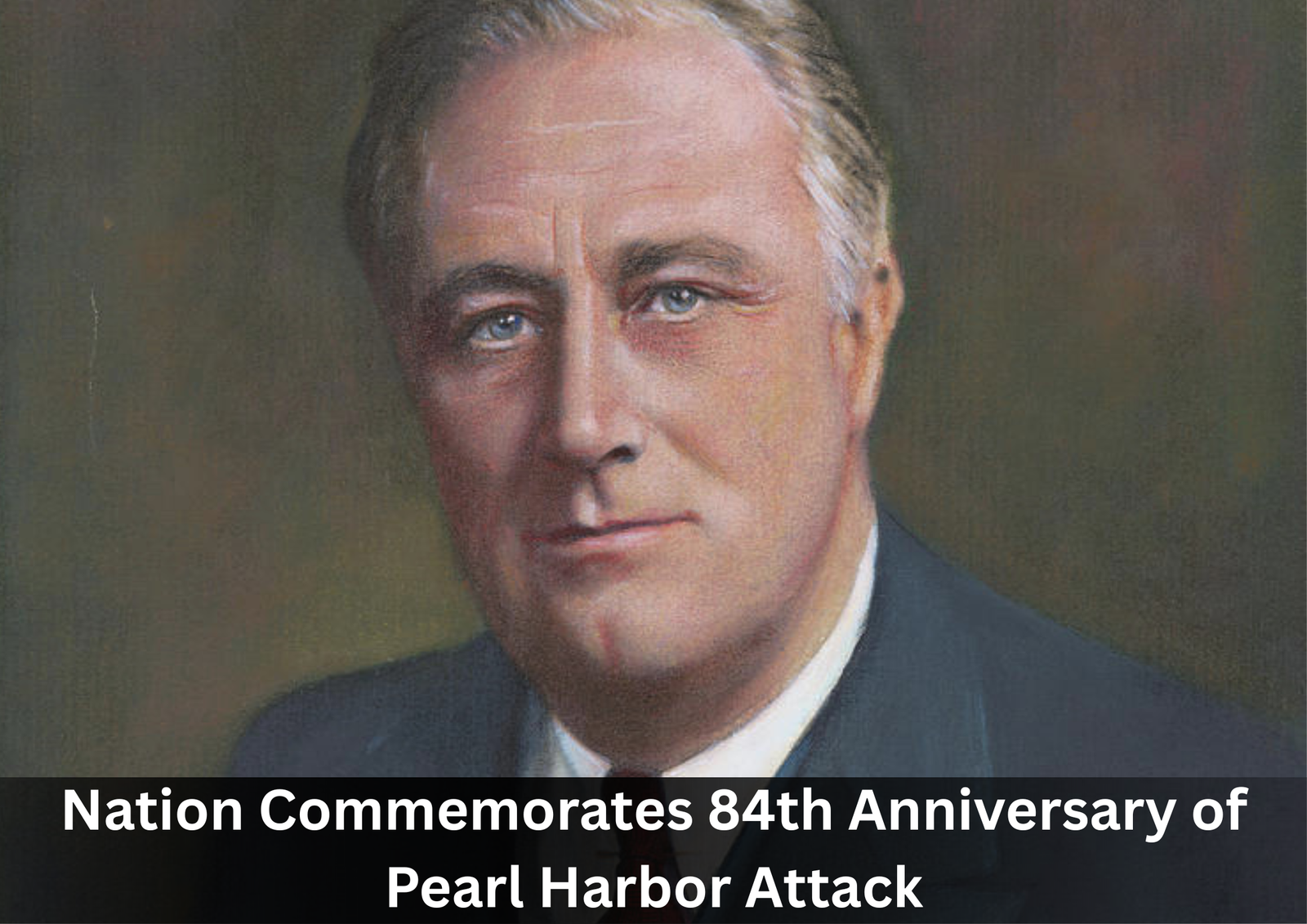
Communities across the United States paused on Sunday to honor the 84th anniversary of the attack on Pearl Harbor, a defining moment in American history that thrust the nation into World War II. The solemn remembrance reflected both national unity and the enduring impact of the tragic events of December 7, 1941.
In recognition of National Pearl Harbor Remembrance Day, President Franklin D. Roosevelt directed all U.S. flags to be flown at half-staff at federal buildings, military installations, and naval vessels across the country. Governors and local leaders echoed the order, extending the gesture to state and municipal properties nationwide.
Ceremonies were held from Hawaii to small towns on the mainland. In Minnesota, residents gathered in Duluth for a public tribute at the city’s historic Depot, where veterans, families, and local officials reflected on the sacrifices made during the surprise attack more than eight decades ago.
The assault unfolded shortly before 8 a.m. on a quiet Sunday morning when Japanese aircraft targeted the U.S. Pacific Fleet stationed at Pearl Harbor. In less than two hours, 2,403 Americans – both military personnel and civilians – lost their lives. Nineteen Navy ships were sunk or damaged, including eight battleships that formed the backbone of the fleet.
The following day, President Franklin D. Roosevelt addressed Congress, delivering his famous declaration that December 7 would live on “in infamy,” formally leading the United States into World War II.
This year’s central memorial ceremony took place at the Pearl Harbor National Memorial and was jointly organized by the National Park Service and the U.S. Navy. The event was broadcast worldwide, allowing families, historians, and veterans across the globe to participate virtually.
As the number of living survivors continues to decline, the annual tribute carries added emotional weight. The Pearl Harbor Survivors Association, once a large national organization, now consists of only a small group of elderly members – a powerful reminder of the passing of the “Greatest Generation.”
Sunday’s commemorations emphasized not only the tragedy of the attack, but also the resilience that followed. From large national memorials to quiet local gatherings, Americans once again reaffirmed the importance of remembering the lives lost and the history that reshaped the nation.