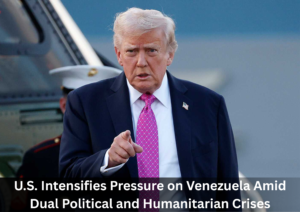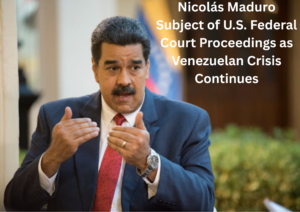
The United States has begun outlining a temporary administrative framework for Venezuela following the detention of President Nicolás Maduro during a recent U.S. military operation, a move that has triggered sharp political debate in Washington and raised concerns across Latin America.
According to senior U.S. officials, the operation was conducted in the early hours of January 3 and resulted in Maduro being taken into custody in Caracas. The White House described the mission as limited in scope, emphasizing that it was not intended as a long-term military occupation but rather as a strategic intervention tied to security and regional stability objectives.
Interim Governance and Political Uncertainty
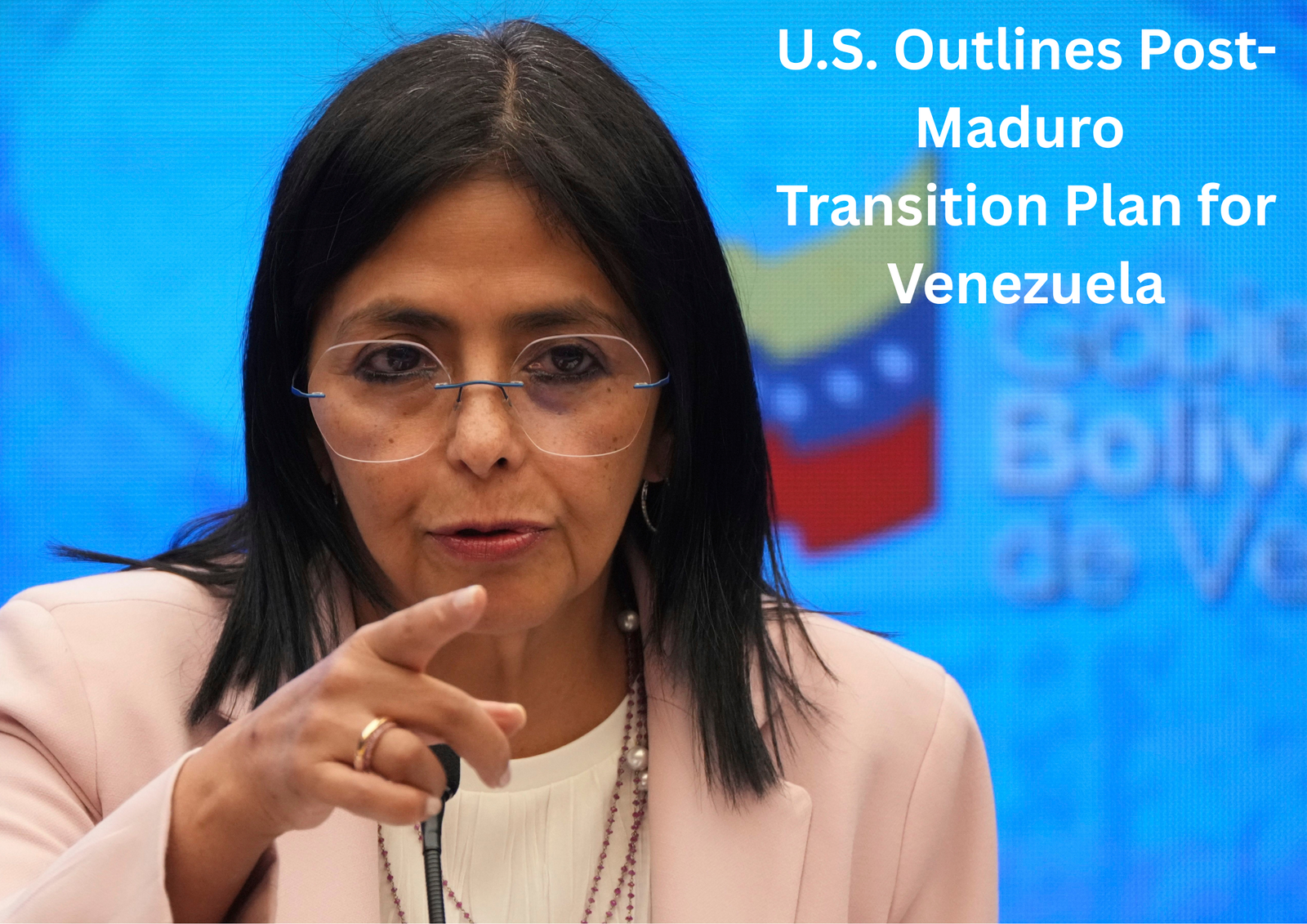
U.S. officials indicated that discussions are underway regarding a transitional governing arrangement in Venezuela. Vice President Delcy Rodríguez has been identified by American policymakers as a potential interim authority, citing continuity within existing state structures as a means to avoid institutional collapse.
However, no formal timeline for elections or constitutional reforms has been announced. Officials stated that immediate priorities include restoring basic governance functions, stabilizing key infrastructure, and addressing cross-border security concerns before broader political processes are considered.
Rodríguez has publicly disputed the legitimacy of the U.S. action and rejected claims that a leadership transition is underway, adding to uncertainty about how governance will function in the coming weeks.
Focus on Security and Foreign Influence
The U.S. administration has framed its involvement around security objectives, particularly the removal of foreign armed groups and criminal networks operating within Venezuela. Senior officials have cited concerns about narcotics trafficking routes and alleged cooperation between Venezuelan institutions and non-state actors linked to the Middle East.
American policymakers have also expressed concern about external influence over Venezuela’s energy sector, noting that control of strategic resources could have long-term implications for regional geopolitics. While officials insist that access to oil is not the primary motive, they acknowledge that economic leverage will play a role in shaping future policy decisions.
Congressional and Legal Challenges
The operation has sparked immediate backlash from Democratic lawmakers, who argue that the intervention amounts to an undeclared act of war. Several members of Congress have stated they were not briefed prior to the operation and are calling for formal reviews under the War Powers Resolution.
Legislators opposing the action have warned that bypassing congressional authorization could set a dangerous precedent, particularly as U.S. forces remain positioned in nearby waters to enforce maritime restrictions.
Republican leaders, by contrast, have largely defended the operation, describing it as a necessary step to counter organized crime and foreign influence in the Western Hemisphere.
Regional Response and Diplomatic Fallout
Reactions across Latin America have been mixed. Cuba strongly condemned the U.S. move, calling it a violation of international law and regional sovereignty. Other governments have urged restraint and called for multilateral dialogue to prevent escalation.
Analysts note that the situation places renewed strain on regional diplomacy, particularly as neighboring countries brace for potential migration pressures and economic spillover effects.
What Comes Next
Despite strong rhetoric from U.S. officials, many aspects of the post-Maduro plan remain undefined. The U.S. Embassy in Caracas remains closed, limiting diplomatic engagement on the ground, and no international monitoring framework has been announced.
For now, Venezuela faces a period of heightened uncertainty as internal political resistance, international scrutiny, and domestic instability converge. Observers say the coming weeks will be critical in determining whether the intervention leads to stabilization or prolonged regional tension.
Stay informed on the latest developments: U.S. Tightens Measures Against Venezuela Amid Growing Political and Humanitarian Strain. Read more on my blog.