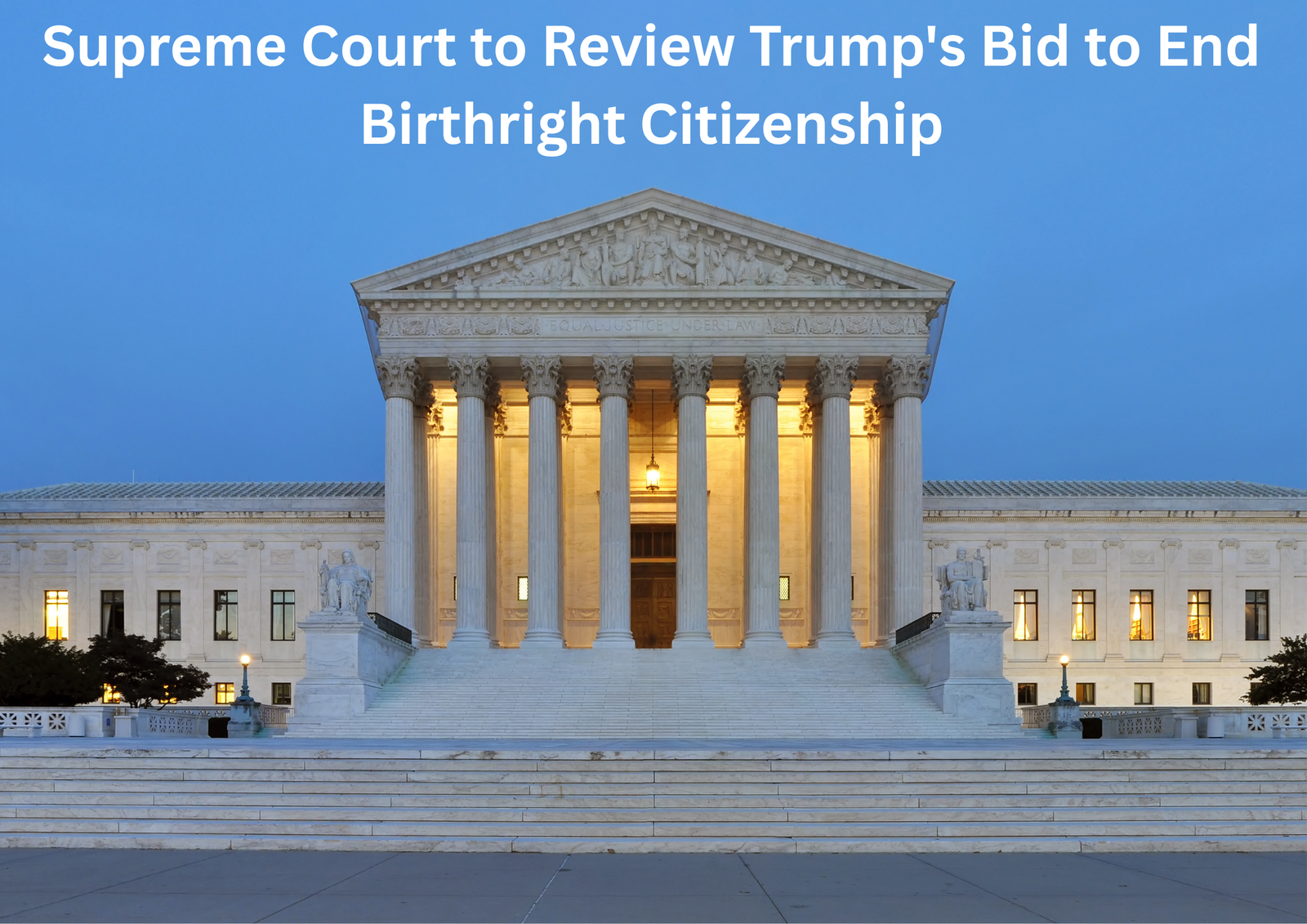
The U.S. Supreme Court has agreed to hear a major case that could redefine the nation’s longstanding interpretation of birthright citizenship, taking up a legal challenge to a 2025 executive order issued by President Donald Trump.
The order, signed on Trump’s first day back in office in January, sought to end automatic U.S. citizenship for children born in the country to undocumented immigrant parents. It marked the most sweeping attempt in decades to reinterpret the Citizenship Clause of the 14th Amendment, which has guaranteed birthright citizenship since 1868.
The policy was immediately met with a series of lawsuits from civil rights groups, immigration advocates, and families who argued that the executive branch does not have the authority to alter constitutional definitions. Federal courts sided with the challengers, blocking the order and ruling that any change to citizenship laws must come from Congress.
Despite those rulings, the Trump administration appealed the decisions, asking the Supreme Court to determine whether the phrase “subject to the jurisdiction thereof” excludes children of parents who are not U.S. citizens or lawful permanent residents. Supporters of the policy claim that undocumented immigrants maintain legal allegiance to their home countries and therefore fall outside full U.S. jurisdiction.
Opponents argue that the executive order contradicts more than a century of legal precedent, including an 1898 Supreme Court ruling that affirmed birthright citizenship for nearly all children born on U.S. soil, regardless of parental immigration status. They warn that altering this principle could destabilize immigration structures and create significant uncertainty for millions of U.S.-born residents.
By agreeing to take up the case, the Supreme Court will, for the first time, directly consider whether children of undocumented immigrants are constitutionally entitled to citizenship at birth. Legal experts say the ruling could have sweeping implications, shaping future immigration policy and influencing eligibility for federal programs, education rights, and employment opportunities.
The Court is expected to hear arguments early next year, with a decision anticipated by June 2026. Whatever the outcome, the case is poised to become one of the most consequential immigration rulings in modern American history, touching the very core of what it means to be a citizen of the United States.