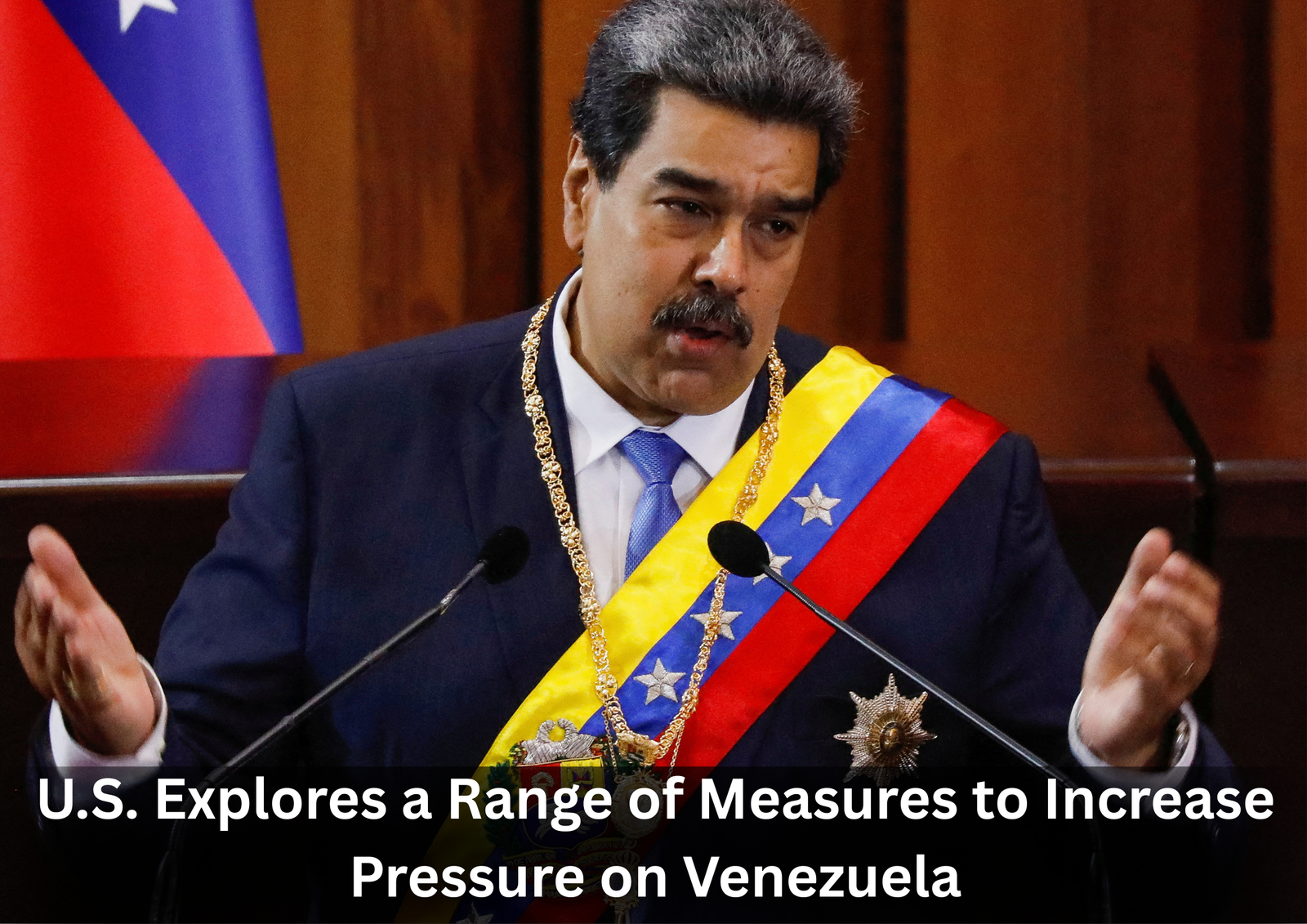
The United States is considering a series of new measures aimed at increasing pressure on the government of Venezuelan President Nicolás Maduro, according to multiple reports and officials familiar with recent policy discussions. The ideas range from psychological influence campaigns to contingency military planning-moves that have drawn comparisons to America’s history of covert operations in Latin America.
Leaflet Campaign Under Review
One of the options currently being evaluated inside the Biden administration involves an information campaign that would distribute leaflets over major Venezuelan cities. The plan, which remains in the internal discussion stage, would be carried out using U.S. military aircraft and is designed to encourage civilians and members of the country’s elite to withdraw support from Maduro.
Officials describe the proposal as a non-violent tactic meant to influence public sentiment rather than provoke direct confrontation. While no authorization has been granted, the idea has circulated through senior levels of the White House and the Pentagon.
Military Options Explored by Trump Advisers
In a separate development, advisers aligned with Donald Trump have reportedly held conversations with retired U.S. military officials about potential strategies should Trump return to office. Among the scenarios discussed is a naval “quarantine” that would place U.S. ships in waters surrounding Venezuela to restrict the country’s oil exports and enforce economic pressure.
These talks are described as exploratory and unofficial, with no indication that the proposals have been incorporated into formal campaign policy. Still, the discussions highlight the growing debate in Washington about how aggressively the U.S. should respond to ongoing political turmoil in Caracas.
Experts Warn of Risky Historical Parallels
International analysts have issued cautionary assessments, noting that some of the proposed strategies resemble earlier U.S. covert operations in the region. Commentaries published this week argued that escalating pressure, combined with visible military deployments in the Caribbean, could raise tensions and create conditions similar to past interventions that destabilized Latin American countries.
Critics warn that a combination of sanctions, naval maneuvers and political influence campaigns could provoke retaliation, worsen humanitarian conditions, and heighten international friction. Russia has already voiced opposition to any U.S. military involvement, saying such actions would threaten regional stability.
U.S. Officials Emphasize Diplomacy First
Despite the heated debate, American officials maintain that diplomatic engagement remains the preferred strategy. Washington has repeatedly expressed concern about Venezuela’s 2024 elections, citing limited political freedoms and barriers facing opposition candidates.
According to administration sources, the U.S. is preparing for “multiple possible outcomes” if diplomatic avenues fail, but stresses that any military or psychological operations remain strictly hypothetical.
For now, the policy landscape surrounding Venezuela continues to evolve, shaped by shifting political dynamics in Washington and the international community’s growing focus on the country’s electoral future.