
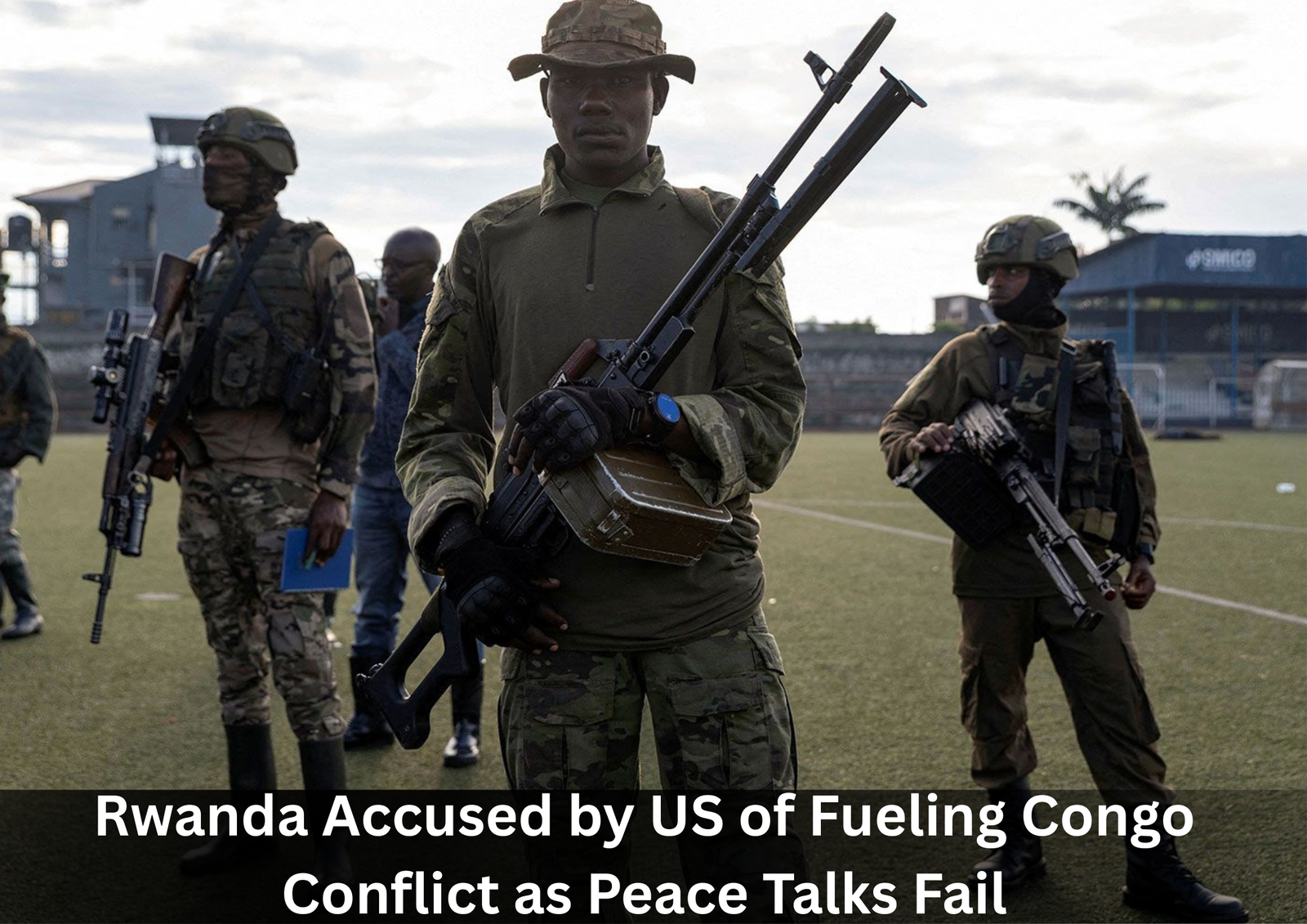
Tensions in Central Africa have surged after the United States publicly accused Rwanda of driving renewed violence in eastern Democratic Republic of Congo (DRC), warning that the region is edging closer to a wider war only days after a Washington-brokered peace agreement was signed.
Speaking during an emergency session of the United Nations Security Council, U.S. Ambassador Mike Waltz said Rwanda’s actions had undermined diplomatic efforts aimed at stabilizing the Great Lakes region. His remarks followed a rapid military advance by the M23 rebel group, which has taken control of Uvira, a strategically vital city in South Kivu province.
Peace Deal Undermined Within Days
The escalation comes just over a week after Presidents Paul Kagame of Rwanda and Félix Tshisekedi of the DRC appeared together in Washington to endorse a U.S.-led peace framework intended to end years of conflict along their shared border. The agreement committed both sides to halting support for armed groups and expanding regional economic cooperation.
Despite those commitments, fighting intensified almost immediately. M23 forces, which were not formal signatories to the deal, launched a coordinated offensive that overwhelmed government defenses and led to the fall of Uvira – the DRC’s last major administrative and military center in South Kivu.
Allegations of Direct Rwandan Involvement
U.S. officials told the Security Council that Rwanda has exercised command and operational influence over M23 for several years. According to the U.S. delegation, thousands of Rwandan troops are believed to be operating inside eastern Congo alongside rebel forces, providing weapons, logistics, and battlefield coordination.
Western governments echoed those concerns, with the European Union and several European states urging an immediate halt to military operations and calling for all foreign troops to withdraw from Congolese territory.
Rwanda has repeatedly denied the allegations, insisting it is acting purely in self-defense and accusing neighboring states of destabilizing its borders.
Strategic Importance of Uvira
Uvira’s capture represents a major setback for the Congolese government. Located on Lake Tanganyika and close to Burundi’s capital, the city serves as a key supply corridor for regional forces operating in eastern Congo. Analysts say its loss significantly weakens Kinshasa’s military posture and complicates humanitarian access.
Military observers also note the increasing use of surveillance and combat drones in the conflict, giving rebel forces a tactical edge during recent battles.
Growing Humanitarian Emergency
The renewed fighting has triggered a sharp rise in civilian casualties and displacement. Regional authorities estimate that hundreds of civilians have been killed in recent weeks, while hundreds of thousands have been forced to flee their homes. Tens of thousands have crossed into Burundi, straining already limited resources in border communities.
Humanitarian agencies warn that access to food, medical care, and shelter is rapidly deteriorating as insecurity spreads across South Kivu.
Burundi Warns of Direct Confrontation
Burundi, which maintains troops in eastern Congo to counter rebel threats, issued a blunt warning to the Security Council. Its representatives said continued shelling near the border could provoke a direct clash with Rwanda, raising fears that the conflict could draw in multiple regional armies.
The Burundian government has since closed its border with the DRC while increasing security screenings amid concerns that rebel groups could exploit the chaos.
Diplomatic Efforts in Jeopardy
With violence escalating, parallel peace talks hosted by Qatar between the Congolese government and M23 rebels have reportedly stalled. Analysts say the success of any diplomatic process now depends on whether international mediators are willing to exert sustained pressure on regional actors to de-escalate.
Eastern Congo remains one of the world’s most complex conflict zones, with more than 100 armed groups operating in mineral-rich territory. Long-standing ethnic tensions, unresolved security concerns, and competition over natural resources continue to complicate efforts to achieve lasting peace.
For now, diplomats warn that without urgent intervention, the breakdown of recent agreements could push the Great Lakes region into a far more dangerous phase of instability.


