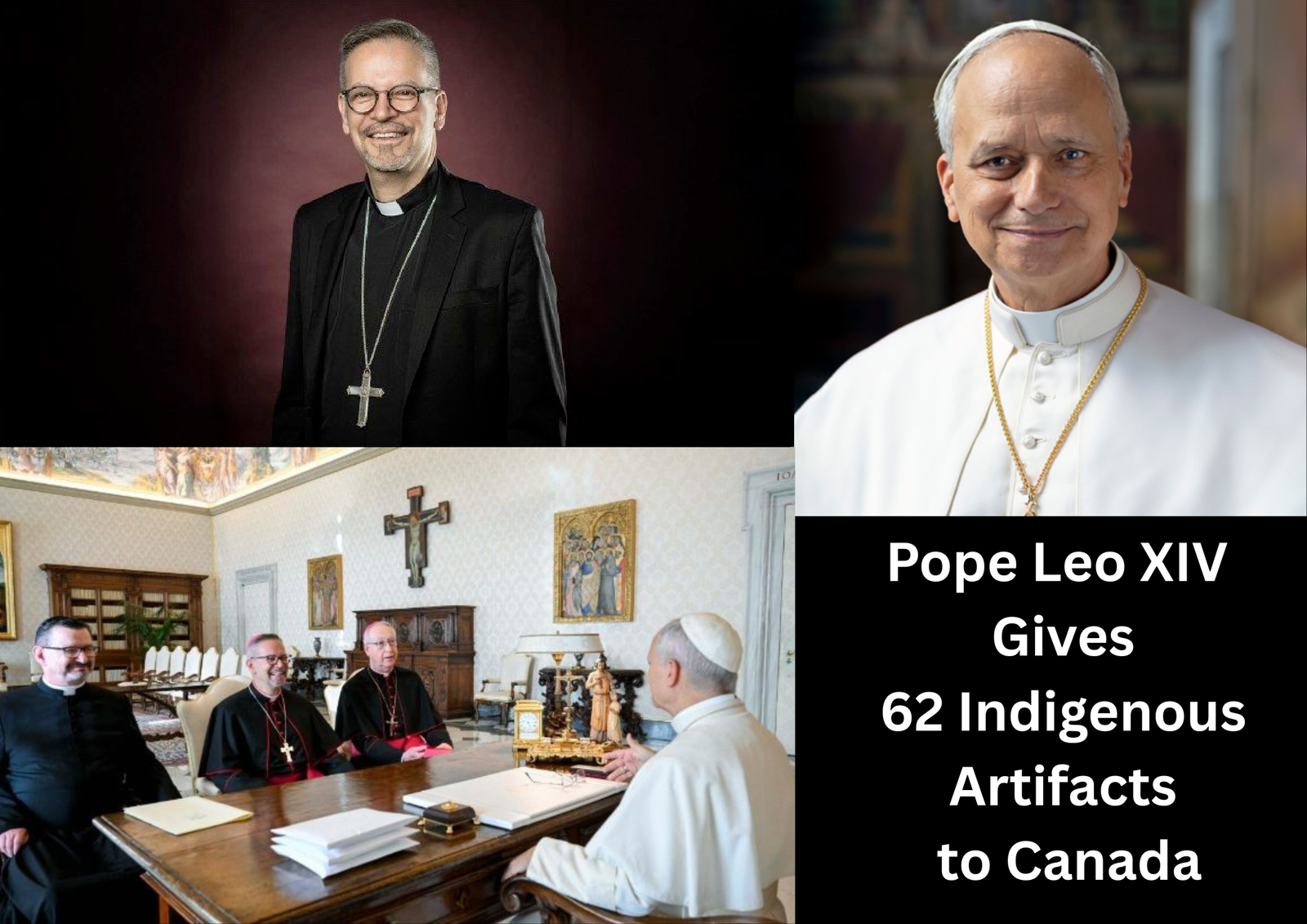
In a landmark moment for reconciliation efforts between the Catholic Church and Indigenous peoples, the Vatican has formally handed over 62 cultural artifacts to a Canadian delegation, marking one of the most significant repatriation events in the Church’s history.
The items had been stored for decades inside the Anima Mundi ethnographic museum, a Vatican institution known for housing cultural pieces from communities around the world. The return took place during a ceremony led by Pope Leo XIV, who emphasized that the objects represent far more than artistic craftsmanship. According to the Pope, the artifacts hold deep emotional, historical, and cultural meaning for First Nations, Métis, and Inuit communities across Canada.
A Diverse Collection With Deep Roots
The Pope officially presented the entire collection to the Canadian bishops, who will oversee the process of returning each artifact to the communities they originated from. Church officials in Canada, working alongside Indigenous representatives, are now developing a plan to ensure the repatriation is carried out respectfully and transparently.
Papal Message: “A Step Toward Healing”
During the ceremony, Pope Leo XIV described the return as a “concrete gesture of dialogue” and a meaningful step on the long road of reconciliation. He highlighted the emotional significance of the artifacts and expressed hope that this act would contribute to rebuilding trust between Indigenous peoples and the Church.
“These are treasures of memory and identity,” he said. “May their return help heal longstanding wounds and deepen our shared journey toward a more just and truthful relationship.”
Response From Canadian Leaders
Leading the Canadian delegation was Bishop Pierre Goudreault, president of the Canadian Conference of Catholic Bishops. He called the handover a “historic moment” that fulfills promises made during previous conversations between Church leaders and Indigenous communities, particularly following the 2022 apology delivered by Pope Francis during his visit to Canada.
Bishop Goudreault emphasized that the bishops are committed to ensuring the objects reach their rightful caretakers and that the process will take place in full collaboration with Indigenous leaders across the country.
A Follow-Through on Past Commitments
The repatriation is widely seen as an important extension of the reconciliation efforts sparked by Pope Francis’s apology for the Church’s involvement in the residential school system-an apology requested by Indigenous leaders for many years. During that visit, community members also raised concerns about cultural items held outside their homelands, urging the Vatican to return them.
This weekend’s ceremony represents one of the first large-scale responses to those calls.
Moving Forward
The Canadian Conference of Catholic Bishops is now coordinating with First Nations, Métis, and Inuit representatives to determine the best path for returning each item. The repatriation is expected to strengthen ongoing cultural renewal efforts, and many Indigenous leaders have expressed cautious optimism that this gesture signals a deeper shift in the Church’s approach to Indigenous rights and sovereignty.
As preparations begin for the physical transfer of the artifacts, the moment stands as a powerful symbol of acknowledgment-one that moves beyond words and into tangible action.