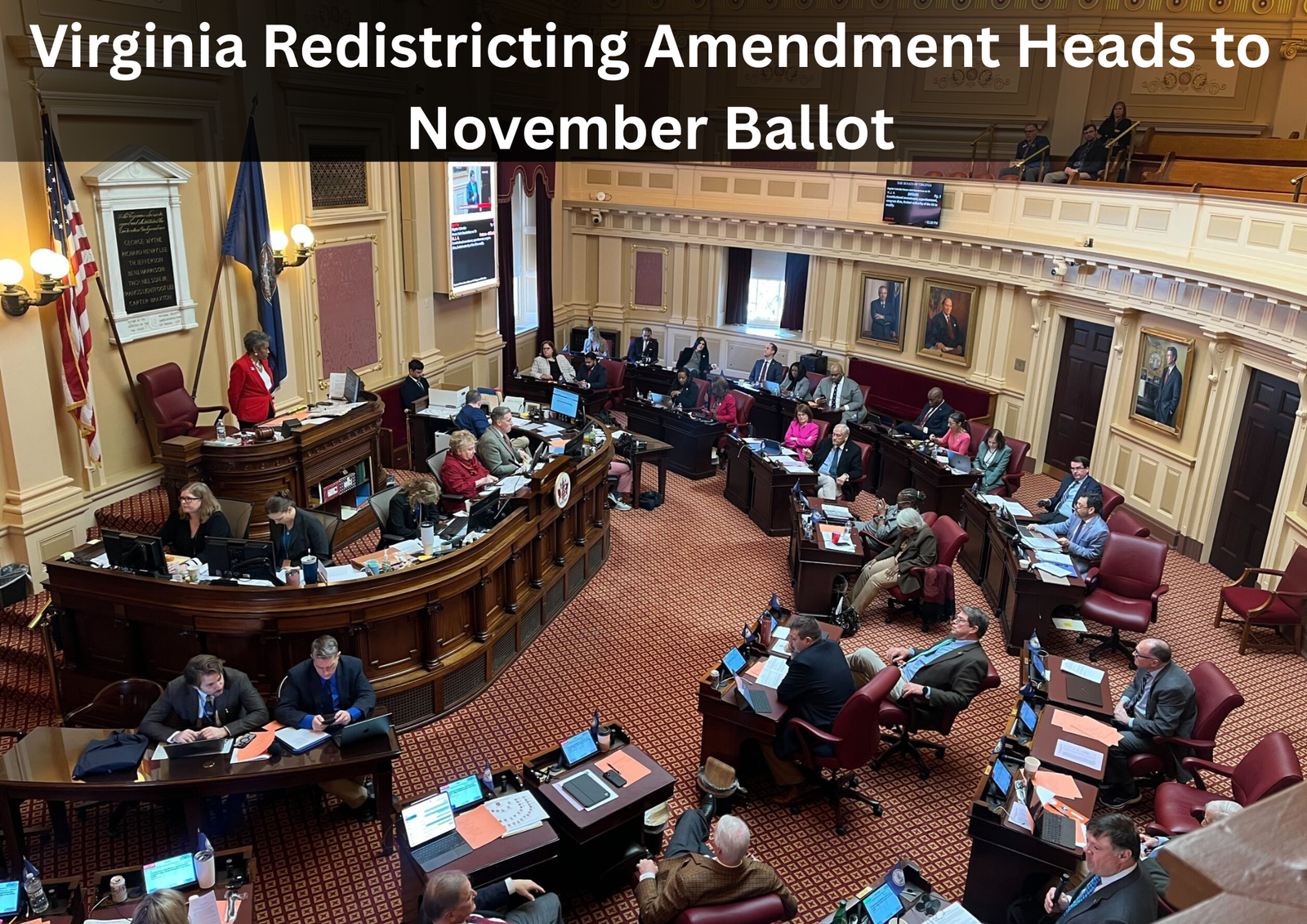
Virginia voters will decide this fall whether to overhaul how political boundaries are drawn in the Commonwealth after state lawmakers approved a constitutional amendment transferring much of the redistricting authority from the General Assembly to an independent commission.
The proposal cleared the Democratic-led House on a 62-33 vote. The measure now heads to the November 2026 ballot, where a statewide referendum will determine whether the new system becomes part of Virginia’s constitution.
How the New System Would Work
If approved, the amendment would create a 16-member redistricting commission consisting of eight citizens and eight legislators, with equal representation from Democrats and Republicans. For maps to advance, the commission would need a supermajority vote that includes support from at least six of the eight citizen members – a requirement designed to prevent lawmakers from dominating the process.
Currently, Virginia’s constitution grants full map-drawing power to the General Assembly. Supporters of the amendment argue the commission structure would limit partisan influence and give ordinary residents a more decisive role in the once-a-decade process that shapes congressional and legislative districts.
Division Among Democrats, Unified GOP Support
Republicans backed the measure unanimously, calling it a meaningful step toward reducing partisan gerrymandering ahead of the 2030 census. A number of Democrats supported the amendment as well, though a sizable bloc opposed it.
Democratic critics and several progressive organizations expressed concern that lawmakers would still play a role in appointing commissioners, leaving room for political maneuvering. They also warned that the amendment’s language could be interpreted in ways that weaken protections for communities of color or lead to deadlocks.
Reform advocates countered that the plan represents a substantial improvement compared to the current process and would ultimately put the final decision in voters’ hands.
What Happens If the Commission Deadlocks
Under the amendment, completed maps would be submitted to the General Assembly for an up-or-down vote. Lawmakers would not be permitted to amend the maps themselves. If the legislature rejects the commission’s proposals twice or the commission fails to advance maps, the Virginia Supreme Court would step in to implement final boundaries – a role it already assumes under current law in stalemates.
Voters Will Have the Final Say
The November referendum will determine whether the commission model becomes permanent. Should voters approve the amendment, the new framework would be used for the redistricting cycle that follows the 2030 U.S. Census.
If rejected, the General Assembly would retain control over drawing the state’s congressional and legislative districts.
“Justice Department Probes Minnesota Leaders Over Alleged Interference with Federal Agents” – a must-read for anyone following the latest political and legal developments; check out this blog for full insights.