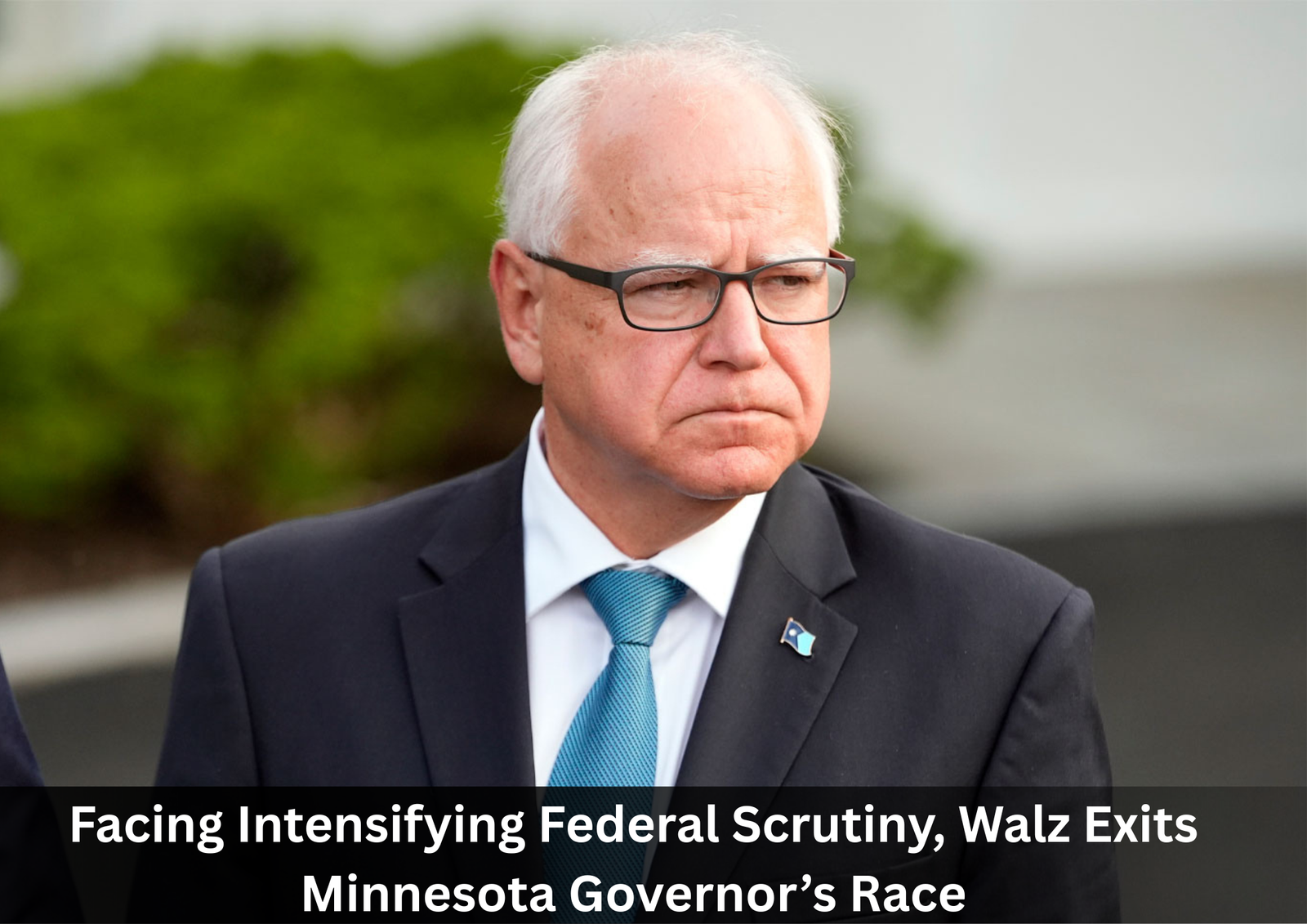
Minnesota Governor Tim Walz has announced that he will not seek a third term in office, citing escalating federal pressure linked to a wide-ranging fraud investigation involving state-administered social service programs. The decision marks a major political shift as tensions grow between state leadership and the federal government.
Speaking publicly for the first time since ending his re-election campaign, Walz said the move was made to shield Minnesota residents from what he described as mounting federal retaliation. While stepping away from the race, the governor emphasized his intention to complete his current term and remain active in governing until its conclusion next year.
The controversy stems from a federal investigation into alleged misuse of funds across multiple Minnesota safety-net initiatives, including pandemic-era programs intended to provide food assistance to children. Prosecutors estimate that billions of dollars may have been improperly obtained through fraudulent claims. Although the probe began several years ago, it has recently drawn heightened national attention.
In recent months, the White House has sharply criticized Minnesota’s oversight of these programs. Several federal agencies have warned of potential funding reductions, and immigration enforcement actions have increased within the state. Additionally, congressional Republicans have scheduled hearings related to the case and requested that Walz testify.
Despite the pressure, Walz has denied any personal involvement in the alleged misconduct. At a recent event unveiling a statewide paid family and medical leave initiative, he portrayed himself as energized rather than deterred. He stated that no evidence has emerged linking him directly to the fraud under investigation and reaffirmed his commitment to strengthening accountability measures.
President Donald Trump, however, welcomed the governor’s withdrawal from the race and escalated his criticism. In a public statement, Trump accused Walz and other Democratic leaders of allowing massive losses of taxpayer funds, asserting that political accountability alone was insufficient.
White House officials later suggested that the governor’s exit from the election does not resolve the matter. Administration representatives indicated that federal authorities may continue examining potential legal responsibility connected to the scandal.
Political analysts note that while the fraud allegations themselves are serious and well-documented, the renewed focus on Walz has reignited debate over whether the issue is being leveraged for broader political objectives. The investigation received limited national attention during previous election cycles, including when Walz appeared on the national ticket.
As his final year in office unfolds, Walz has pledged to prioritize reforms aimed at tightening oversight of public assistance programs and restoring confidence in state management. The coming months are expected to be contentious as Minnesota navigates the intersection of governance, federal scrutiny, and political fallout.
Five years on, January 6 remains a battleground of memory and power-read this blog to understand how narratives, politics, and public memory continue to clash around that defining moment in history.