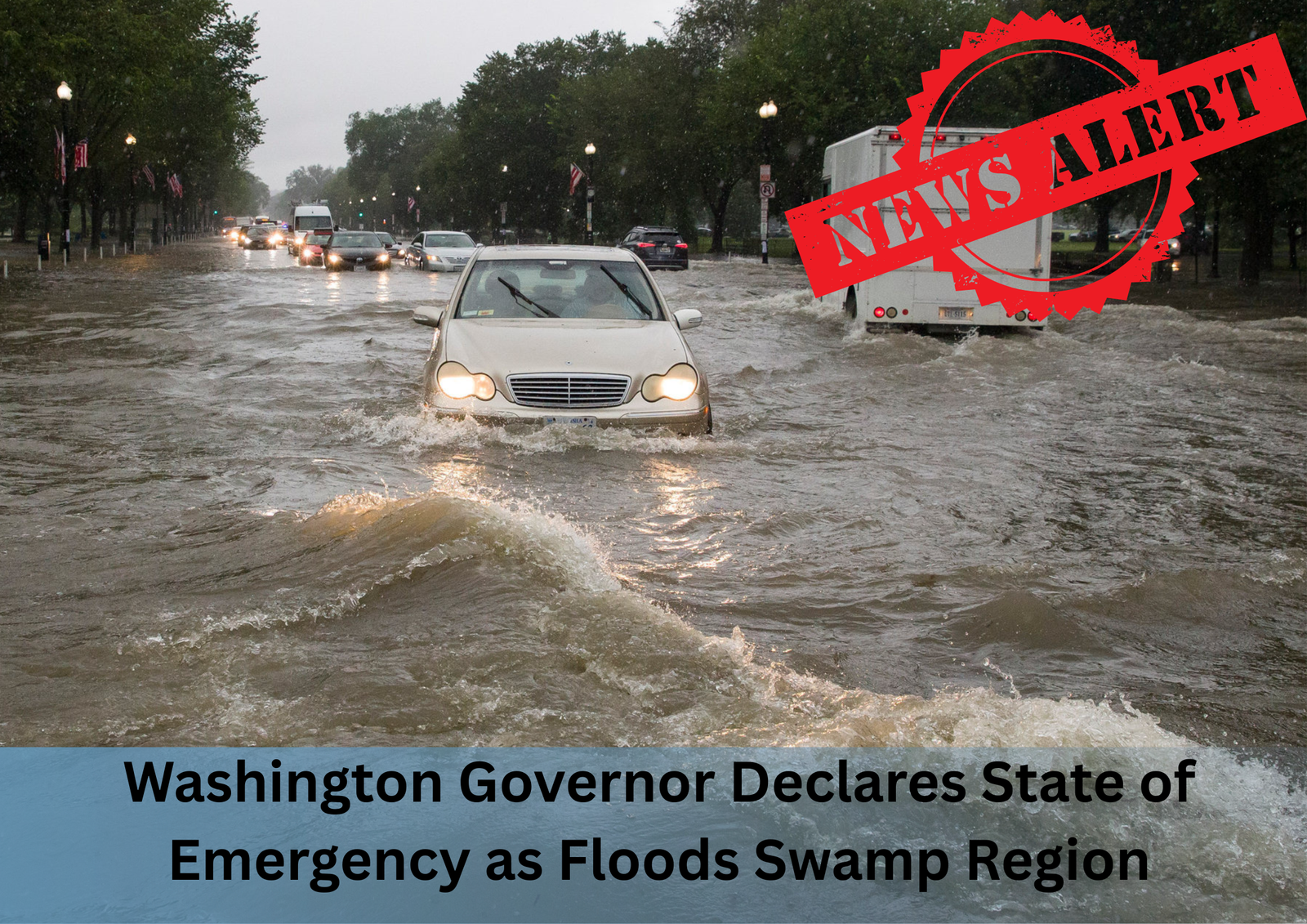
Washington Governor Bob Ferguson issued a statewide emergency declaration late Wednesday as two powerful atmospheric river systems drenched the Pacific Northwest, pushing rivers to record-breaking levels and forcing tens of thousands of residents to flee to higher ground. Meteorologists warned that the current surge of rainfall could eclipse the notorious 1990 floods, which caused massive damage and widespread evacuations across the region.
State emergency officials reported that 17 major rivers were expected to overflow, with peak rainfall arriving overnight. Robert Ezelle, head of Washington’s Emergency Management Division, said the situation is escalating rapidly, cautioning that as many as 75,000 people in Skagit County alone may be required to evacuate. Forecasts show the Skagit River nearing unprecedented crests at both Concrete and Mount Vernon between Thursday and Friday morning.
To bolster local response efforts, Ferguson activated the Washington National Guard. Roughly 100 troops were deployed to Marysville, with another 200 mobilizing from Kent to assist communities in Skagit, Whatcom, and Snohomish counties-areas most vulnerable to catastrophic inundation.
Evacuation orders swept across multiple jurisdictions Wednesday evening. Skagit County directed all residents living within the FEMA-designated 100-year floodplain-encompassing Hamilton, Marblemount, Rockport, Concrete, and large portions of Mount Vernon-to leave immediately. Farther north, the Nooksack River surged toward major flood stage, prompting the cities of Sumas and Everson to urge residents to evacuate as well. The Lummi Nation announced its own emergency declaration after floodwaters cut off nearly all access roads.
Washington has also requested a federal emergency declaration to unlock national resources, including air support and additional personnel. The outcome remains uncertain, particularly after the Trump administration rejected a similar request earlier this year tied to a 2024 bomb cyclone. FEMA, however, has already positioned coordination teams in Bothell to support the state’s efforts.
The flooding has triggered widespread disruptions across western Washington. Skagit County closed all non-essential government services, including its courts. Amtrak halted passenger rail service between Seattle and Vancouver, British Columbia, through December 12. Local businesses scrambled to protect property-Mount Vernon shop owner Gabriel Mercado spent the day stacking sandbags as water crept toward storefronts. Emergency shelters opened in churches, community centers, and at Skagit Speedway, though officials warned that available space would fall far short of demand if evacuation numbers climb.
State climatologist Guillaume Mauger said the extraordinary conditions stem from the combined effect of two large, moisture-laden storm systems arriving in rapid succession. He noted that while neither storm produced record rainfall on its own, their timing overwhelmed natural drainage systems. Mauger also pointed to long-term climate trends, explaining that warmer atmospheric conditions are increasing the intensity and frequency of extreme floods. According to his projections, major Skagit River floods once considered “once-in-a-century” events could occur four times as often by the 2040s.
Additional concerns emerged throughout the region. The Samish River approached hazardous flow rates near Burlington, Hovander Homestead Park in Ferndale was forced to close, and emergency officials issued a flash-flood watch for Skagit County through Saturday due to risk of levee breaks. Swift water rescue teams were dispatched to monitor hospitals, long-term care facilities, and county jails at risk of rapid flooding.
Localized power outages affected hundreds of residents in Bellingham, while community services such as the Nooksack Valley Food Bank temporarily shut down operations in Everson and Sumas.
Speaking from the Emergency Operations Center at Camp Murray, Governor Ferguson warned that the worst impacts may still be ahead. “The next few days will test our state’s resilience,” he said. “Lives are at stake, and our priority is getting people to safety.”Meteorologist Samuel Bartlett of UC San Diego classified the storm as an AR5 atmospheric river, placing it among the most intense weather events the region has experienced in more than six decades.