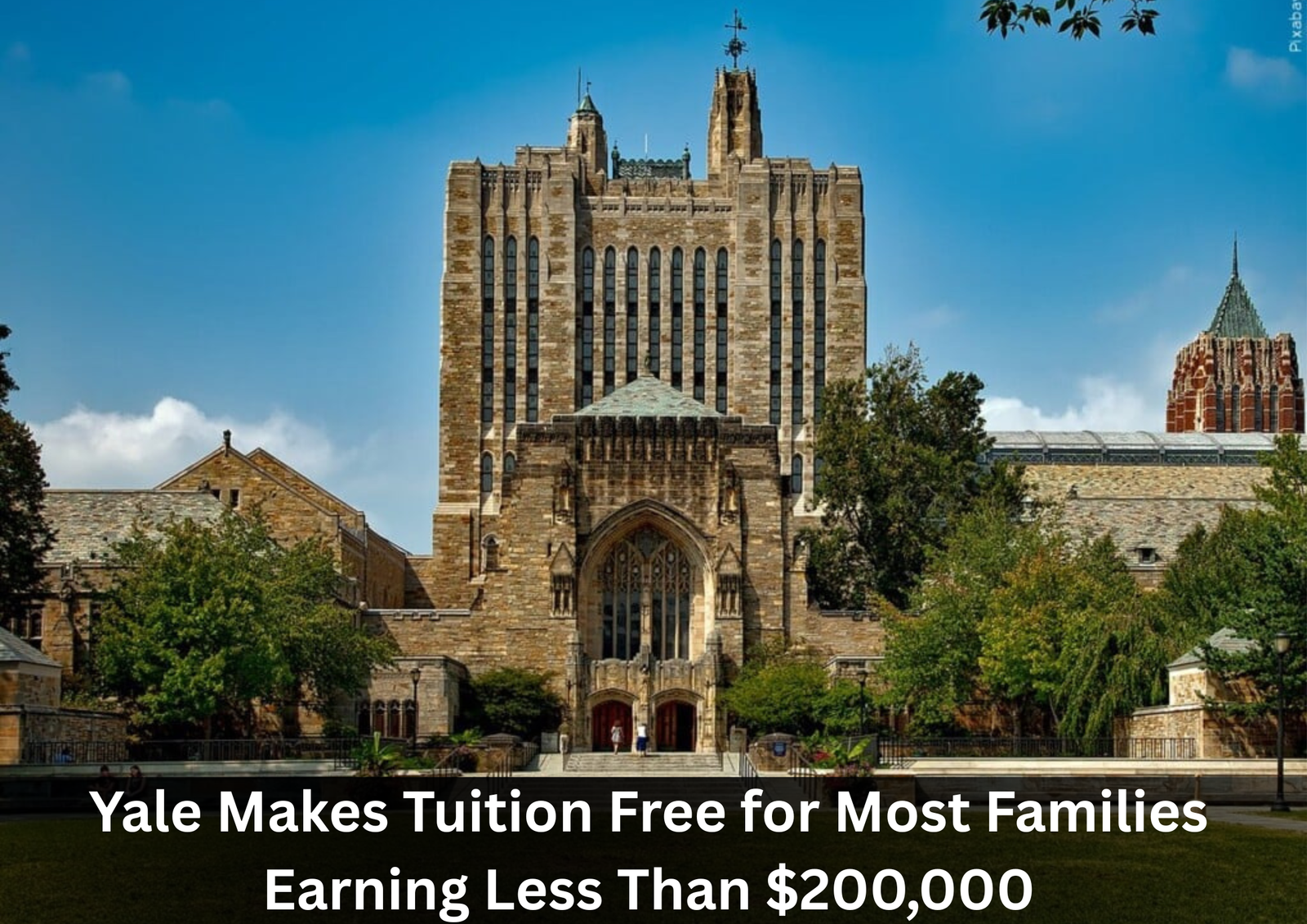
Yale University announced a major expansion of its undergraduate financial aid program on Tuesday, significantly widening access to one of the nation’s most prestigious institutions by eliminating tuition costs for many families.
Under the new policy, students admitted for the 2026–2027 academic year whose families earn less than $200,000 annually will no longer be charged tuition. For families with incomes below $100,000 and typical assets, Yale will cover the entire cost of attendance, removing all expected parental financial contribution.
University officials said the changes are designed to ensure that financial barriers do not prevent qualified students from attending Yale. The expanded aid package includes tuition, housing, meals, estimated travel expenses, hospitalization insurance, and a $2,000 start-up grant for books and academic supplies for students qualifying for full support.
Previously, Yale’s “zero parent share” financial aid threshold was set at $75,000, an increase from $65,000 in 2020. By raising the limit to $100,000 and extending tuition-free access up to $200,000 in household income, Yale expects a substantial rise in the number of students eligible for assistance.
According to the university, nearly half of American households with school-aged children fall below the $100,000 income threshold, meaning a significant portion of families could qualify for a fully funded Yale education. With the higher tuition waiver limit, more than 80 percent of U.S. households would be eligible for at least partial scholarship support.
Currently, more than 1,000 Yale College students receive financial aid that requires no parental contribution, and approximately 56 percent of undergraduates qualify for need-based assistance. The average grant awarded already exceeds the annual cost of tuition, university data shows.
Dean of Undergraduate Admissions and Financial Aid Jeremiah Quinlan said the expansion reflects Yale’s long-standing commitment to affordability. He emphasized that the university aims to ensure that talented students are not discouraged from applying due to financial concerns.
Additional support programs for low-income students will remain in place, including grants for winter clothing, international summer programs, and assistance during unexpected financial hardships. Yale College Dean Pericles Lewis noted that the university has practiced need-blind admissions for more than six decades, evaluating applicants without considering their ability to pay.
Yale’s move aligns with similar announcements from other elite institutions such as Harvard, Princeton, the University of Pennsylvania, and the Massachusetts Institute of Technology, all of which have recently broadened financial aid eligibility. Education analysts say the trend reflects a growing emphasis on socioeconomic diversity in higher education.
To improve transparency around college costs, Yale continues to offer online tools that allow families to estimate financial aid eligibility quickly. Despite the expanded assistance, the full published cost of attending Yale now exceeds $90,000 per year, underscoring the growing importance of financial aid programs at private universities.
With this latest announcement, Yale positions itself among a small group of institutions seeking to redefine affordability at the highest levels of American higher education.
For deeper context and verified details on the “Man Wounded in Gunfire Exchange With Border Patrol Near Arizona Border”, read the full report-this blog explains what happened and why it matters.