
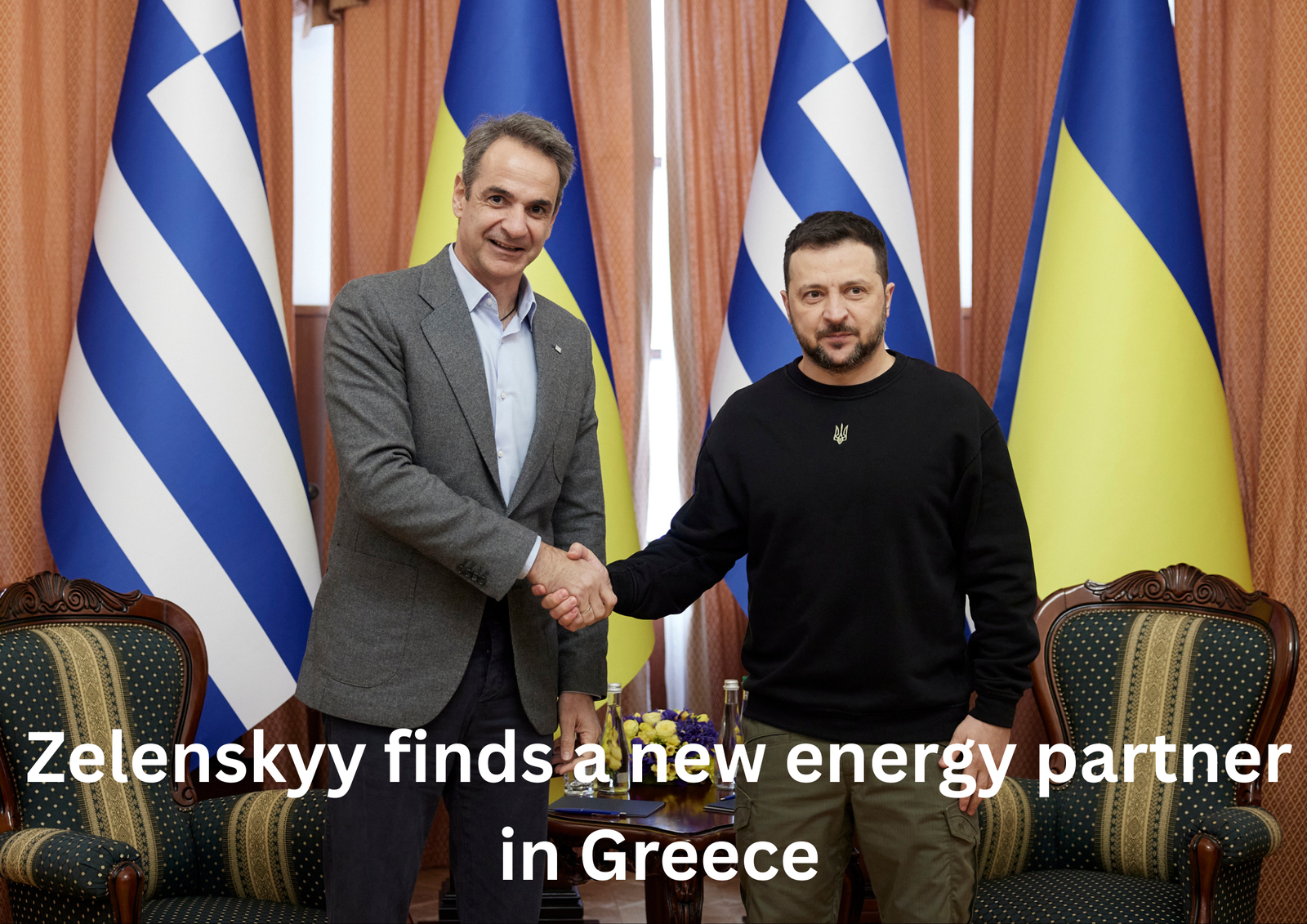
Greece has entered into a landmark agreement to supply liquefied natural gas (LNG) to Ukraine, marking the first time a European Union nation has formally adopted a new U.S.-supported energy cooperation framework. The deal was concluded during Ukrainian President Volodymyr Zelenskyy’s official trip to Athens, where he met with Greek Prime Minister Kyriakos Mitsotakis to discuss Europe’s shifting energy landscape.
Under the agreement, Greece will play a central role in facilitating LNG deliveries to Ukraine to ensure uninterrupted energy supplies during the approaching winter season. With Ukraine’s critical infrastructure repeatedly targeted in recent months, securing reliable fuel sources has become a top priority for Kyiv. Ukrainian officials have warned that the coming winter could be “challenging,” citing the heavy damage sustained by nearly half of the country’s power-generating capacity.
The partnership is part of a broader initiative supported by the United States, aimed at reducing Europe’s vulnerability to energy disruptions and promoting diversified supply routes across the continent. By joining this framework, Greece positions itself as a key transit hub for LNG flows into Eastern Europe-a role that aligns with its long-term strategy of expanding its energy infrastructure and maritime capabilities.
Prime Minister Mitsotakis emphasized that the agreement goes beyond bilateral cooperation, describing it as a step toward strengthening collective European energy security. Greek LNG terminals, including facilities on the Revithoussa and Alexandroupolis sites, are expected to handle and route shipments toward Ukraine through neighboring countries.
President Zelenskyy praised the initiative, noting that consistent energy deliveries will help Ukraine stabilize its grid and maintain essential services amid ongoing conflict. He highlighted that every additional supply route reduces the pressure created by targeted strikes on energy systems and improves the country’s ability to protect civilians throughout the winter months.
Energy analysts say the deal could set a precedent for other European nations to join the U.S.-facilitated framework, potentially reshaping regional energy cooperation. As Europe continues to adjust to new geopolitical realities, partnerships like the Greece-Ukraine agreement are seen as critical for ensuring long-term stability and reducing over-reliance on any single supplier.
The signing marks a significant milestone for both nations: for Greece, an opportunity to strengthen its role in Europe’s energy network, and for Ukraine, an essential lifeline at a time of persistent infrastructure challenges and harsh seasonal conditions.


