

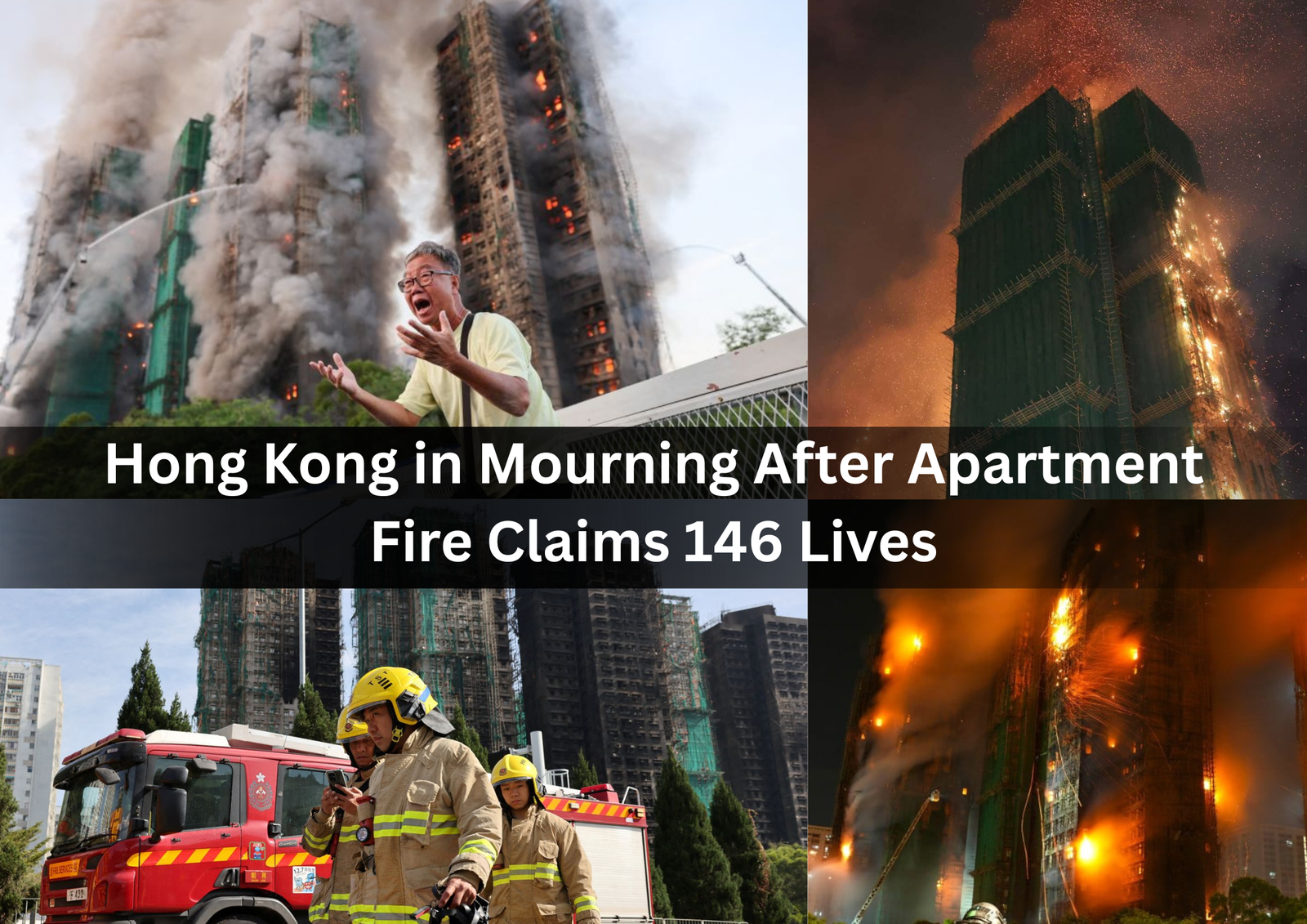
A catastrophic blaze that tore through a mixed-use high-rise in Hong Kong’s Yau Ma Tei district has claimed 146 lives, marking one of the most devastating urban disasters the city has experienced in decades. As emergency crews continue combing through the damaged structure, Hong Kong has entered a solemn period of mourning and renewed debate about the city’s longstanding housing risks and tightened political environment.
The fire erupted late Monday in a densely populated building that contained residential units, small businesses, and a large number of subdivided flats – cramped rooms created by partitioning larger apartments, often lacking proper ventilation or clearly marked escape routes. Firefighters battled the inferno through the night, eventually reaching upper floors where many victims were found in heavily charred, confined living spaces.
Residents in nearby streets gathered throughout Tuesday, placing flowers and lighting candles along barricades set up near the scene. The overwhelming loss prompted Chief Executive John Lee to order flags flown at half-mast and suspend non-essential government events as the city reflects on the scale of the tragedy.
The disaster has also intensified scrutiny of Hong Kong’s housing conditions. Tens of thousands of low-income residents live in subdivided units, a consequence of soaring property prices and severe space limitations. Safety inspectors have long warned that such units pose elevated fire risks, yet meaningful reform has been slow due to complicated building ownership structures and a growing demand for affordable housing.
Authorities have announced a city-wide inspection campaign targeting buildings known to contain subdivided flats. Lee pledged a full investigation into the cause of the fire and promised legal action should any building code violations be uncovered.
Beyond safety issues, the incident has unfolded under Hong Kong’s increasingly centralized governance system. Since Beijing’s implementation of a national security law in 2020, crisis response protocols require closer coordination with mainland authorities. Analysts note that the need for top-down approval can slow communication and complicate emergency decision-making, particularly in fast-developing situations.
The devastating fire has laid bare two of Hong Kong’s most persistent challenges: deep social inequality and a political landscape shaped by tight oversight from Beijing. As families mourn and investigators piece together what went wrong, the tragedy stands as a stark reminder of the human cost of systemic urban and governance problems still awaiting solutions.