

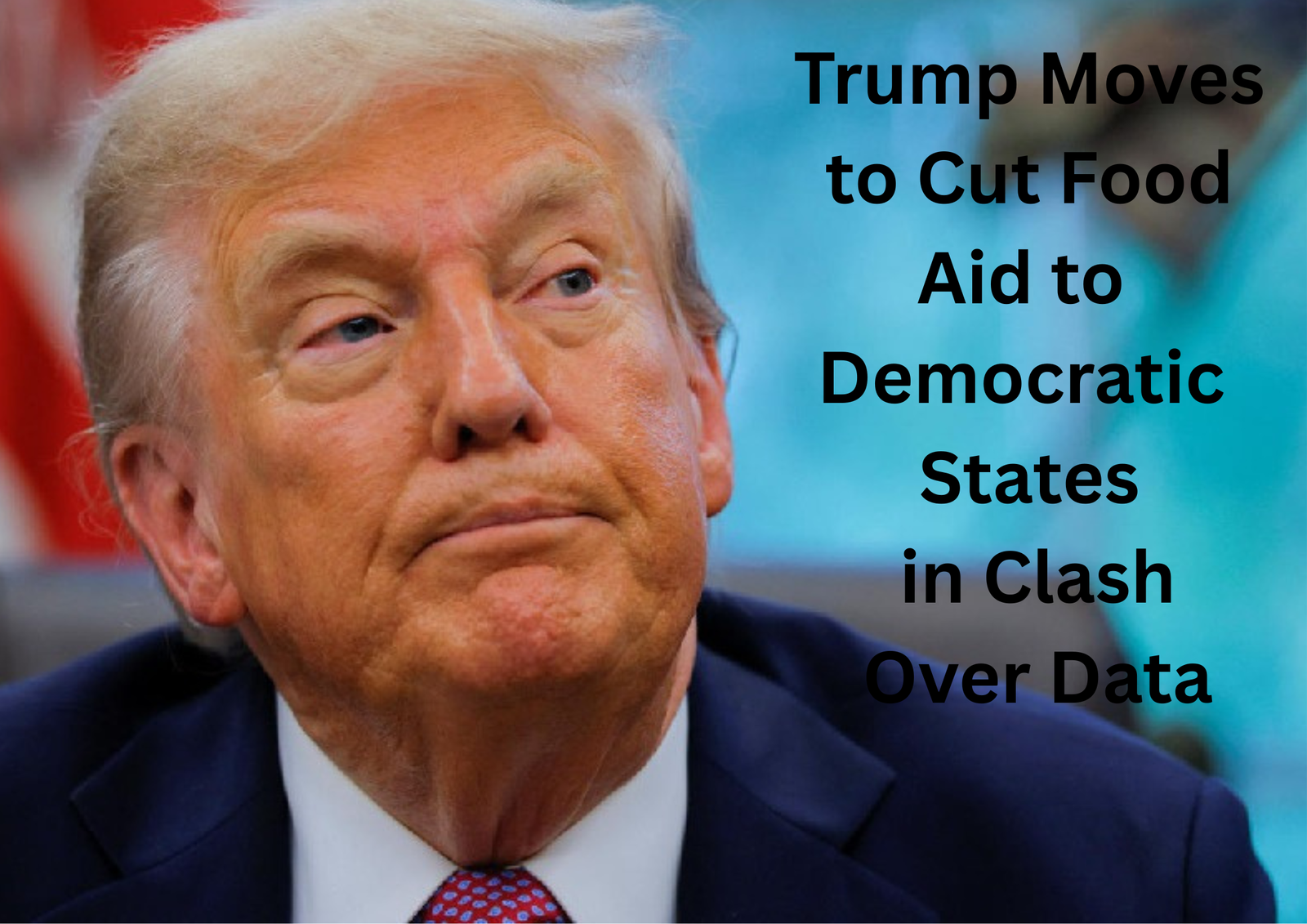
The Trump administration has opened a new front in its long-running battle with Democratic-led states, warning that billions of dollars tied to the Supplemental Nutrition Assistance Program (SNAP) could be withheld unless state officials agree to share immigration-related information with federal authorities.
According to federal letters sent to California, New York State, New York City, and several other jurisdictions, the U.S. Department of Agriculture argues that current “sanctuary” policies block access to data needed to verify the immigration status of certain benefit recipients. Officials contend that these restrictions violate provisions of a welfare reform law requiring states to assist the federal government in determining non-citizen eligibility for public benefits.
The warnings put enormous sums at stake. California alone-home to one of the nation’s largest SNAP caseloads-could see billions in administrative funding placed at risk. New York officials were also told that a portion of their federal support may be suspended if access to immigration-related information is not restored. While the letters outline expected compliance, they do not provide a uniform deadline, leaving states to navigate ambiguous timelines while preparing for potential legal battles.
State leaders have responded with sharp criticism. Governors and mayors in the affected regions called the move an unjustified attempt to pressure local governments into enforcing federal immigration policy. They maintain that their sanctuary laws are lawful, carefully designed to foster trust between immigrant communities and local authorities, and do not impede federally mandated benefit reviews. Attorneys for multiple states have already signaled plans to challenge the administration’s interpretation of the statute.
The White House, however, insists the action is necessary to protect taxpayer resources and close what it characterizes as enforcement gaps created by sanctuary rules. Senior officials maintain that the federal government cannot accurately confirm eligibility without access to immigration status information, and that failing to act would undermine program integrity.
The latest standoff intensifies an already fraught national debate over immigration enforcement, state autonomy, and public assistance programs. With billions of dollars and millions of households potentially affected, the dispute is expected to trigger court rulings that could reshape the balance of power between federal agencies and local governments.
For now, states are bracing for a high-stakes confrontation that could determine not only how SNAP is administered, but also how far Washington can go in compelling local participation in immigration enforcement.