
After years of conflict and global debate, Syria now stands at a critical crossroads following the collapse of its long-standing ruling structure. While the removal of President Bashar al-Assad marked a dramatic turning point, the country’s future remains deeply uncertain as political, economic, and humanitarian pressures continue to shape the nation’s fragile transition.
Shifting Global Strategy and U.S. Policy
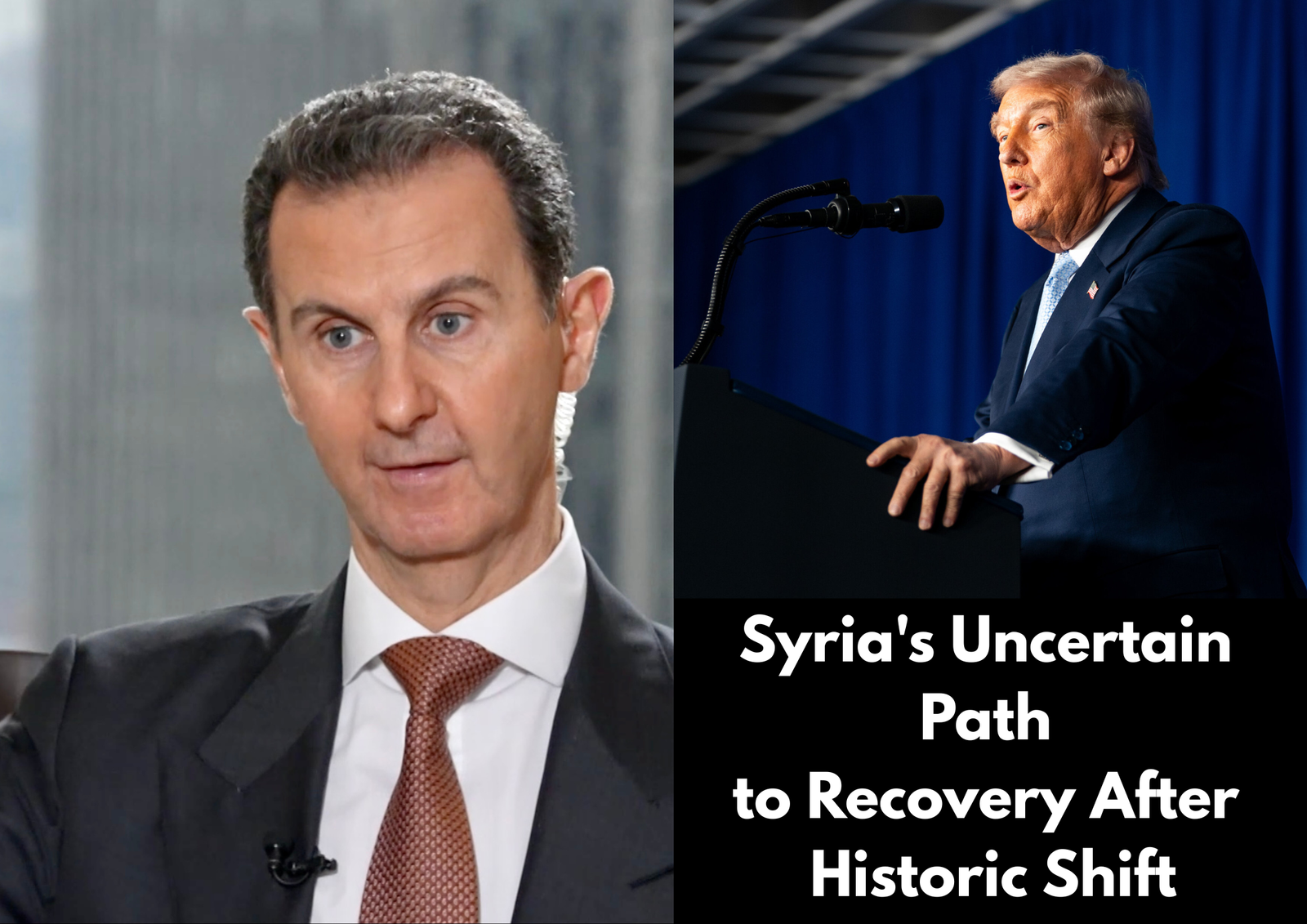
Newly surfaced reports reveal that during the presidency of Donald Trump, U.S. policymakers began reassessing their approach toward Syria. Internal discussions reportedly framed Assad not only as a dominant force within the conflict but also as a possible strategic partner in countering extremist groups operating across the region.
This recalibration led to a quieter shift away from earlier U.S. demands that Assad step down as a condition for diplomatic engagement. Officials at the time appeared to conclude that his grip on power had strengthened enough to make cooperation more practical than confrontation, particularly in counter-terrorism operations. The change represented a significant departure from years of official U.S. policy that had pushed for political transition in Damascus.
Political Landscape After the Power Collapse
One year after the fall of the former government, Syria is still grappling with the enormous challenge of rebuilding both institutions and trust. Analysts note that the absence of centralized authority has created political vacuum zones, with local leaders, armed groups, and international stakeholders competing for influence.
Efforts to form an inclusive national government continue, but progress remains slow. While preliminary talks have taken place among various political factions, disagreements over power-sharing, foreign presence, and security control have stalled meaningful breakthroughs. Observers warn that without a unified political framework, long-term stability will remain elusive.
Economic Strain and Humanitarian Crisis
Beyond politics, the country’s economic condition remains dire. Years of infrastructure damage have crippled transportation, electricity, healthcare, and housing systems across vast regions. Investors remain hesitant, and reconstruction efforts are advancing unevenly due to ongoing security risks and funding shortfalls.
Meanwhile, millions of displaced Syrians are still unable to return home safely. Aid organizations report that access to clean water, medical treatment, and stable food supplies remains limited in many communities. The slow pace of rebuilding has added to public frustration, particularly among younger generations seeking employment and normalcy.
A Nation Still in Transition
Although the removal of an authoritarian system once considered a signal of possible renewal, experts caution that political change alone does not guarantee recovery. The security environment remains unpredictable, with several armed factions continuing to operate independently of any national authority. Regional rivalries and international interests further complicate Syria’s path forward.
One year on, Syria’s transformation remains incomplete. While the era of centralized control has ended, the struggle to define what comes next continues. The coming months will likely determine whether the country can move toward lasting peace-or remain trapped in prolonged instability shaped by both internal divisions and external pressures.