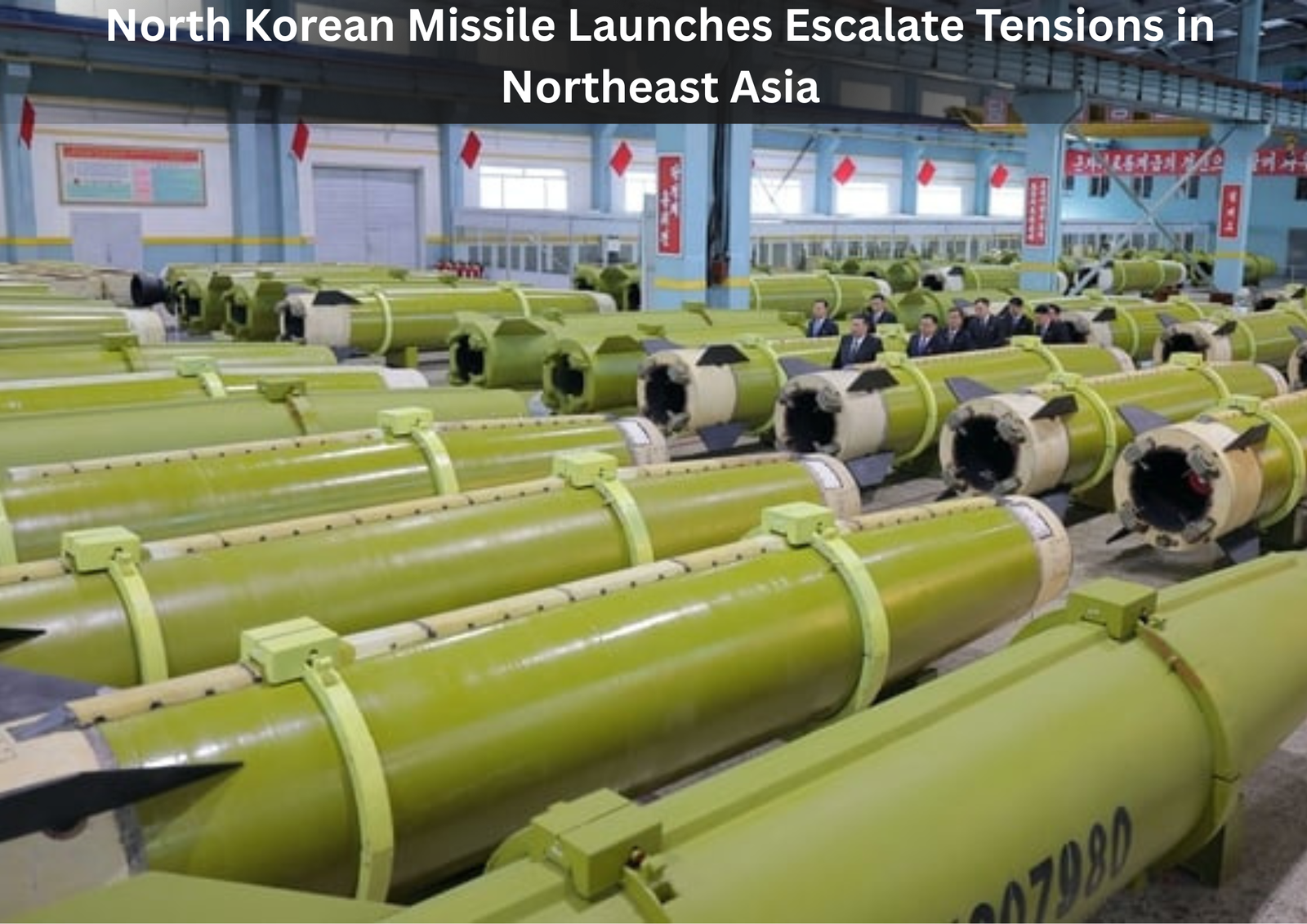
North Korea has escalated regional tensions after launching several ballistic missiles toward waters east of the Korean Peninsula, prompting strong reactions from neighboring countries and renewed international concern over stability in Northeast Asia. The missile activity, confirmed by multiple governments, marks Pyongyang’s first known weapons test of the year and comes amid delicate diplomatic engagements involving major regional powers.
According to South Korea’s military, the missiles were fired early Friday morning from an area near the North Korean capital. Defense officials reported that the projectiles traveled hundreds of kilometers before splashing down in the East Sea, a body of water also known internationally as the Sea of Japan. The launches were detected by regional monitoring systems, triggering immediate alerts in both South Korea and Japan.
Timing Raises Diplomatic Concerns
The missile launches occurred at a politically sensitive moment, as senior leaders from South Korea, Japan, and China were engaged in high-level diplomatic talks in China. Analysts say the timing may have been intentional, signaling North Korea’s intent to assert its presence during discussions that often include regional security and nuclear non-proliferation.
South Korean officials stated that the President was briefed shortly after the launches were detected. Despite the provocation, his office indicated that scheduled diplomatic engagements would continue, while defense authorities were instructed to maintain heightened readiness and coordination with allies.
Japan and U.S. Respond Swiftly
Japan’s government confirmed that the missiles landed outside its Exclusive Economic Zone, reducing the immediate risk to civilian maritime traffic. Nevertheless, Japanese leaders condemned the launches, calling them a violation of international norms and United Nations resolutions that prohibit North Korea from testing ballistic missile technology.
In Washington, the U.S. Indo-Pacific Command released a statement acknowledging the missile activity. While noting that the launches did not pose an immediate threat to U.S. personnel or territory, the command described the tests as destabilizing and reaffirmed U.S. security commitments to its allies in the region.
Military Implications Under Scrutiny
Defense experts have pointed out that the missiles appeared to follow a steep trajectory, a detail that could suggest testing of advanced capabilities rather than long-range reach. Such launch patterns are often associated with efforts to improve maneuverability or evade missile defense systems, though no official confirmation has been provided.
South Korea’s Joint Chiefs of Staff stated that intelligence agencies are continuing to analyze flight data to better understand the missiles’ technical characteristics. Surveillance and reconnaissance activities have reportedly been intensified along the peninsula as a precaution.
Silence From Pyongyang
As of Sunday, North Korean state media had not released any official statement regarding the missile launches. This silence is not uncommon following weapons tests, as Pyongyang often delays public acknowledgment or frames such actions later as routine military exercises or defensive measures.
The lack of commentary, however, has done little to ease concerns among regional governments. International observers warn that continued testing risks further isolating North Korea diplomatically and increasing the likelihood of miscalculation in an already tense security environment.
Broader Regional Impact
The latest launches underscore the ongoing challenges facing diplomatic efforts aimed at reducing tensions on the Korean Peninsula. Despite years of sanctions and intermittent talks, North Korea’s weapons programs remain a central issue for policymakers in East Asia and beyond.
Security analysts note that missile tests not only strain inter-Korean relations but also complicate cooperation among neighboring countries seeking stability and economic growth. With regional leaders emphasizing dialogue and crisis management, provocations of this nature highlight the fragile balance between diplomacy and deterrence.
As governments continue to assess the implications of the launches, attention now turns to whether additional tests may follow and how the international community will respond in the coming weeks. For now, heightened vigilance remains the norm across Northeast Asia as uncertainty persists over North Korea’s next move.
For a detailed breakdown of Caribbean Air Travel Disrupted After U.S. Security Action in Venezuela, readers are strongly encouraged to explore this blog for full context and verified updates.