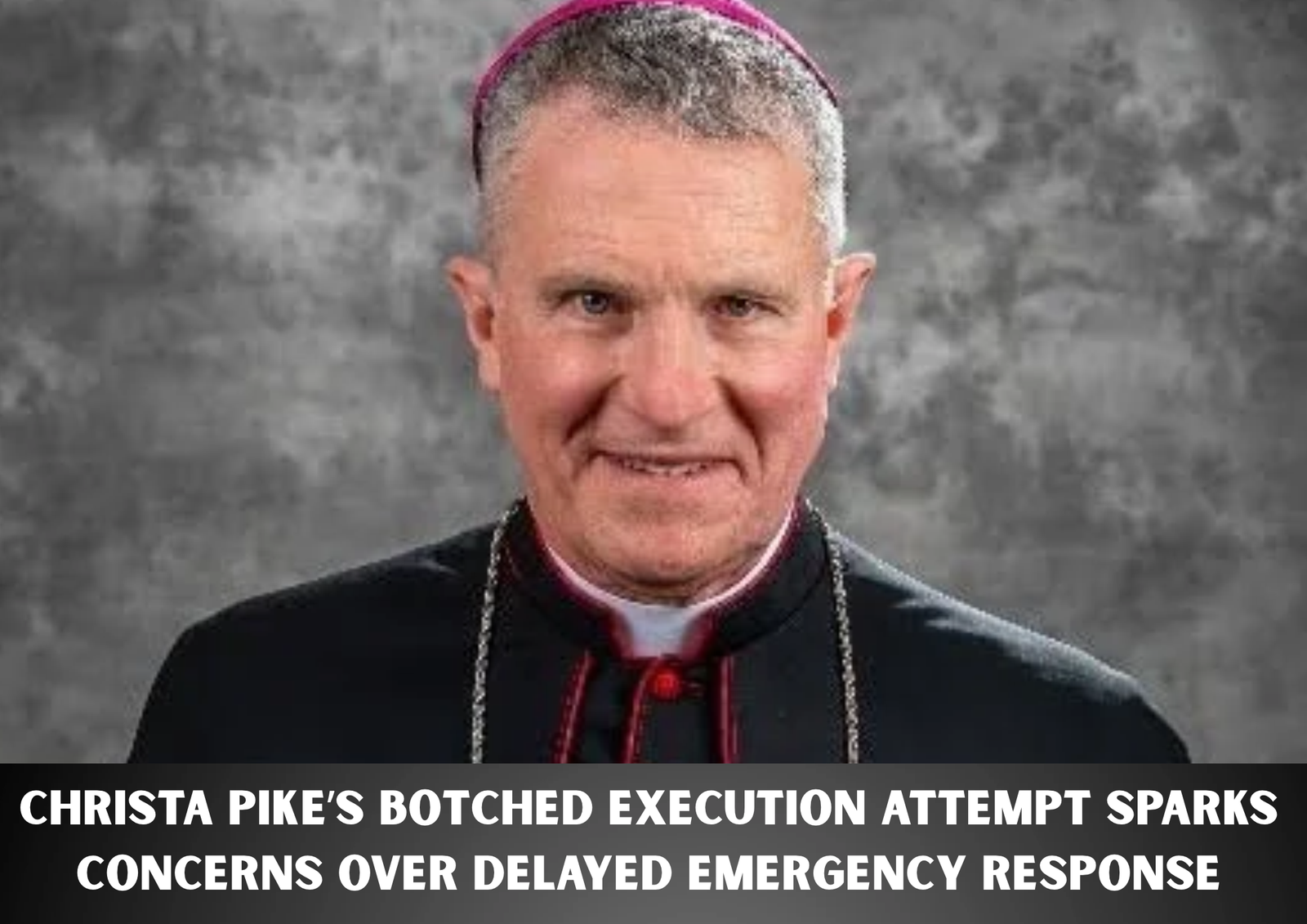
A growing controversy has emerged in the United States over plans to publicly broadcast the military execution of former Army Major Nidal Hasan, convicted in connection with the deadly 2009 Fort Hood shooting. Archbishop Timothy Broglio, who leads the Catholic Church’s military archdiocese in the United States, has urged Catholic service members assigned to the firing squad to seek exemption, arguing that participating in the execution would conflict with Church teachings.
The dispute has intensified debate over capital punishment, military responsibility, religious conscience and the government’s proposal to turn an execution into a publicly televised event.
Archbishop Raises Religious and Moral Objections
In a statement issued on Monday, October 12, Broglio strongly objected to the proposed execution arrangements. He called on Catholic military personnel assigned to the firing squad to request that they be excused from the duty.
His position reflects the Catholic Church’s opposition to the death penalty and its emphasis on the dignity of human life. The archbishop also questioned whether broadcasting a state-sanctioned killing would set an appropriate example for the public.
Broglio expressed concern that presenting an execution as a public spectacle could undermine the moral principles the military is expected to uphold. He also questioned whether such a broadcast could damage the reputation of the US armed forces internationally.
The issue places Catholic service members in a difficult position, balancing their military obligations with religious beliefs and personal conscience.
Why the Planned Execution Has Become Controversial
The controversy follows an announcement by US Defense Secretary Pete Hegseth that the government intends to carry out Hasan’s execution by firing squad on December 3, with plans to make the event available through a livestream.
Hegseth has defended the idea of making the execution public, suggesting that allowing people to witness the punishment could deter similar crimes by demonstrating the consequences of mass violence.
However, critics question whether broadcasting a person’s death would genuinely prevent future attacks. They argue that a public execution could instead encourage sensationalism, expose viewers to disturbing imagery and provide extremist groups with material for propaganda.
The proposal has also raised questions about whether a government should use the death of a convicted criminal as a public lesson when the consequences of such a broadcast could extend far beyond its intended audience.
Nidal Hasan Case Dates Back to 2009
Nidal Hasan, now 56, was an Army psychiatrist when he carried out the deadly shooting at Fort Hood, Texas, in November 2009. The attack killed 13 people and wounded 32 others, leaving a lasting impact on military personnel, victims’ families and the wider American public.
Hasan was shot by police during the attack and survived, but he was left using a wheelchair. His planned execution, scheduled more than 17 years after the incident, has renewed discussion about the purpose and limits of capital punishment.
The proposed firing squad execution is particularly significant because military executions of this kind are extremely rare in modern American history. The last US military execution by firing squad took place in 1945, when Army Private Eddie Slovik was executed after being convicted of desertion.
Other Religious Leaders Join the Opposition
Broglio is not the only prominent Catholic leader to criticize the plan. Cardinal Blase Cupich, the archbishop of Chicago, has also condemned the proposed livestream, raising concerns about the consequences of exposing children and other viewers to a publicly broadcast killing.
Pope Leo has separately reiterated the Catholic Church’s opposition to capital punishment, stating that justice and public safety can be protected through effective detention systems without completely removing the possibility of rehabilitation.
These statements underline the Church’s position that punishment must be considered alongside human dignity and the possibility of redemption.
The debate is therefore not limited to the method of execution. It also concerns whether the public presentation of state-administered punishment is compatible with the moral standards that religious institutions and human rights advocates seek to promote.
Trump Administration Faces Questions Over Livestream
President Donald Trump has approved Hasan’s execution, but he has indicated that the decision to livestream it has not been finalized.
Trump has suggested that making the execution public could discourage others from committing similar crimes. At the same time, his remarks indicate that the administration is still weighing the potential benefits and drawbacks of broadcasting the event.
The proposal has drawn criticism from lawmakers, religious leaders and other observers who question whether publicizing an execution would strengthen public safety or create additional risks.
One concern is that a highly publicized killing could be used by hostile organizations to portray the United States negatively. Another is that turning an execution into a televised event could normalize violence rather than communicate a meaningful warning.
A Wider Debate About Justice and Human Dignity
The controversy has also prompted a broader discussion about the role of government in defining acceptable punishment. Supporters of capital punishment often argue that it provides accountability for the most serious crimes and may deter future offenders. Opponents question its moral legitimacy and challenge the claim that public executions offer an effective deterrent.
Critics of the livestream proposal have emphasized that punishment and public spectacle are two different matters. Even when a government proceeds with a lawful sentence, they argue, it must consider whether broadcasting the act serves a legitimate public interest.
For Catholic soldiers, the issue adds another dimension: whether they can reconcile participation in an execution with their religious convictions. Broglio’s appeal asks those assigned to the firing squad to seek exemption rather than participate in an act he considers contrary to Church teaching.
As December 3 approaches, the central questions remain unresolved. The administration must decide whether the execution will be broadcast, while the objections raised by religious leaders and critics continue to focus attention on the ethical implications of the plan.
The debate ultimately extends beyond one convicted man’s punishment. It raises fundamental questions about deterrence, military duty, religious freedom and the standards a modern democracy should maintain when exercising its power to take a human life.