Foreign Weapons Fuel Intensifying Conflict
Sudan’s brutal civil war has entered a new and alarming phase as the paramilitary Rapid Support Forces (RSF) deploy advanced foreign-made drones in their assault on El Fasher, the last major stronghold of the Sudanese Armed Forces (SAF) in the Darfur region. Analysts have identified the drones as Iranian-made Mohajer-6 and Turkish Bayraktar TB2 models-technology that has dramatically shifted the battlefield in favor of the RSF.
These precision airstrikes have destroyed military sites and civilian areas alike, leaving neighborhoods in ruins. Observers warn that the influx of foreign weapons marks a dangerous escalation, making peace efforts increasingly elusive.
El Fasher Under Siege
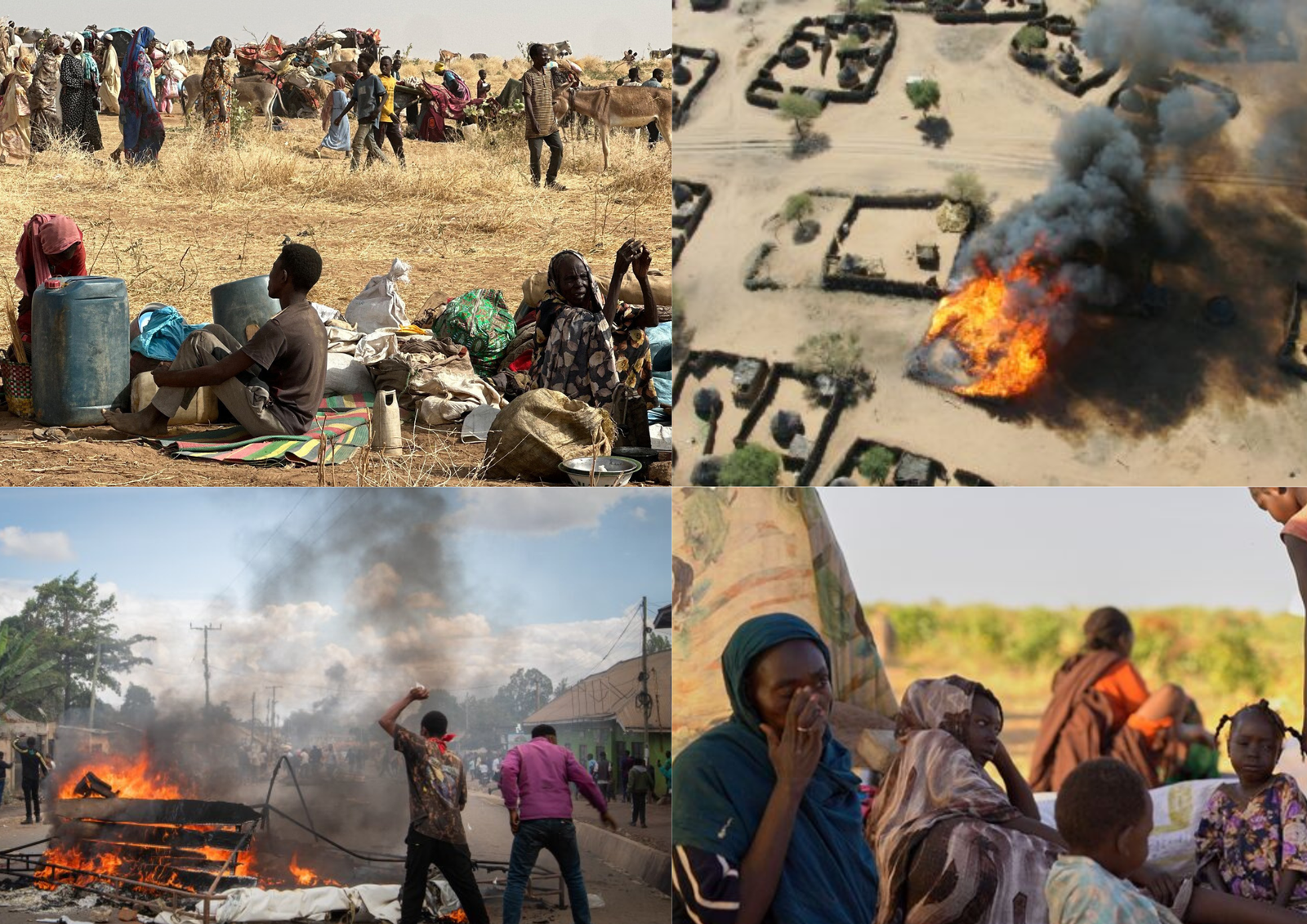
El Fasher, a city that once served as a refuge for displaced civilians, is now at the heart of Sudan’s humanitarian nightmare. Nearly 1.5 million residents are trapped under siege, cut off from food, clean water, and medicine.
Eyewitnesses describe relentless bombardments and scorched-earth tactics targeting entire communities. Satellite imagery shows widespread destruction, particularly in districts inhabited by the Masalit tribe and other non-Arab groups.
Rights groups have reported patterns of violence-including killings, looting, and sexual assaults-that mirror atrocities committed during the Darfur genocide two decades ago.
A Growing Proxy War
The Sudanese conflict has become a complex web of regional power struggles. Investigations indicate that the United Arab Emirates has been a key backer of the RSF, allegedly supplying arms and funds through neighboring countries. Meanwhile, Iran has aligned itself with the SAF, providing drones and military expertise.
Egypt and Saudi Arabia reportedly favor the army, while remnants of Russia’s Wagner Group are said to be cooperating with the RSF to secure access to gold mines.
This external meddling has turned Sudan into a battleground for competing interests, prolonging the bloodshed and complicating international peace negotiations.
Humanitarian Collapse
Sudan now faces one of the worst humanitarian crises on record. According to the World Food Programme, more than 24 million people-around two-thirds of the population-are suffering from acute hunger, and millions in Darfur are on the brink of starvation.
With only a fraction of hospitals still operational, medical care is nearly impossible to access. A communications blackout in El Fasher has further isolated the population, leaving aid agencies unable to coordinate relief operations.
The United Nations estimates that nearly 12 million people have been displaced inside the country, while over two million have fled to neighboring nations such as Chad and South Sudan.
World Response and Genocide Fears
Despite repeated warnings, the global response has been slow and fragmented. A U.S.-backed resolution calling for an arms embargo was blocked at the U.N. Security Council, and a watered-down alternative proposed by the UAE offered no real enforcement mechanisms.
Analysts caution that the world risks repeating the same mistakes that allowed the 2003 Darfur genocide to unfold unchecked. Without decisive diplomatic and humanitarian action, they warn, El Fasher could soon become the site of another mass atrocity.