
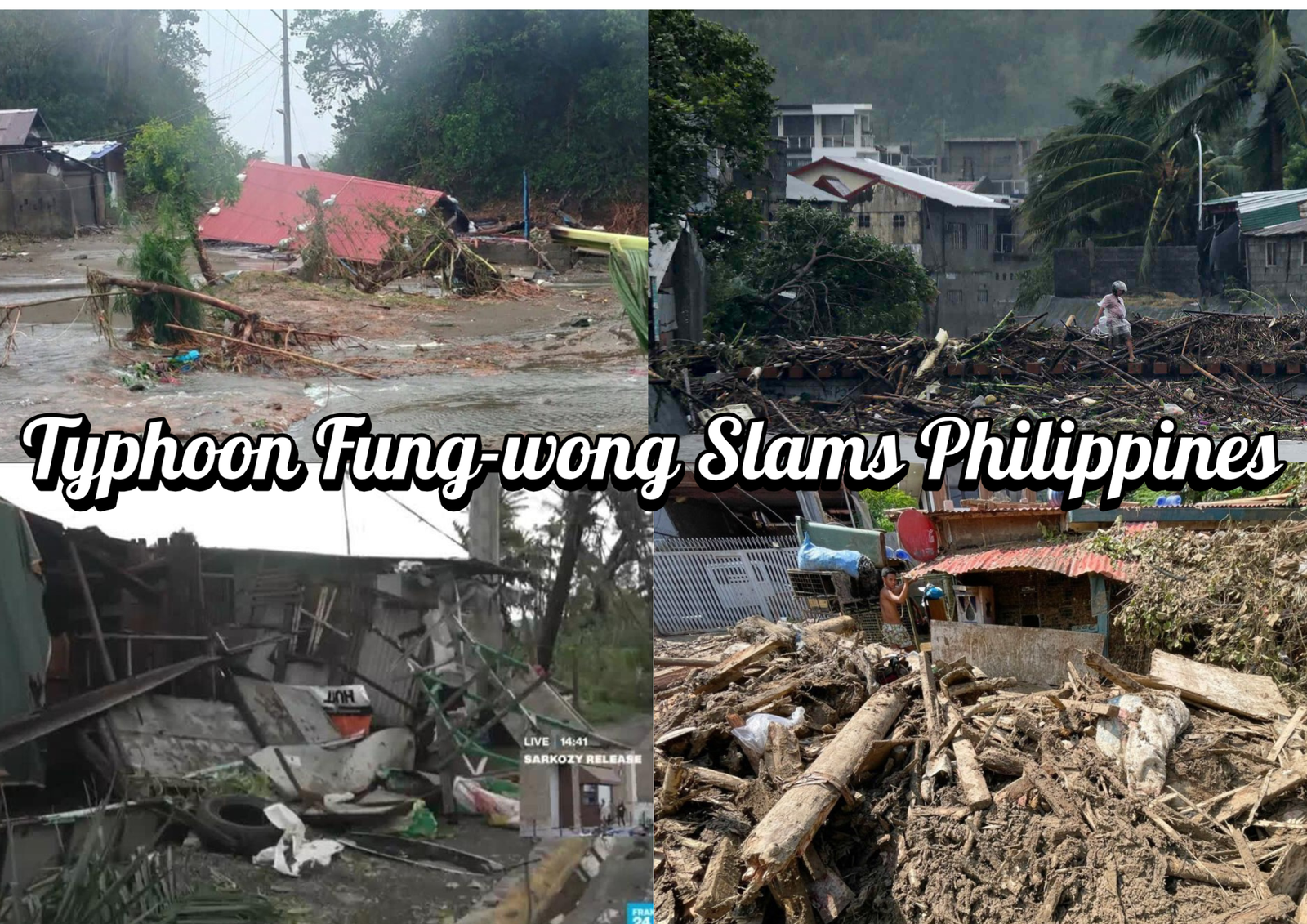
Typhoon Fung-wong, locally called Uwan, swept across the Philippines on Tuesday, unleashing torrential rains and fierce winds that left communities across Luzon reeling from massive flooding and landslides.
According to the country’s disaster agency, at least 18 people have been confirmed dead, while dozens more sustained injuries as the storm tore through homes and toppled power lines. More than 20,000 residents were forced to evacuate, seeking shelter in temporary centers set up by local authorities.
A Storm of Unusual Strength
Classified as a severe tropical storm, Fung-wong made landfall on November 4 in the eastern region before barreling westward across Luzon. The Philippine capital, Manila, was among the hardest-hit areas, with major roads submerged and vehicles stranded in rising floodwaters. In Isabela province, strong winds ripped off roofs, and overflowing rivers triggered landslides that buried several rural villages.
Swift Government and Humanitarian Response
Authorities acted swiftly, ordering the suspension of work and classes across affected provinces as a precautionary measure. Emergency crews and volunteers were deployed to clear roads, restore power, and deliver aid to those stranded by the storm.
Meanwhile, Caritas Philippines, the social service arm of the Catholic Church, has launched an emergency relief operation, providing food, clean water, and basic necessities to displaced families. Volunteers from parishes across the country joined in distributing relief packs and conducting rapid needs assessments in devastated areas.
Regional Impact
The storm, known as Typhoon Kalmaegi in Taiwan, also brought disruption beyond Philippine borders. Taiwan reported several flight cancellations and school closures as precautionary measures, although major damage was avoided thanks to early warnings.
Aftermath and Recovery
By Wednesday, November 5, Typhoon Fung-wong had exited the Philippine landmass and moved into the South China Sea, though lingering rains and gusty winds continued to hamper cleanup and recovery efforts. Power outages persisted in many northern towns, while emergency teams struggled to reach remote communities cut off by landslides.
Authorities have urged residents to remain alert for possible secondary flooding as rivers continue to swell. Weather experts warned that even after the storm’s departure, unstable atmospheric conditions may still trigger scattered rain showers in parts of Luzon.
As the Philippines begins the slow process of rebuilding, relief groups stress the need for sustained assistance to help families recover from yet another devastating blow in a country frequently struck by tropical cyclones.