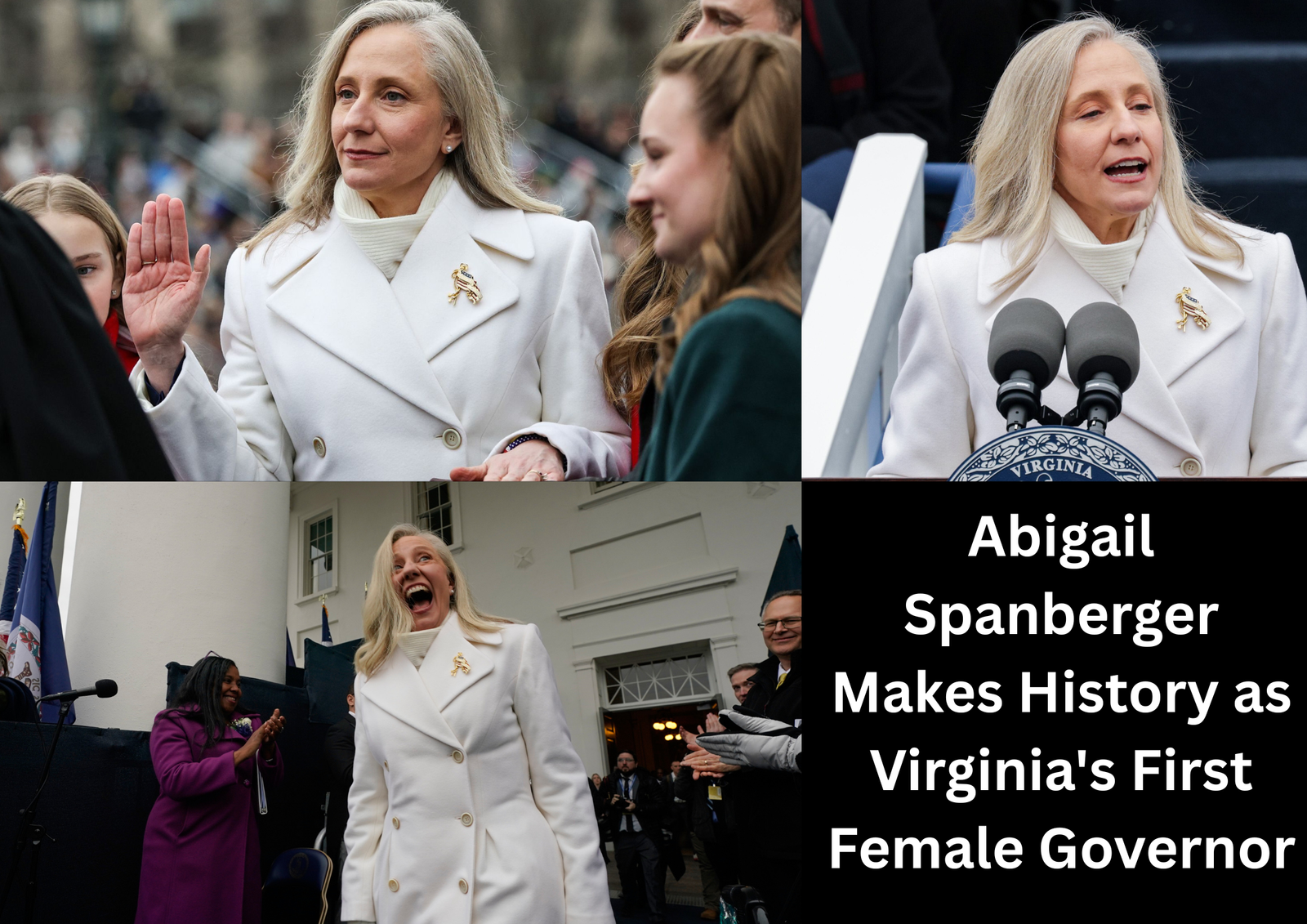
Virginia marked a watershed moment on Saturday as Abigail Spanberger took the oath of office as the state’s 75th governor, becoming the first woman to ever lead the commonwealth. The inauguration drew thousands to the Capitol grounds, where light rain did little to dampen the celebratory mood of attendees witnessing the end of a centuries-long tradition of male governors.
Spanberger, a Democrat and former CIA officer, acknowledged the significance of the moment in her remarks, noting that generations of women had pushed for representation in the political sphere long before they could vote. “We stand on the shoulders of those who imagined a future they would never see,” she told the crowd.
Her victory over Republican Winsome Earle-Sears by a double-digit margin in November served as a decisive shift in statewide politics. With Democrats now holding all three statewide executive offices, the inauguration represented more than symbolic change – it signaled a substantive pivot in policy direction and governing ideology.
Breaking With Tradition on the Capitol Steps
The ceremony itself reflected multiple departures from long-standing inaugural protocols. While male officials and dignitaries adhered to traditional morning suits, Spanberger opted for an all-white ensemble, widely interpreted as a nod to the suffrage movement’s historic symbolism. Political observers described the gesture as both intentional and resonant, underscoring the broader significance of the day.
Two More Historic Firsts Sworn In
Spanberger was not the only history-maker sworn in. Ghazala F. Hashmi assumed office as lieutenant governor, becoming the first Muslim woman to hold a statewide elected office in the United States. Joining her was Jay Jones, inaugurated as Virginia’s attorney general, who is the first Black person ever elected to the position in the state.
Together, the trio constitutes the most diverse executive leadership slate in Virginia’s history.
Executive Orders Signal Immediate Policy Realignment
Within hours of the ceremony, Governor Spanberger signed her first ten executive orders. One of the most notable was reversing a directive issued by outgoing Republican Governor Glenn Youngkin that required state law enforcement entities to assist federal immigration officials. Spanberger argued the mandate placed unnecessary burdens on local agencies already stretched thin.
The early actions point toward a governing strategy focused on distancing the state from federal enforcement priorities under President Donald Trump, currently occupying the White House. Democrats in the state legislature, newly expanded after significant gains in the House of Delegates, have said they plan to work closely with the new administration on issues ranging from healthcare to electoral maps ahead of the midterms.
Campaign Focus and National Stakes
Spanberger’s campaign leaned heavily into economic themes, emphasizing affordability, job security, and concerns tied to federal workforce instability. With nearly 150,000 federal civilian employees residing in the state, layoffs and spending shifts from Washington became central talking points. Analysts view her win as an early test case for national messaging strategies Democrats may deploy in future contests.
In her speech, Spanberger pledged to strengthen caregiver support, improve childcare access, and respond to growing anxiety over rising costs in healthcare and essential goods. She also criticized federal trade policies that she said were harming innovation and small businesses.
Honoring Pioneers and Linking Past to Present
The governor’s remarks paid tribute to earlier trailblazers in Virginia politics, including former Governor. Douglas Wilder, who broke national barriers as the country’s first elected African American governor and attended the ceremony at age 95. Spanberger also highlighted figures such as Barbara Johns and Mary Sue Terry, acknowledging their role in laying groundwork for future generations of leadership.
Notable Democratic figures from neighboring states were also present, including Maryland Governor Wes Moore, New Jersey Governor-elect Mikie Sherrill, and U.S. Senators Elissa Slotkin and Adam Schiff.
A New Chapter for Virginia
Saturday’s inauguration marked both a historic milestone and a strategic pivot in governance, positioning Virginia as a bellwether state in the evolving political landscape of 2026. With new leadership, fresh legislative priorities, and national stakes intertwined, attention now turns to how the Spanberger administration will navigate a divided federal environment – and how the electorate will respond in the months ahead.
Large-Scale Federal Immigration Operation Disrupts Daily Life Across Twin Cities, creating unexpected closures and tension – read the full breakdown in my latest blog, don’t miss it.