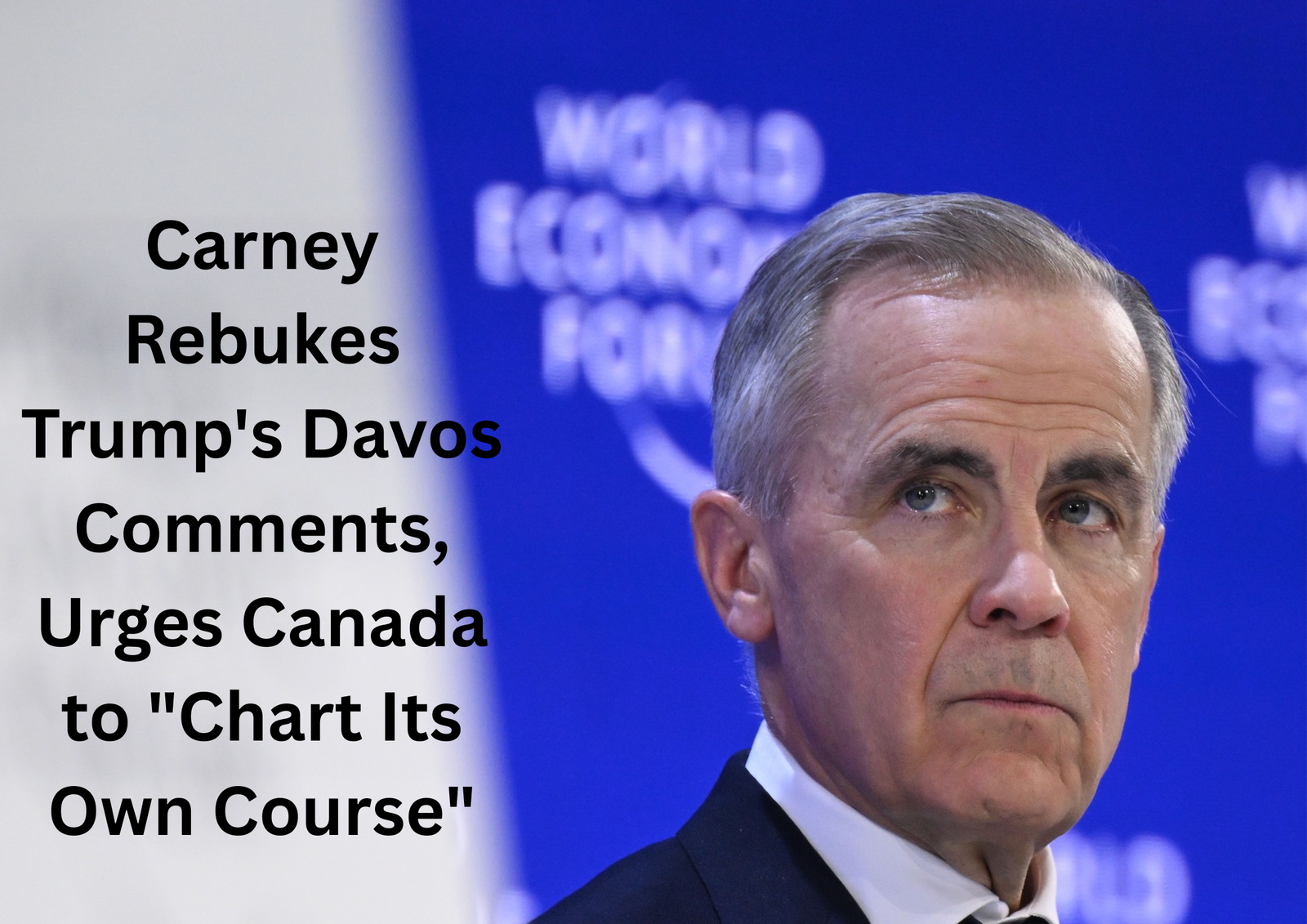
Canadian Prime Minister Mark Carney forcefully rejected remarks made by U.S. President Donald Trump this week, asserting that Canada’s prosperity and identity stand independent of American power. Speaking after Trump claimed at Davos that “Canada lives because of the United States,” Carney countered by saying Canada succeeds “because of its own people, values, and choices.”
The exchange followed Carney’s widely discussed address at the World Economic Forum in Davos, where he described the existing international system as effectively broken. In his speech, Carney argued that global cooperation has suffered a lasting fracture, urging countries that are neither superpowers nor minor states to take greater responsibility for shaping future rules.
The speech reportedly drew an unusually strong reaction from the Davos audience, including extended applause. Soon afterward, Trump publicly withdrew Carney’s invitation to participate in a newly announced “Board of Peace,” a U.S.-backed initiative intended to facilitate ceasefire discussions in the Middle East. The withdrawal was posted online and framed as a direct response to Carney’s criticism.
Back in Canada, Carney expanded on his message during a cabinet planning session in Quebec City. He described Canada as an example of how open societies can remain secure while protecting democratic norms and social cohesion. According to Carney, the country’s emphasis on pluralism, economic inclusion, and institutional stability offers a viable alternative at a time when nationalism and isolationism are gaining ground globally.
Beyond rhetoric, tensions between Ottawa and Washington are increasingly tied to trade and security issues. Trump has repeatedly suggested that Canada benefits disproportionately from its relationship with the U.S., and has even floated the idea of incorporating Canada as an American state-comments that have been widely criticized by Canadian officials. Meanwhile, the United States–Mexico–Canada Agreement faces a mandatory review later this year, raising uncertainty for businesses on both sides of the border.
Carney’s stance has found some support within the United States. California Governor Gavin Newsom praised the Canadian leader’s willingness to speak candidly, warning that democratic institutions can erode when political pressure goes unchallenged. Newsom also pointed to Canada’s growing trade engagement with Asia as an indicator of how shifting U.S. policies may be reshaping long-standing alliances.
Observers at Davos noted that conversations about redefining global governance are becoming more common among world leaders. Some analysts suggest these debates could have far-reaching geopolitical consequences, particularly as emerging powers seek greater influence in setting international norms.
Concluding his remarks in Quebec City, Carney stressed that Canada’s future will be decided domestically, not dictated from abroad. He reaffirmed national sovereignty and framed Canada as a place where opportunity is not reserved for a privileged few, but accessible to ordinary citizens through democratic choice and shared responsibility.
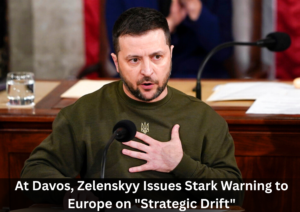
For deeper context and sharp insights behind “Zelenskyy Challenges Europe’s Resolve at Davos, Warns Against Strategic Drift,” read the full analysis in this blog and understand what’s truly at stake for Europe.