
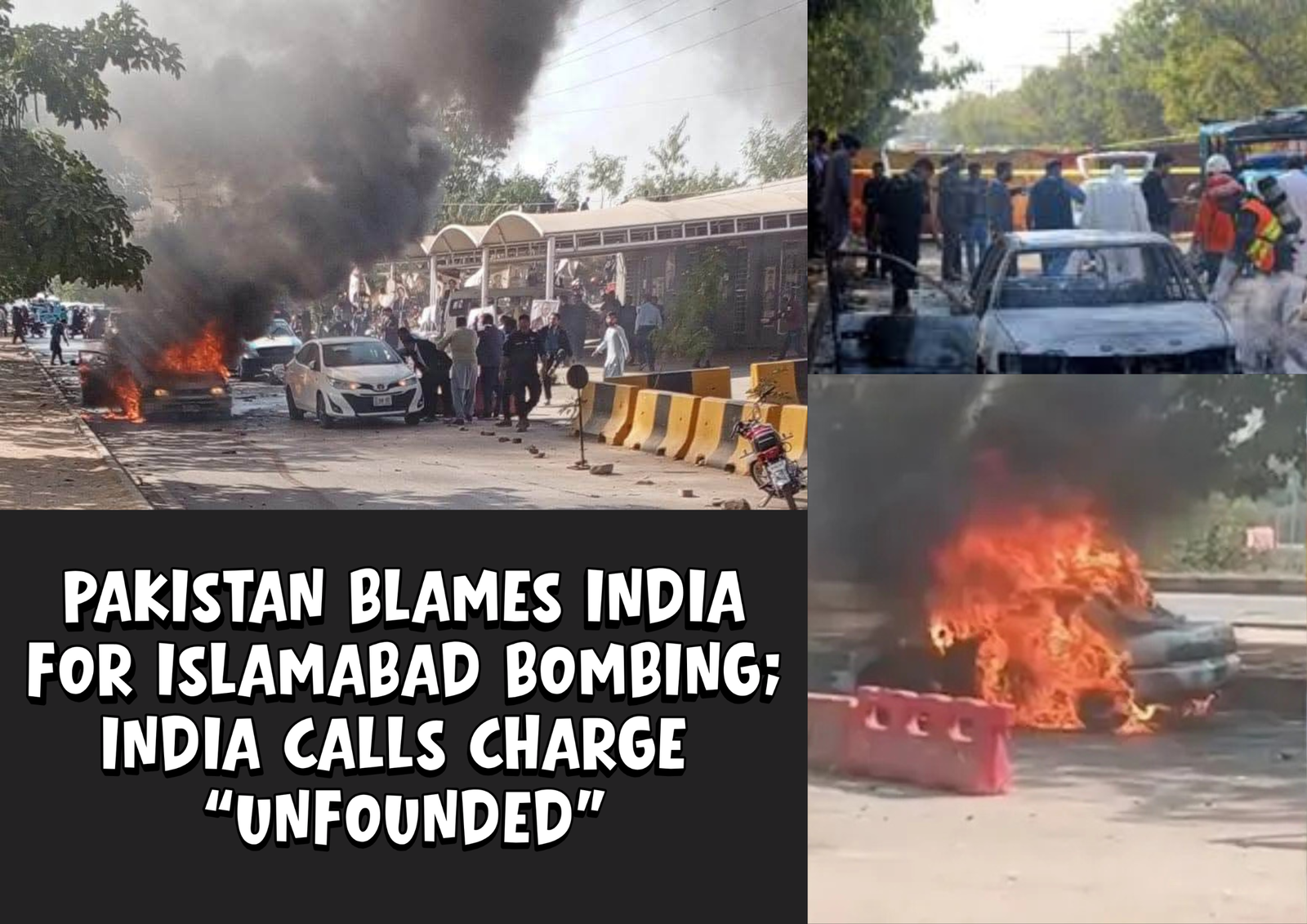
A powerful explosion shook Pakistan’s capital on the evening of November 11, leaving at least 12 people dead and dozens more injured. The blast, which authorities confirmed was a suicide bombing, ripped through a bustling area in Islamabad’s heavily guarded diplomatic enclave – an area surrounded by embassies, restaurants, and offices.
Witnesses described moments of terror and confusion following the detonation. Khalid Khan, who manages a nearby restaurant, said the explosion shattered windows and sent debris flying across the street. “People were screaming and running in every direction. It was pure chaos,” he recalled. Another witness, law student, said visibility was nearly zero immediately after the blast due to dust and smoke. Emergency responders and police rushed to the scene, cordoning off the area while ambulances ferried victims to local hospitals.
Authorities confirmed that at least 12 people were killed and around 30 others were wounded. Several vehicles and nearby buildings suffered severe damage from the impact.
In a strongly worded statement, Pakistan’s Foreign Ministry accused India’s external intelligence agency, the Research and Analysis Wing (RAW), of orchestrating the bombing. Foreign Secretary claimed that Islamabad had obtained “irrefutable proof” linking Indian operatives to the attack. He described the bombing as part of a “pattern of state-sponsored terrorism” and vowed that Pakistan would take the matter to the United Nations and other global platforms.
India swiftly denied the allegations. A spokesperson for the Ministry of External Affairs dismissed Pakistan’s claim as “absurd, baseless, and politically motivated.” The statement accused Pakistan of spreading misinformation to deflect from its internal security challenges.
The bombing marks one of the deadliest terror incidents in Islamabad in recent years and has reignited diplomatic tensions between the two nuclear-armed neighbors. The attack’s location – just blocks away from several embassies – underscores the audacity and potential geopolitical implications of the assault.
Ties between India and Pakistan have long been strained, with both nations accusing each other of cross-border terrorism and interference, particularly over the disputed territory of Kashmir. Analysts fear the latest exchange of blame could derail any prospects for dialogue in the near future.
As investigators comb through the debris for evidence, the people of Islamabad are left mourning yet another tragic episode in the city’s recent history – a stark reminder of the fragility of peace in South Asia.


