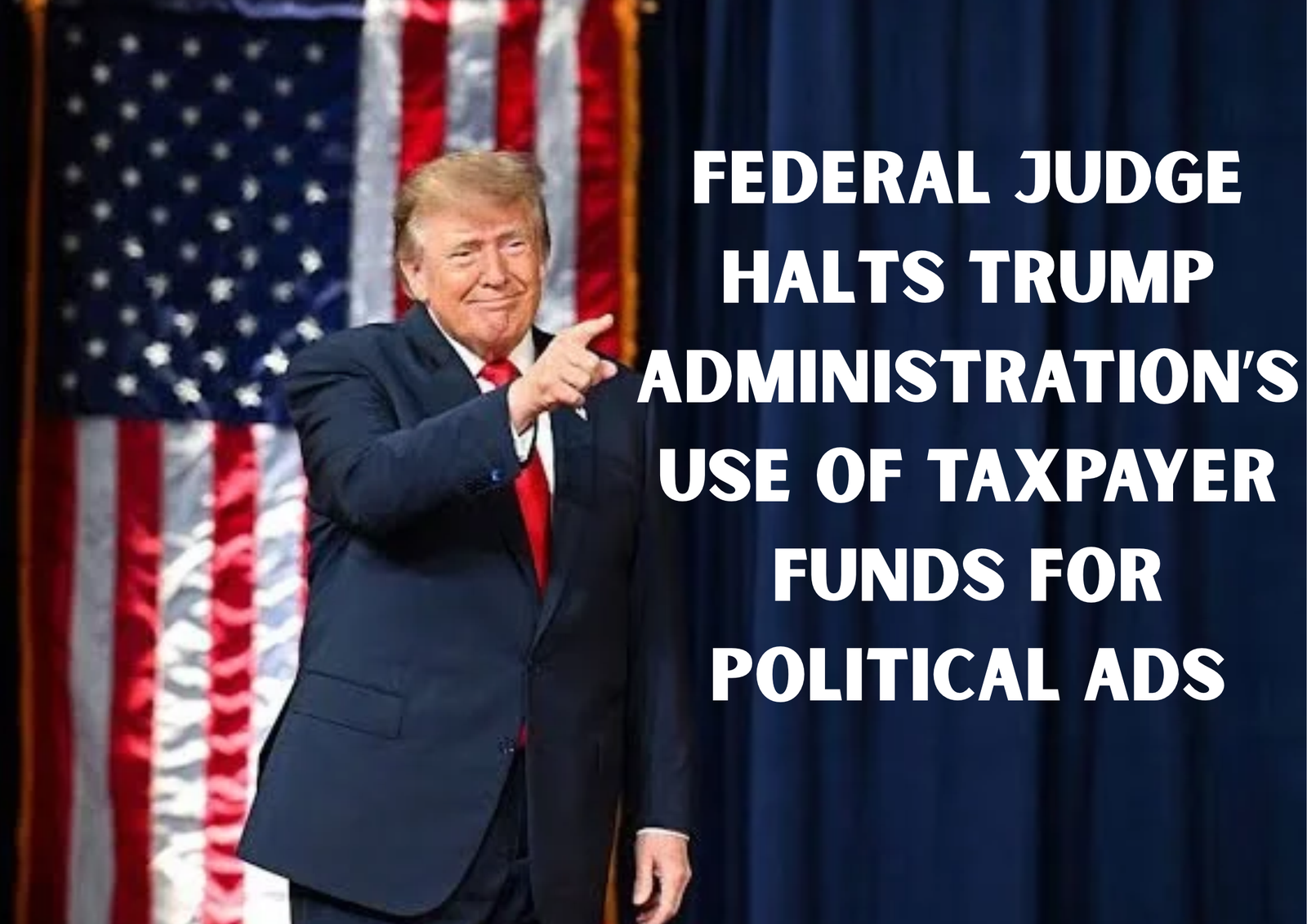
A federal judge has ordered the Trump administration to stop using taxpayer money to fund television advertisements featuring President Donald Trump, raising fresh questions about the use of public funds for political messaging ahead of the 2026 midterm elections.
U.S. District Judge Jennifer L. Rochon issued a temporary restraining order on Sunday, October 11, directing the administration to halt the disputed advertising campaign and cancel any remaining television placements. The order is scheduled to remain in effect for 14 days while a legal challenge moves forward.
The ruling followed a lawsuit filed by a coalition of advocacy organizations, labor groups and an Alabama state legislative candidate. The plaintiffs argued that federal money allocated for government purposes had been redirected to produce advertisements that promoted the president’s political agenda rather than providing essential public information.
$20 Million in Federal Funds Under Scrutiny
At the center of the controversy is approximately $20 million in funding that the Department of Homeland Security received for the advertising campaign. The money was added to a budget category intended for commemorative activities, including memorials, agency anniversaries and official recognition ceremonies.
Critics argue that the funds were used for a purpose that Congress had not authorized. Federal law places restrictions on government agencies using public money for unauthorized publicity or political propaganda.
The advertisements began appearing in late September and featured messages associated with Trump’s political priorities. One commercial closely resembled messaging from his 2024 presidential campaign, while another featured Trump alongside Defense Secretary Pete Hegseth discussing the war involving Iran.
The plaintiffs contend that these commercials went beyond legitimate government communication and effectively used public resources to promote a partisan political message during an important election period.
Judge Questions the Administration’s Legal Position
In granting the temporary restraining order, Rochon determined that the plaintiffs had demonstrated a strong likelihood of success in their legal challenge. She also found that the groups could suffer harm if the advertisements continued while the case remained unresolved.
The administration had argued that the dispute no longer required court intervention because officials had indicated that the taxpayer-funded campaign would end and that no additional advertising slots would be purchased.
However, the judge’s order required the government to stop the challenged advertisements immediately, including placements already scheduled to air. It also prohibited officials from using or transferring the disputed federal funds to develop, distribute or broadcast the commercials during the order’s 14-day period.
The decision does not constitute a final ruling on the legality of the entire campaign. Instead, it temporarily restricts the administration’s actions while the court considers the underlying claims.
Advertisements Continued After Court Deadline
The controversy intensified after the court issued its order. Television advertising data indicated that two of the disputed commercials continued airing after the Sunday evening deadline, with broadcasts extending into Monday, October 12.
The White House attributed the continued broadcasts to a delay in notifying the Department of Homeland Security about the court’s decision. Officials said the agency had not received the notice in time to cancel the previously scheduled advertising purchases.
The administration also stated that outside political groups would cover the cost of future broadcasts. Trump had previously indicated that his political fundraising operation would pay for the advertisements going forward following criticism of the use of taxpayer money.
The continued broadcasts prompted the plaintiffs to ask the court to examine whether the administration had complied with the temporary restraining order. They requested a status conference to address the issue but did not initially seek contempt sanctions.
A Separate Legal Challenge Adds Pressure
The dispute is not limited to one lawsuit. The Democratic National Committee has also filed a separate legal challenge, arguing that the advertisements improperly use government resources in ways that could affect the electoral environment.
Opponents say publicly funded political messaging could provide an unfair advantage by allowing a president’s political agenda to receive additional exposure without drawing on campaign funds. They also argue that money allocated for government operations should not be diverted to influence voters.
The administration, meanwhile, has characterized the commercials as public service announcements and maintained that previous administrations have also used taxpayer-funded advertising to communicate government policies.
The central legal question is whether these particular advertisements served a legitimate government purpose or crossed the line into prohibited political promotion.
What Happens Next?
The temporary restraining order places immediate limits on the administration’s ability to use the disputed funds for the campaign. The legal proceedings will determine whether the advertisements violated federal spending restrictions and whether further judicial action is warranted.
The case could also have broader implications for how federal agencies use appropriated funds to communicate with the public, particularly during election periods. Government advertising can serve legitimate informational purposes, but the use of public resources for partisan messaging raises concerns about accountability and the separation between official government activities and political campaigning.
For now, the dispute remains unresolved. The court’s intervention has temporarily halted the taxpayer-funded campaign, while questions surrounding the continued broadcasts, the original allocation of funds and the proposed use of private political money remain part of the unfolding controversy.