
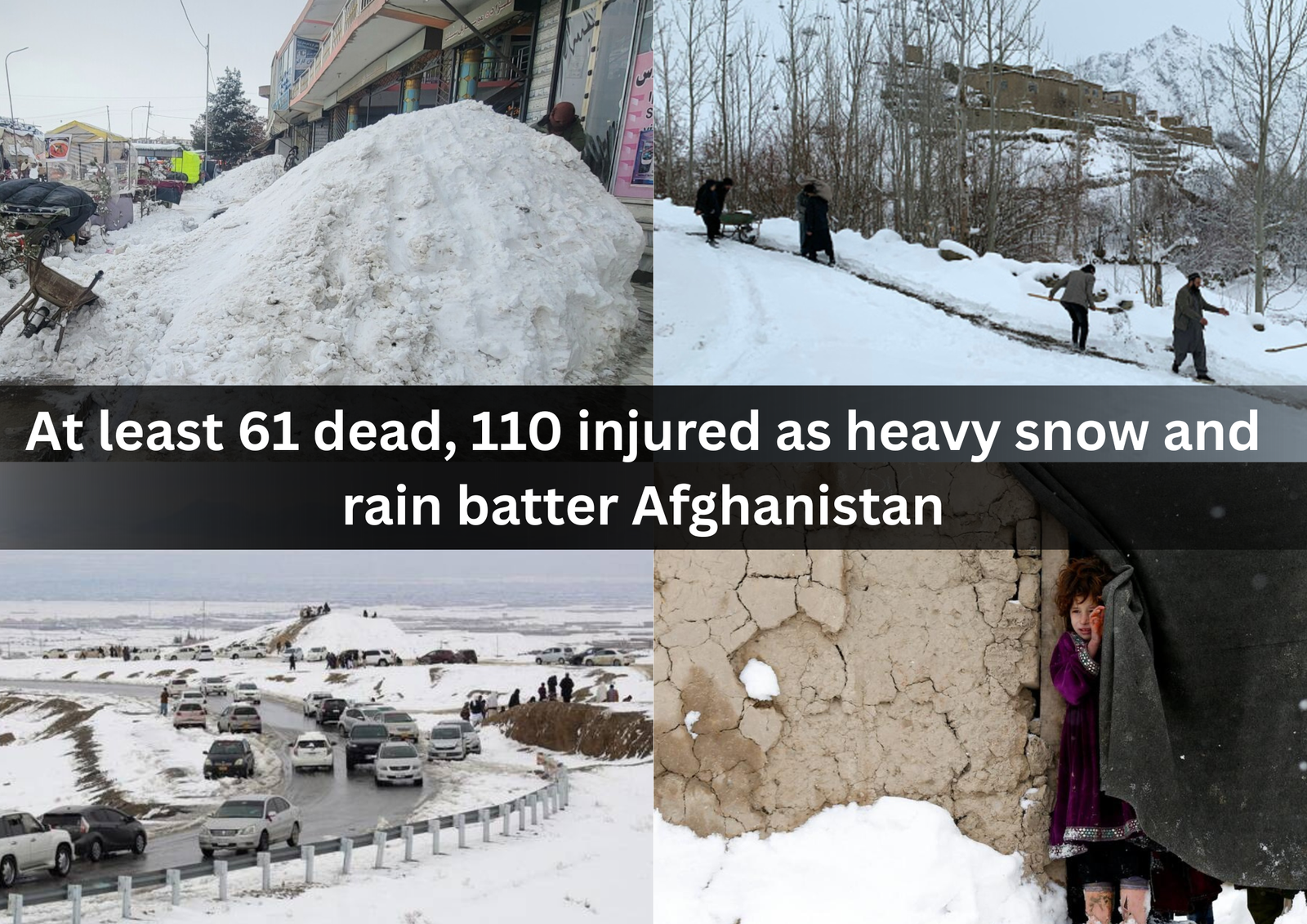
Severe winter weather sweeping across Afghanistan has claimed at least 61 lives and left more than 110 people injured, according to officials, as heavy snowfall and relentless rainfall battered large parts of the country over several days.
The National Disaster Management Authority (NDMA) said the extreme weather affected 15 provinces, triggering roof collapses, flooding, and deadly exposure to freezing temperatures. Hundreds of homes were either destroyed or badly damaged, while significant livestock losses have further strained livelihoods in rural communities.
NDMA spokesperson Yousaf Hammad stated that rescue and assessment efforts remain ongoing, warning that the casualty figures could rise as authorities reach remote districts that remain inaccessible due to blocked roads and deep snow. Entire villages have reportedly been cut off, delaying emergency aid and medical assistance.
The latest disaster has intensified an already fragile humanitarian situation, particularly in eastern regions still struggling to recover from powerful earthquakes that struck late last year. Many families displaced by those quakes are now facing harsh winter conditions with limited shelter, increasing the risk of cold-related illnesses.
Humanitarian agencies have repeatedly warned that children are among the most vulnerable. UNICEF previously estimated that hundreds of thousands of children in quake-affected areas face serious health risks during winter due to inadequate housing and limited access to healthcare.
Afghanistan’s exposure to extreme weather has worsened in recent years. Seasonal floods, heavy snowfall, and droughts have become more frequent, with experts pointing to climate change, environmental degradation, and decades of underinvestment in infrastructure as key factors amplifying the damage. In many rural areas, homes made of mud and weak materials offer little resistance against floods or snow accumulation.
Earlier this month, the United Nations described Afghanistan as one of the world’s most severe humanitarian emergencies heading into 2026. The UN and its partners have appealed for billions of dollars in aid to support millions of Afghans facing food shortages, displacement, and recurring natural disasters.
As winter conditions persist, officials warn that further casualties remain possible unless access improves and emergency support reaches the hardest-hit regions in time.
For deeper insight into “Trump Threatens Massive Tariffs on Canadian Imports Amid Growing Tensions Over China Trade,” read the full analysis in this blog to understand the wider global impact.