A decision by House Republican leadership to block a vote on extending enhanced Affordable Care Act health insurance subsidies has intensified internal party divisions and raised alarms about rising insurance costs for millions of Americans beginning next year.
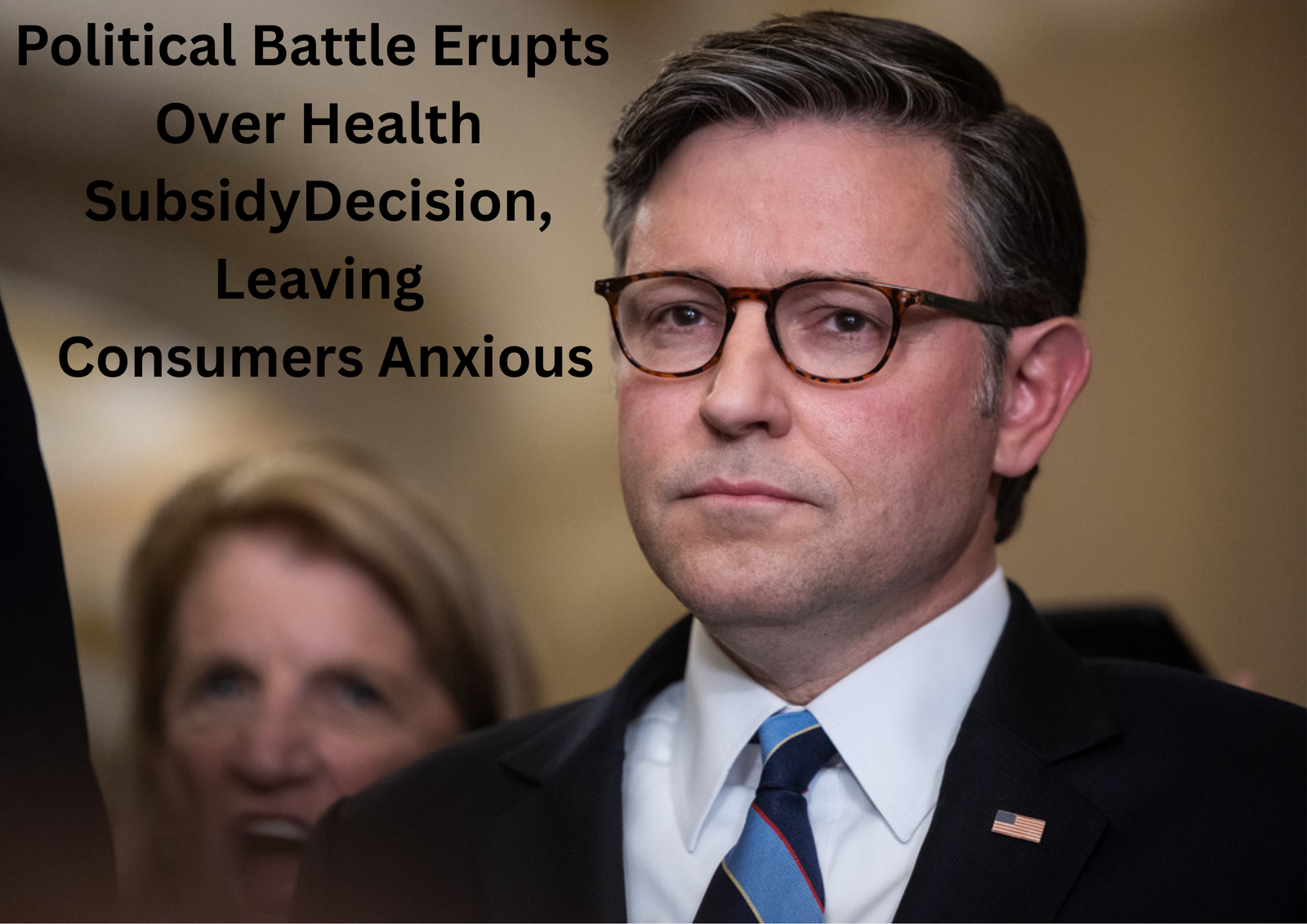
House Speaker Mike Johnson confirmed that the chamber will not take up legislation to prolong the temporary subsidies, which are scheduled to expire at the end of December. Without congressional action, many policyholders purchasing insurance through federal and state marketplaces are expected to face noticeable premium increases in 2026.
The announcement followed days of private negotiations within the Republican caucus, particularly involving lawmakers from politically competitive districts who have urged leadership to allow a vote on the issue. Several of these members argue that allowing the subsidies to lapse could create financial strain for middle-income families and pose electoral risks ahead of the next midterm cycle.
Speaker Johnson said efforts were made to find common ground but ultimately fell short. He emphasized that the conference would instead move forward with a separate health care package that does not include subsidy extensions. While acknowledging concerns raised by moderates, Johnson maintained that long-term structural changes to the health insurance system should take priority over short-term funding measures.
The decision has drawn sharp criticism from some Republican representatives, who say constituents will bear the cost of inaction. Lawmakers from New York, Pennsylvania, Virginia, and California have publicly expressed frustration, calling for an up-or-down vote to let members formally record their positions.
Democratic leaders have seized on the division, renewing efforts to force a vote through procedural mechanisms. House Minority Leader Hakeem Jeffries said his caucus remains unified behind a proposal to extend the subsidies for multiple years, arguing that affordability and market stability depend on continuity. Democrats currently need only a handful of Republican defections to advance the measure.
However, conservative lawmakers have downplayed the likelihood of such a move succeeding, noting that even if a bill passed the House, it would face uncertain prospects in the Senate. Members of the House Freedom Caucus have reiterated opposition to extending the subsidies without corresponding spending offsets.
Health policy analysts warn that uncertainty alone could disrupt insurance markets, as insurers finalize pricing and coverage decisions. Consumer advocacy groups have also urged lawmakers to act swiftly, citing the risk of reduced enrollment and higher out-of-pocket costs.
With Congress expected to adjourn soon, the window for legislative action is narrowing. If no agreement is reached before the deadline, the subsidy expiration will take effect automatically, shifting the debate into the new year-after higher premiums have already begun to impact households nationwide.