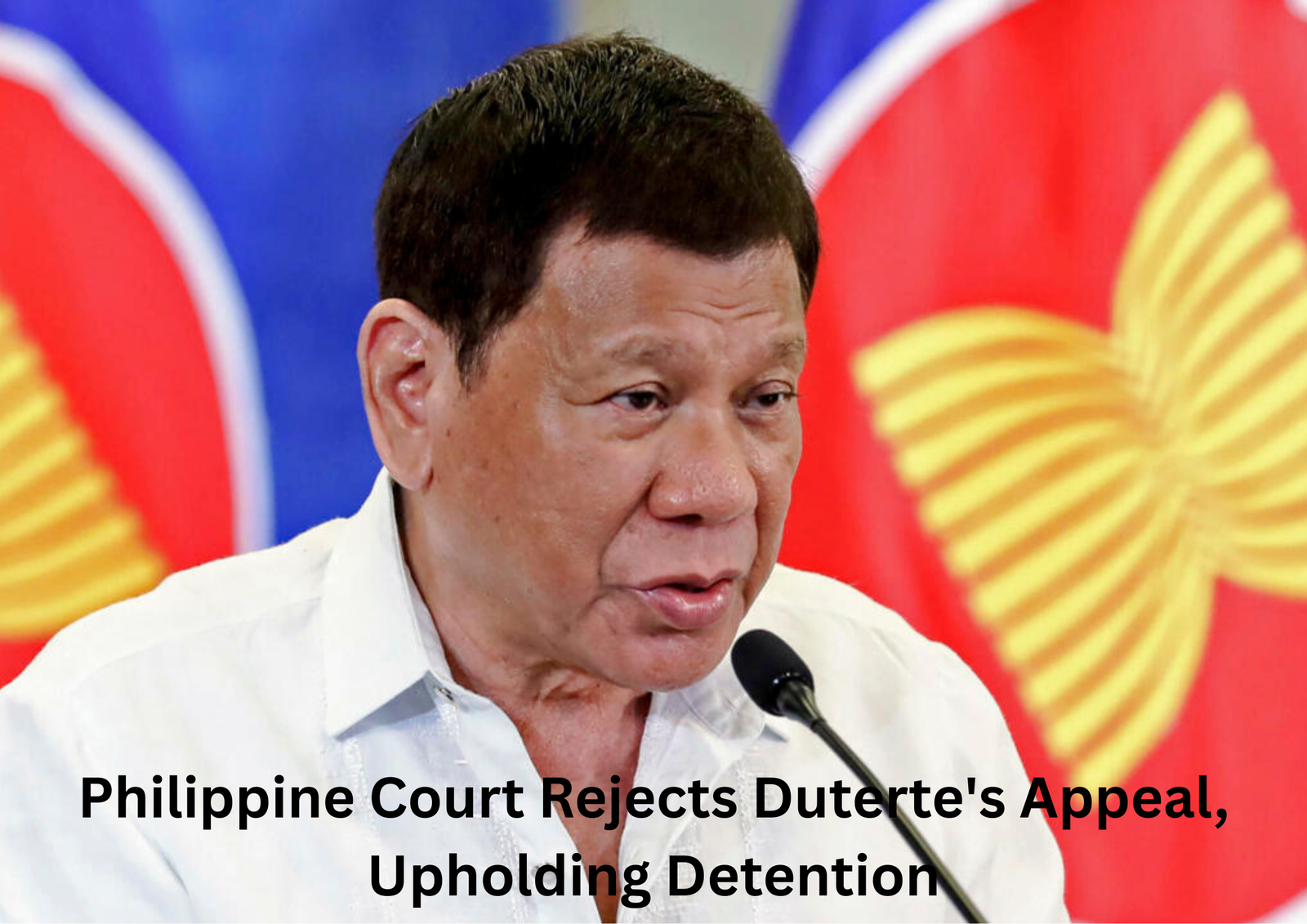
Former Philippine President Rodrigo Duterte will remain behind bars after judges at the International Criminal Court (ICC) rejected his request for release, marking a major step in the court’s ongoing investigation into alleged crimes against humanity committed during his controversial anti-drug campaign.
The pre-trial chamber announced the decision on Friday, noting that Duterte’s lawyers failed to meet the strict conditions required for provisional release. According to the judges, there have been “no new or changed circumstances” that would justify modifying the original detention order issued earlier this month following Duterte’s arrest.
ICC magistrates reaffirmed their concerns that releasing Duterte could jeopardize the integrity of the proceedings. Their ruling highlighted two main risks: the possibility that he might evade future court appearances and the threat he could pose to witnesses involved in the case.
Duterte, who led the Philippines from 2016 to 2022, was placed into ICC custody in early November after years of international scrutiny over thousands of deaths linked to his administration’s drug-war operations. While the Philippines withdrew from the ICC in 2019 during his presidency, the court maintains jurisdiction over alleged crimes committed while the country was still a member.
The charges center on accusations that state forces and vigilante groups carried out widespread and systematic killings during anti-narcotics operations. Human rights organizations have long claimed that many victims were unarmed individuals, some of whom may not have been involved in drug activity at all.
Duterte’s arrest has been viewed globally as a turning point in efforts to seek accountability for the violent campaign. ICC prosecutors are now preparing for the next stage of the case, with upcoming pre-trial sessions expected to determine whether the evidence is strong enough to advance to a full trial.
If the proceedings move forward, the case would become one of the most high-profile human rights trials involving a former head of state in recent years.