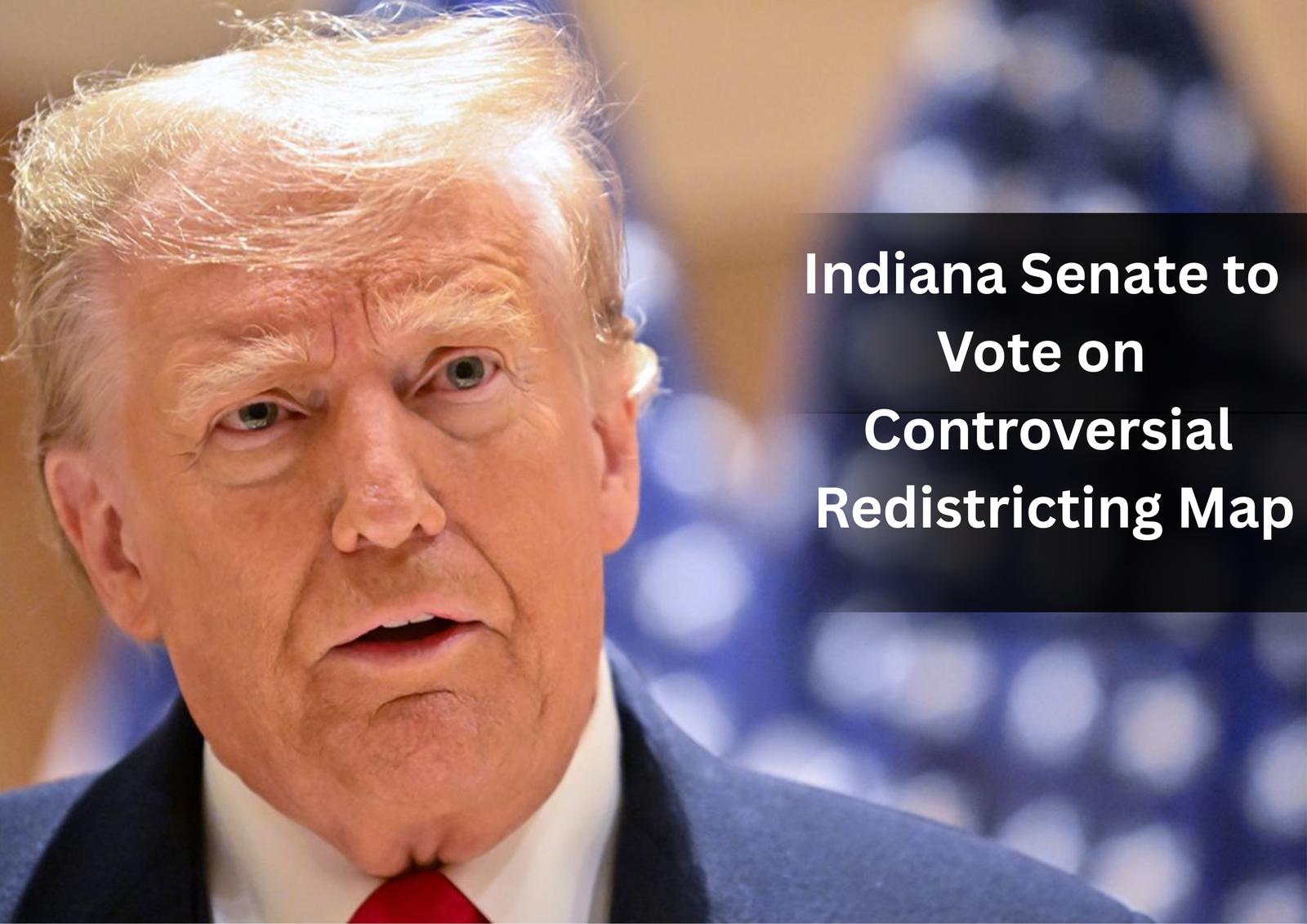
The Indiana Senate is preparing for a decisive vote on Thursday over a controversial congressional redistricting proposal that would redraw the state’s political landscape and potentially give Republicans control of all nine U.S. House seats. The mid-decade overhaul, long sought by President Donald Trump, has fractured the GOP supermajority and triggered an unprecedented wave of political pressure directed at lawmakers.
A Pivotal Moment for Indiana Politics
House Bill 1032, which cleared the state House earlier this month, aims to eliminate the two Democratic-held districts in Indiana by reshaping boundaries to favor Republican candidates. Supporters say the move mirrors similar redistricting pushes in states controlled by Democrats and is vital for GOP competitiveness heading into the 2026 midterms. Critics argue it is an unnecessary power play that could undermine public trust.
Although Republicans control 40 of the Senate’s 50 seats, internal divisions have made the bill’s fate uncertain. Public statements indicate the caucus is nearly evenly split, with a sizable bloc still undecided. Passage requires at least 26 votes; a 25–25 tie would be broken by Lt. Gov. Micah Beckwith, who favors the redraw.
Tension Builds as Pressure Campaign Intensifies
The debate has been overshadowed by extraordinary outside pressure. President Trump has aggressively targeted GOP lawmakers reluctant to support the map, warning that opposition could invite primary challenges. Vice President JD Vance has held multiple meetings with Indiana legislators in an attempt to shore up support, while House Speaker Mike Johnson has personally called senators to advocate for the proposal.
A political group known as Fair Maps Indiana, led by longtime Republican strategist Marty Obst, has poured hundreds of thousands of dollars into advertising campaigns backing the bill. An affiliated super PAC has pledged to fund challengers against any Republican who votes against the measure.
Beyond political persuasion, a darker element has emerged. Several senators have reported being targeted with swatting calls, threats, and harassment, prompting a statewide police investigation. Lawmakers across the political spectrum have condemned the intimidation efforts, warning that such tactics erode democratic norms.
Arguments on the Floor and Failed Amendments
Senators opposing the bill-including several Republicans-say mid-cycle redistricting sets a dangerous precedent and could trigger voter backlash. They also argue that predictions of a sweeping Republican takeover of all nine districts are unrealistic and overly optimistic.
Supporters counter that Indiana should not remain passive while other states redraw their maps to favor Democrats. They maintain that the proposed boundaries are justified and strategically necessary.
During a brief session on Wednesday, Democrats introduced amendments to curb mid-decade mapmaking, reimburse counties for implementation costs, and change the process for court challenges. All three attempts were defeated.
Broader National Implications
Indiana’s effort is part of a wider national trend. States such as Texas, California, Missouri, and North Carolina have undertaken mid-decade redistricting either through legislation or ballot initiatives, reshaping the country’s political map ahead of the 2026 cycle.
If passed, Indiana’s proposal would significantly shift the Indianapolis-area district represented by Democrat André Carson by dividing urban voters across multiple Republican-leaning districts. Governor Mike Braun has publicly endorsed the redraw and echoed Trump’s willingness to support primary challengers against dissenting Republicans.
What Happens Next
With the vote set for Thursday, the outcome remains unpredictable. Attendance issues earlier in the week have added another layer of uncertainty, and several lawmakers who advanced the bill in committee have not committed to supporting it on the floor.
Regardless of the result, the debate has already exposed deep divisions within Indiana’s ruling party and raised questions about the future of redistricting battles nationwide.