


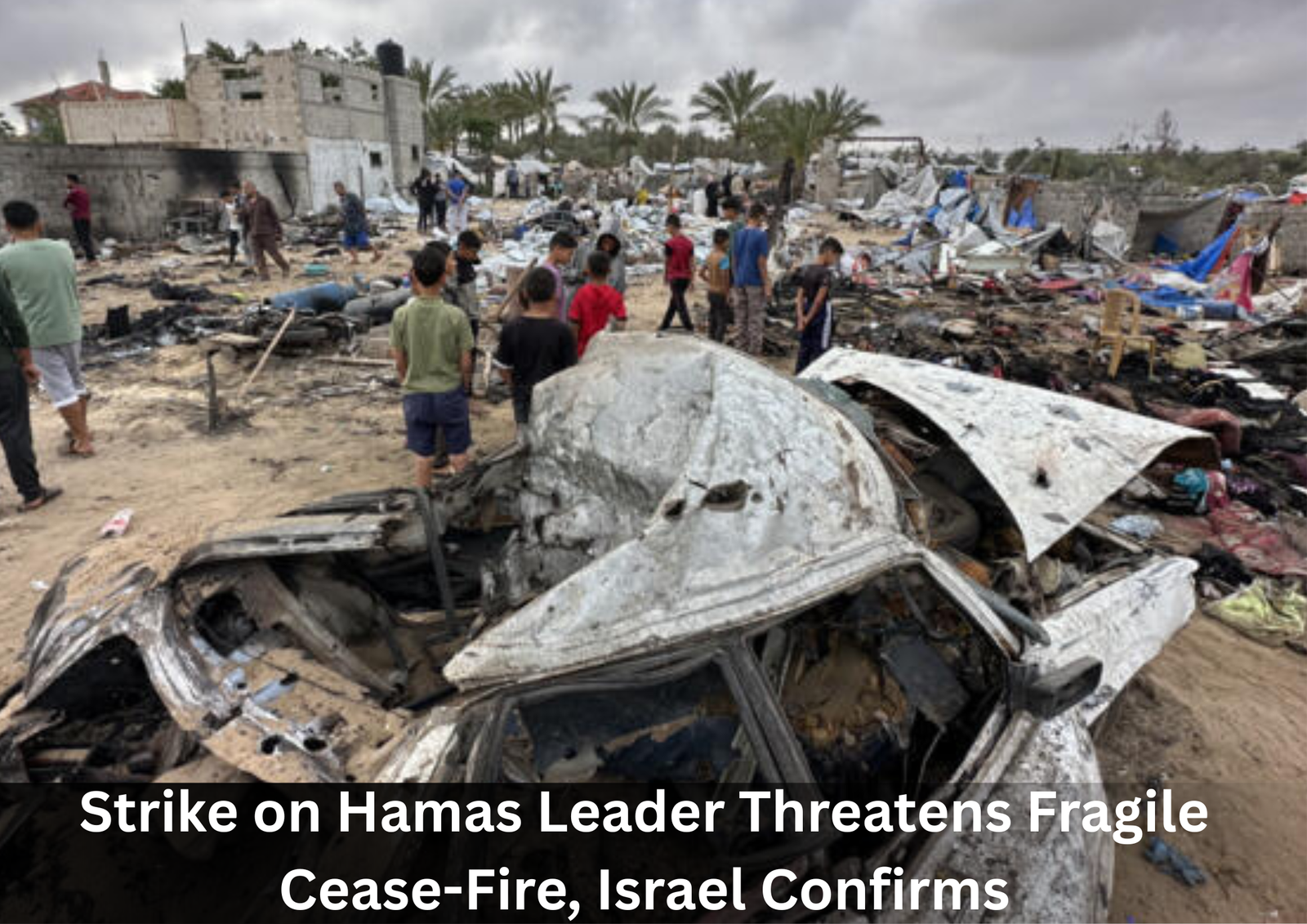
Israel said Saturday that it carried out a targeted airstrike in Gaza City that killed Raed Saad, a senior military commander within Hamas, triggering renewed tensions during an already fragile cease-fire.
According to Israeli officials, the strike hit a vehicle in Gaza City and was authorized at the highest political and military levels. The Israeli military described Saad as a leading figure in Hamas’s armed wing who played a significant role in planning past attacks against Israel and was actively involved in rebuilding the group’s military infrastructure in recent months.
Israeli defense authorities stated that the operation was launched in response to an earlier incident on Saturday in which two Israeli soldiers were wounded by an explosive device. Officials accused Hamas of violating cease-fire terms by attempting to restore weapons production and operational capabilities during the truce period.
The Israel Defense Forces said Saad was responsible for overseeing weapons manufacturing and logistical operations, adding that his removal would substantially weaken Hamas’s ability to reorganize militarily. The strike marks the most prominent Israeli action against a Hamas leader since the cease-fire began in October.
Gaza health officials reported that the airstrike killed at least five people and injured more than two dozen others. Medical personnel at Al Shifa Hospital confirmed receiving multiple casualties from the attack but said they were unable to immediately verify the identities of those killed.
Hamas condemned the strike, calling it a serious breach of the cease-fire agreement and an act of escalation. While the group disputed Israel’s justification for the attack, it did not confirm whether Saad was among the dead or announce any immediate response.
Regional analysts have previously identified Saad as one of Hamas’s most senior military figures in Gaza, ranking just below the group’s top commanders. He was also known to have held leadership roles in Gaza City’s battalion structure earlier in the conflict.
The cease-fire, brokered with U.S. involvement, has led to a partial Israeli military withdrawal from urban areas in Gaza, expanded humanitarian aid deliveries, and the return of large numbers of displaced Palestinians. Despite these developments, hostilities have not fully ceased. Palestinian officials say hundreds have been killed in Gaza since the truce began, while Israel maintains that its forces have continued to strike individuals it accuses of violating the agreement.
Meanwhile, protests took place across Israel on Saturday, with demonstrators demanding a formal inquiry into the October 7 attacks. Rallies in major cities also renewed calls for the return of remaining captives and highlighted ongoing political divisions within the country.
The latest strike underscores the fragile nature of the cease-fire and the challenges facing efforts to prevent a broader return to sustained conflict.


