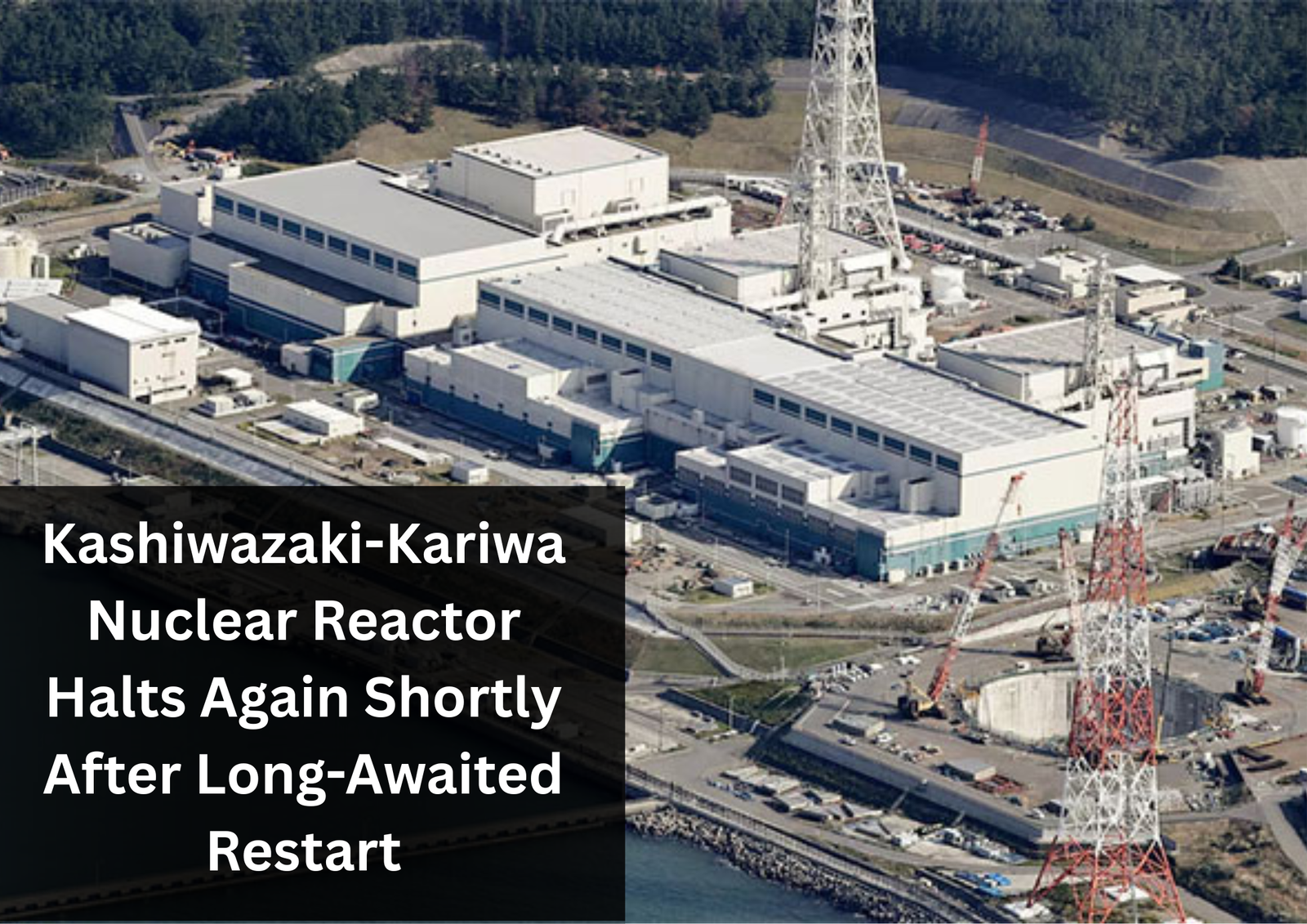
Japan’s push to revive nuclear energy encountered a fresh setback after a reactor at the Kashiwazaki-Kariwa Nuclear Power Plant automatically shut down just hours after being brought back online, officials confirmed on Thursday.
Unit 6 of the facility, operated by Tokyo Electric Power Company, ceased operations on January 22 following an alert linked to generator equipment. The shutdown occurred slightly more than six hours after the reactor reached criticality, ending what was expected to be a symbolic return to nuclear power for the embattled utility.
According to the operator, safety mechanisms functioned as designed, triggering an automatic halt to prevent potential equipment damage. Company representatives stressed that no radiation was released and that there were no injuries to workers or nearby residents. Local authorities echoed those assurances, stating that environmental monitoring systems showed no abnormalities.
The restart of Unit 6 had carried particular weight. It marked the first time a reactor owned by TEPCO had resumed operations since the 2011 Fukushima Daiichi disaster, an event that reshaped Japan’s energy policy and led to the prolonged shutdown of nearly all nuclear facilities nationwide. The Kashiwazaki-Kariwa site itself, the largest nuclear power station in the world by output capacity, had remained idle for more than a decade amid regulatory scrutiny and public opposition.
Japan’s nuclear watchdog, the Nuclear Regulation Authority, has opened an investigation into the cause of the shutdown. Regulators will review inspection data and corrective measures before considering whether the reactor can be restarted again. TEPCO officials have publicly apologized, acknowledging the incident has renewed concerns over reliability and preparedness.
The disruption comes at a delicate moment for Japan’s energy strategy. Prime Minister government has been encouraging the gradual return of nuclear power to stabilize electricity supply and support climate commitments. While more than a dozen reactors have already resumed operations under reinforced safety standards, confidence remains fragile-particularly when issues arise at high-profile facilities.
Energy analysts note that while the shutdown does not pose an immediate safety risk, it underscores the technical and reputational challenges facing nuclear restarts. For TEPCO, still managing the long-term cleanup at Fukushima Daiichi Nuclear Power Plant, the incident represents another hurdle in efforts to restore credibility and financial stability.
As the investigation continues, the unexpected pause is likely to intensify debate among policymakers, industry leaders, and the public over the pace and prudence of Japan’s return to nuclear energy.
To understand the implications behind “U.S. Presents Ambitious Postwar Vision for Gaza at Davos”, explore the full analysis in this blog and gain deeper insight into the global response.