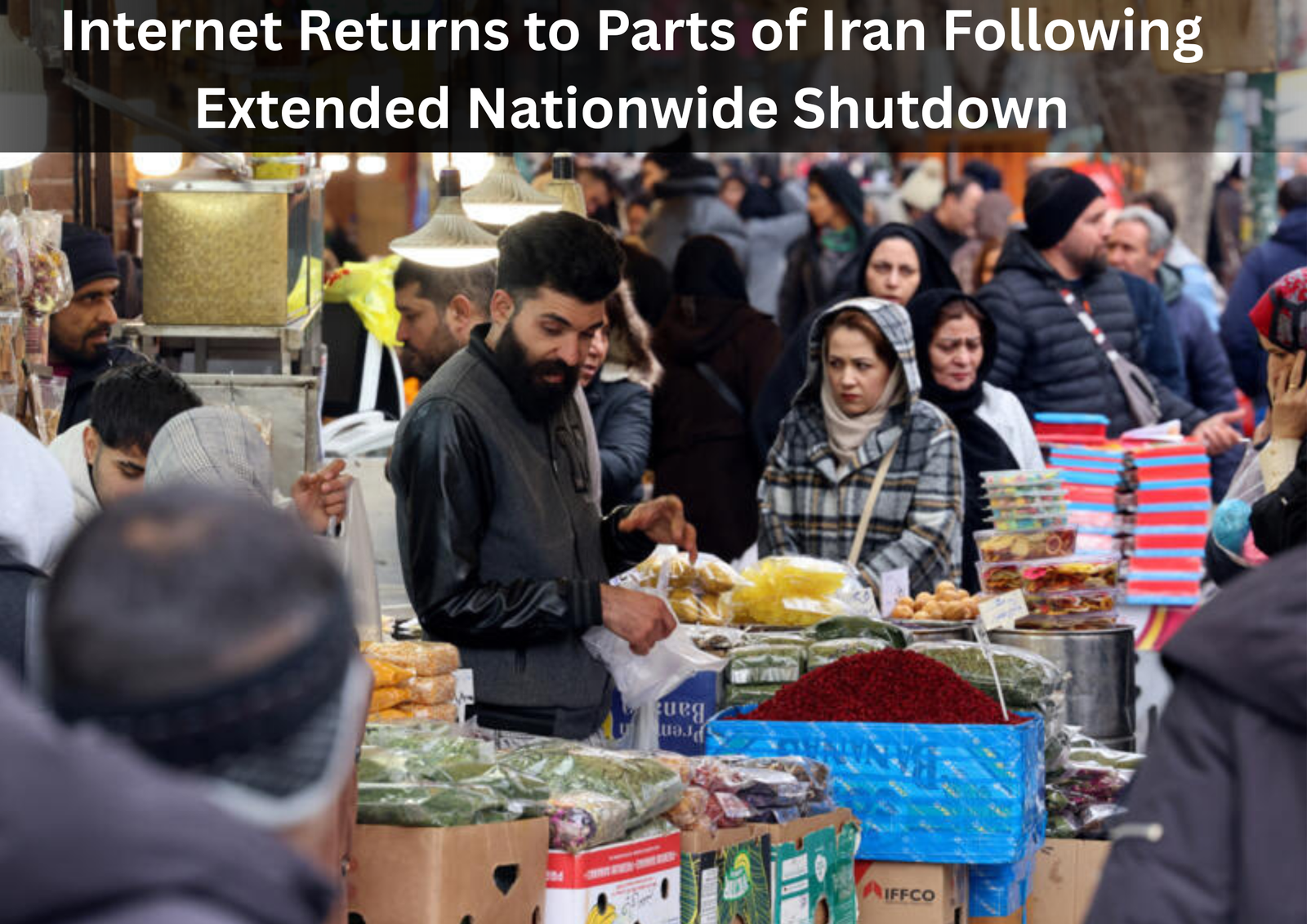
After more than two weeks of widespread internet disruption across Iran, a small number of citizens have begun reporting brief and unpredictable moments of online access. The development comes amid mounting internal debate and growing public pressure to restore full connectivity following a government crackdown on nationwide protests.
Since the shutdown began, Iran has remained largely disconnected from the global internet, leaving families unable to communicate and severely restricting the flow of information. However, in recent days, scattered users have managed to connect for short periods, often without warning. These limited connections have enabled people to reassure relatives, share firsthand accounts, and transmit visual evidence of events unfolding inside the country.
Information emerging during these short access windows points to a far heavier human toll than initially acknowledged. Several international human rights organizations now estimate that fatalities linked to the unrest could be many times higher than early official figures. Reports also indicate that thousands of individuals have been detained, with many families still unaware of the whereabouts of their relatives.
Medical professionals inside Iran have described hospitals under intense strain. Doctors report treating large numbers of patients with severe injuries linked to crowd control measures, including eye trauma requiring urgent surgical intervention. Some facilities are said to be operating beyond capacity as the protests’ aftermath continues to unfold.
Technical analysts believe the intermittent internet access may be the result of authorities testing partial restoration while maintaining strict filtering and monitoring systems. This has fueled disagreement within Iran’s leadership. While some senior officials reportedly favor reopening internet services to ease economic and social pressure, others argue that restrictions remain necessary for security reasons.
Public calls for restoration have also emerged from within government circles. In a rare public statement, a senior adviser closely connected to the presidency warned that prolonged internet restrictions risk deepening public frustration and weakening trust between citizens and the state. He emphasized that modern life depends on connectivity and that security concerns should be managed without shutting down access entirely.
The economic consequences of the blackout are becoming increasingly severe. Industry groups estimate daily losses in the tens of millions of dollars as businesses struggle without digital payments, logistics systems, or access to international markets. Traders have reported being granted only minutes of supervised internet use per day, far short of what is needed to maintain operations. Meanwhile, financial indicators show continued pressure on Iran’s currency and stock market, alongside persistently high inflation.
For ordinary citizens, the emotional impact has been profound. Messages sent during rare online moments describe exhaustion, fear, and grief. One Tehran resident wrote that each successful connection brings both relief and anxiety, while another lamented that although people may survive physically, the psychological damage is lasting.
At the same time, internal criticism of official explanations for the unrest has begun to surface. Reform-minded figures have questioned claims that foreign actors were primarily responsible, arguing that the scale and spread of the protests reflect deeper domestic issues.
Despite increasing calls to lift restrictions, there has been no official announcement signaling a full restoration of internet services. For now, Iranians continue to rely on unpredictable flashes of connectivity-brief openings that reveal fragments of a much larger story still unfolding behind a digital curtain.
Don’t miss “EU and India Set to Formalize Major Trade Agreement at New Delhi Meeting”-read the full blog for key insights, implications, and why this landmark deal could reshape global trade.