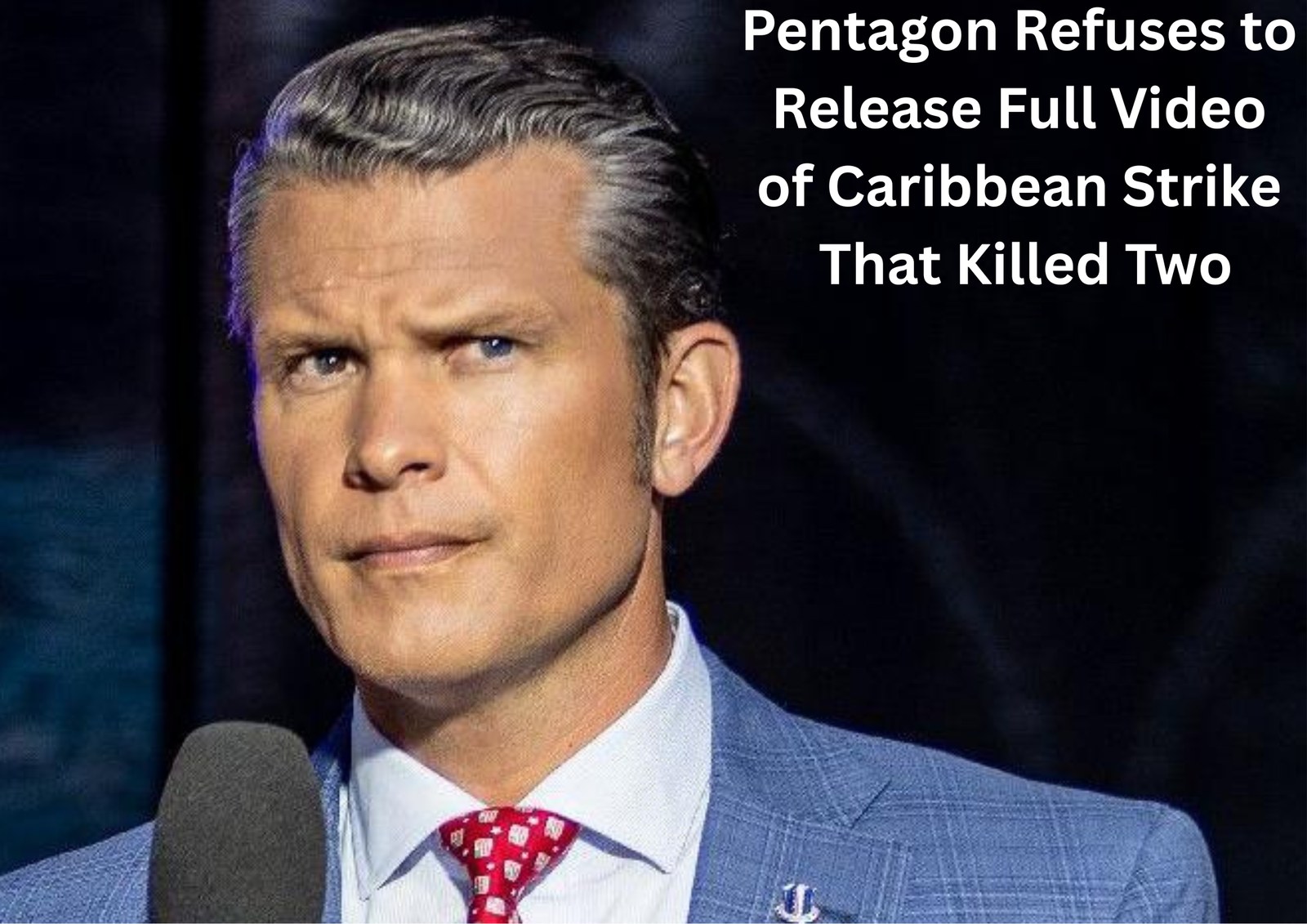
The U.S. Department of Defense has declined to release complete video footage of a controversial military strike carried out in the Caribbean earlier this year, intensifying bipartisan concern on Capitol Hill over transparency, legality, and the scope of America’s expanding anti-drug operations near Venezuela.
Defense Secretary Pete Hegseth confirmed Tuesday that an unedited recording of the September 2 strike would remain classified and unavailable to the public. While select members of congressional defense committees will be permitted to review the footage behind closed doors, many lawmakers argue the restrictions fall short of congressional oversight requirements.
The incident in question involved a U.S. military operation targeting a small vessel suspected of transporting illegal narcotics in international waters. According to officials briefed on the matter, an initial strike disabled the boat, leaving two individuals alive and clinging to debris. A follow-up strike was later ordered, resulting in their deaths. Military leaders have stated the second action was taken to ensure the destruction of suspected drug cargo believed to remain onboard.
However, the decision has sparked sharp criticism from lawmakers across party lines. Several members of Congress expressed frustration that the full video was not shown during classified briefings earlier in the day. Senate leaders said they had explicitly requested access to the footage for all senators, citing both accountability and moral responsibility.
Legal scholars and human rights advocates have also raised alarms. Some experts argue that international law prohibits attacks on individuals who are considered “shipwrecked” and no longer pose an active threat. Questions have also been raised about whether such military actions require explicit authorization from Congress, particularly as the United States is not formally at war with Venezuela.
The strike is part of a broader U.S. military campaign launched in recent months aimed at disrupting drug trafficking routes in the Caribbean and eastern Pacific. The operation has included airstrikes on multiple vessels, increased naval patrols, and heightened military presence near Venezuelan territory. U.S. officials maintain the mission is focused solely on counter-narcotics efforts, while Venezuelan leadership has accused Washington of using drug enforcement as a pretext for political pressure.
Within Congress, opinions remain divided. Some lawmakers defend the administration’s actions as necessary to combat international drug networks, while others warn that escalating military force without clear legal grounding risks setting a dangerous precedent. War powers resolutions seeking to limit further military action without congressional approval have been introduced, though their prospects remain uncertain.
As debate continues, the Pentagon has not indicated whether additional footage or documentation related to the strike will be released. For now, unanswered questions surrounding the September incident continue to fuel scrutiny over how far the U.S. military can go in the name of counter-drug operations-and who ultimately decides where that line is drawn.