Saudi Arabia has begun scaling back elements of its high-profile NEOM development as part of a wider reassessment of major national projects tied to the Vision 2030 economic transformation plan. The move reflects growing financial constraints and a shift toward more measured project timelines.
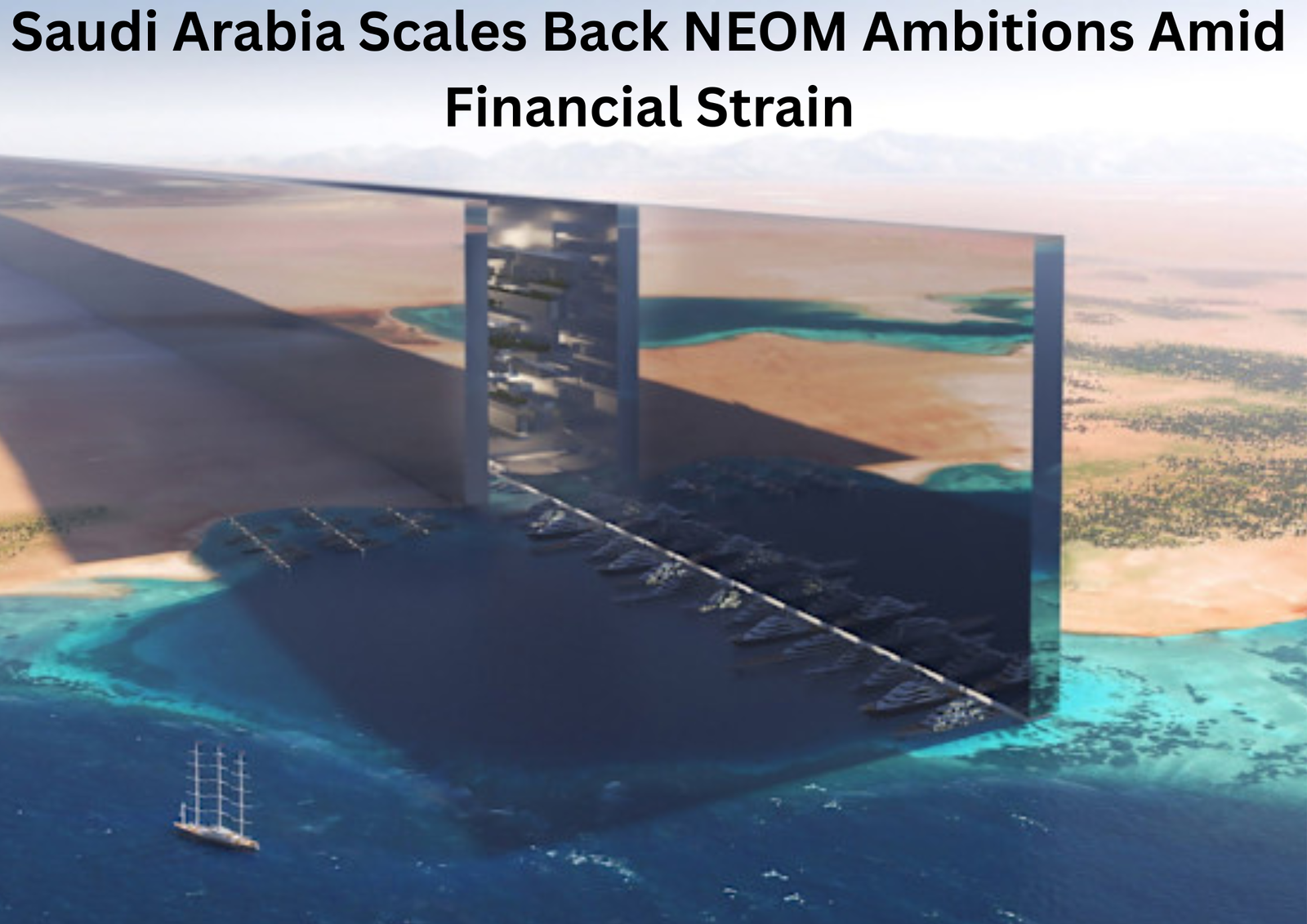
NEOM, a futuristic city under development in the country’s northwest, has long been promoted as a symbol of Saudi Arabia’s push to diversify its economy beyond oil. Central to the plan is “The Line,” a proposed linear urban settlement originally envisioned to stretch 170 kilometers across the desert.
Recent adjustments suggest a more cautious approach. Officials have reportedly informed contractors that population expectations for The Line by 2030 have been revised significantly downward. Instead of accommodating 1.5 million residents within the decade, current projections now estimate a population of around 300,000 by that time.
The physical scale of the initial phase has also been reduced. Rather than completing the full length originally planned, the first stage of The Line is now expected to span just 2.4 kilometers by 2030. Long-term ambitions remain, but the full 170-kilometer development may not be completed until the mid-2040s.
These changes come amid tightening financial conditions. Saudi Arabia’s Public Investment Fund (PIF), which plays a central role in financing NEOM and other large-scale developments, is reportedly facing limited liquidity. With multiple giga-projects advancing simultaneously, the fund has signaled that current cash reserves are insufficient to maintain all projects at their original pace.
Leadership changes have also accompanied the restructuring. NEOM’s long-serving chief executive has stepped aside from day-to-day management and transitioned into an advisory role, though no successor has been formally announced.
The review extends beyond NEOM alone. Other flagship developments, including tourism and heritage projects near the Red Sea and Riyadh, are also being reassessed. Authorities are aiming to prioritize strategic initiatives while spreading completion timelines to reduce financial strain.
Despite the adjustments, Saudi officials emphasize that Vision 2030 remains firmly on track. The revisions are being described as a recalibration rather than a retreat, intended to ensure sustainability, efficiency, and long-term economic value.
Lower oil revenues have added pressure to government finances, limiting transfers to the PIF and prompting a more disciplined approach to capital allocation. As Saudi Arabia continues its transformation agenda, the evolving scope of NEOM highlights the challenges of balancing ambition with economic realities.
For deeper context and on-the-ground insights, don’t miss this blog on “Limited Online Access Returns for Some Iranians After Weeks of Internet Shutdown,” a crucial read on digital freedom and control.