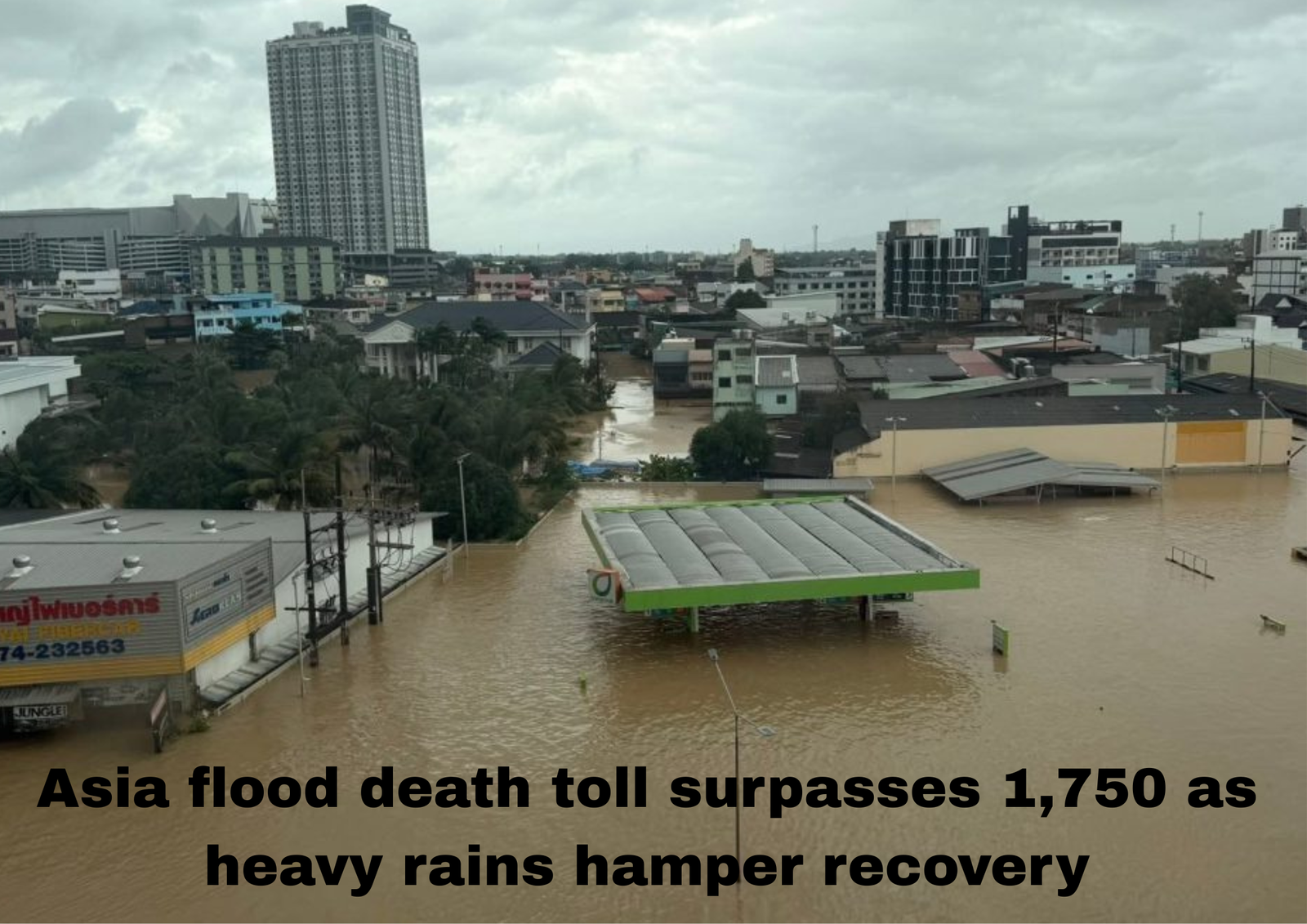
Widespread flooding and landslides triggered by relentless rainfall have devastated large parts of South and Southeast Asia, claiming the lives of more than 1,750 people and leaving thousands more displaced. Among the worst-hit nations is Indonesia, where authorities report that fatalities have crossed the 900 mark as emergency crews race against time to reach isolated communities.
Torrential downpours have overwhelmed rivers, submerged villages, and triggered deadly landslides across mountainous regions. In many affected areas, roads, bridges, and communication lines have been severely damaged, making it extremely difficult for rescue teams to access survivors. In some Indonesian districts, residents are reportedly climbing over piles of fallen trees, mud, and wreckage just to reach food distribution points and emergency shelters.
According to regional disaster agencies, the ongoing rainfall continues to obstruct relief operations. Helicopter evacuations have been deployed in remote zones where ground transport is no longer possible, while military and civilian volunteers work around the clock to provide medical assistance, drinking water, and temporary housing.
Meteorologists have linked the extreme weather to unusually intense storm systems affecting South Asia and nearby regions. Weather tracking networks described the storms as statistically rare, producing rainfall levels well above seasonal averages. Similar assessments have been echoed by other sources, which confirmed that the ongoing crisis includes both flash floods and large-scale landslides.
International aid organizations are now mobilizing emergency resources as local governments struggle with the scale of destruction. Hospitals in several regions are overwhelmed by injured residents, while concerns are growing over waterborne diseases due to contaminated floodwaters.
Reports indicate that economic losses are expected to run into billions of dollars as agricultural land, homes, and public infrastructure have been severely damaged or completely washed away.
Authorities have urged residents in vulnerable zones to remain on high alert as additional rainfall is forecast in the coming days. Disaster response officials warn that the death toll could continue to rise if weather conditions do not improve and access to affected regions remains restricted.
As communities mourn their losses, the focus now shifts toward large-scale recovery and rebuilding efforts across some of Asia’s most disaster-prone regions.