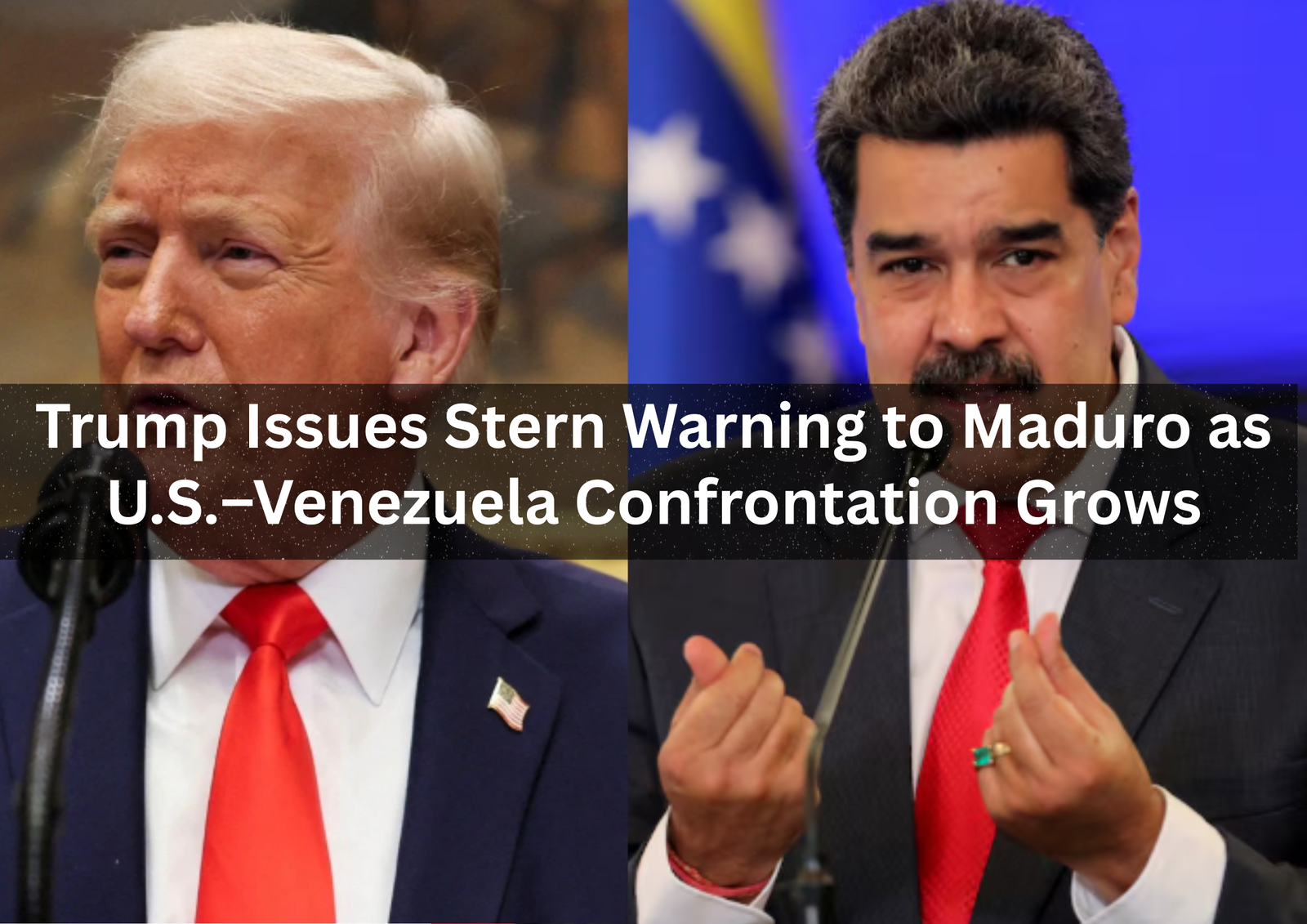
President Donald Trump issued a forceful warning to Venezuelan President Nicolás Maduro during a phone conversation last week, telling the embattled leader that it was time for him to leave the country, according to officials briefed on the call. The exchange, described as blunt and highly charged, signals the most direct U.S. demand toward Maduro since Washington cut diplomatic recognition of his government six years ago.
Tensions Rise After Aircraft Interception
The call took place shortly after a confrontation in the Caribbean, where Venezuelan fighter jets intercepted a U.S. Air Force RC-135 surveillance aircraft operating in international airspace. U.S. military officials called the maneuver reckless, accusing Venezuelan pilots of flying dangerously close to the American plane.
In response, the United States has increased its military presence near Venezuelan waters, deploying an aircraft carrier and additional naval vessels to take part in exercises. Defense officials say the moves are intended to deter aggressive behavior and reassure allies in the region.
Trump Cites National Security Concerns
The president has repeatedly described the Venezuelan situation as a risk to the region, pointing to Maduro’s close ties with Russia, Iran, and China. Trump argued that the country’s political crisis, deteriorating economy, and mass migration have had ripple effects throughout the hemisphere.
“The situation in Venezuela is no longer sustainable,” Trump said in a statement following the call. “This regime threatens stability beyond its borders, and the time for change has arrived.”
Public Opinion Remains Split
A new national poll conducted by CBS News shows that Americans are deeply divided over the possibility of U.S. military action. According to the data:
46% would support military intervention if diplomatic efforts fail.
54% oppose U.S. involvement.
Support for military force is significantly stronger among Republican respondents, reflecting partisan views on foreign policy and the administration’s handling of the crisis.
Years of Diplomatic Isolation
Since 2019, the United States has refused to recognize Maduro as Venezuela’s legitimate leader, instead backing opposition figure Juan Guaidó as interim president. Washington has also imposed sweeping sanctions targeting the Venezuelan government, state-owned oil companies, and senior officials.
The latest escalation suggests the U.S. may be weighing new options, though administration officials have not publicly committed to any specific course of action.
Maduro Responds With Defiance
In a televised speech, Maduro rejected Trump’s ultimatum and accused the United States of attempting to undermine Venezuelan sovereignty. He announced new military drills and urged citizens to prepare for what he called “defensive readiness.”
“We will not bow to foreign threats,” Maduro said. “Venezuela will stand firm and defend itself.”
Regional leaders and international observers have expressed growing concern that continued escalation could spark a broader confrontation in the Caribbean, where geopolitical tensions are already heightened.