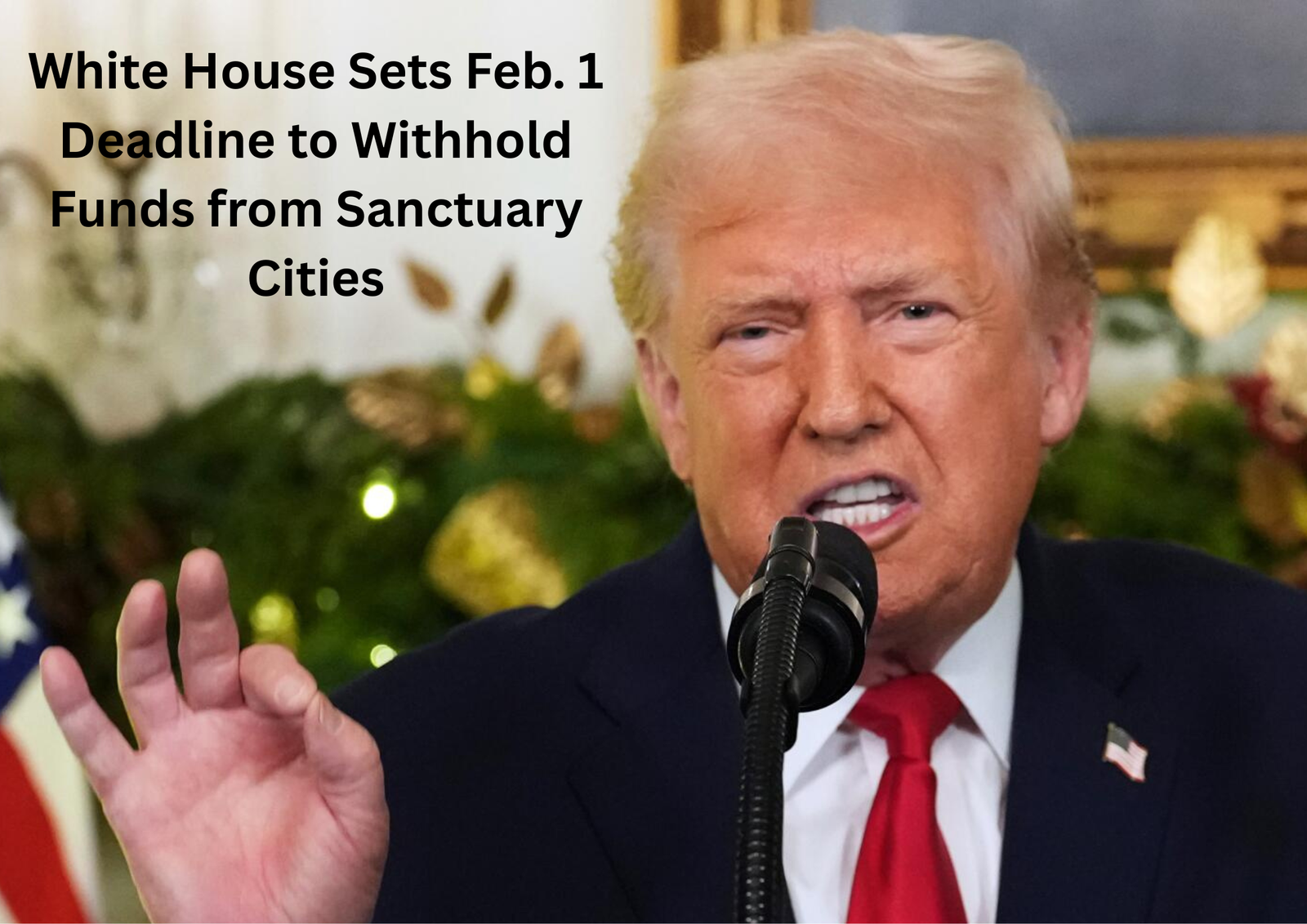
President Donald Trump announced Tuesday that federal funds will be withdrawn from sanctuary-designated cities and states beginning February 1, escalating a years-long conflict between his administration and local governments over immigration enforcement.
Speaking at the Huntington Place convention center in downtown Detroit, Trump said the federal government would “no longer subsidize policies that directly obstruct immigration authorities.” The announcement was delivered during a campaign speech focusing heavily on crime and border security.
Policy Position and Legal Standpoint
Trump argued that jurisdictions declining to honor detainer requests from U.S. Immigration and Customs Enforcement (ICE) undermine public safety and violate federal law. The administration referenced provisions in federal statute restricting states and municipalities from limiting cooperation with immigration officials.
According to Trump, sanctuary policies create situations where individuals with outstanding immigration orders remain free in local communities. He cited a recent example involving a detainee who was released from a sanctuary city jail and later accused of committing a violent offense – an incident the administration described as preventable.
Reaction From Municipal Leaders
The announcement immediately triggered pushback from leaders in large sanctuary jurisdictions. New York City Mayor Mamdani criticized the proposed cutoff in a news briefing, labeling the move more political than practical. Mamdani pledged to maintain his city’s sanctuary status and confirmed that litigation opposing the funding halt is being prepared.
“Our city will not abandon long-standing commitments simply because of pressure from Washington,” Mamdani said.
Scope and Unresolved Questions
The administration did not detail which grants or federal programs will be affected, nor provide an estimated dollar figure. However, analysts expect the impact to be significant due to the broad range of federal funding cities and states receive for transportation, law enforcement, housing, education, and public health.
Implementation would require federal agencies to assess compliance at the local level and redirect or freeze funds accordingly.
Political Landscape
The February 1 enforcement date places the new policy squarely in the national spotlight at the outset of the 2026 election year. Legal experts anticipate a wave of court filings as states and municipalities argue that conditioning funding on immigration cooperation may violate constitutional limitations on federal power.
The standoff represents a renewed flashpoint in an ongoing debate over how immigration laws should be enforced and who holds authority to dictate those policies.
“Trump Highlights Economic Agenda in Detroit as Demonstrators Rally Outside” — a gripping update you shouldn’t miss. Make sure to read the full blog for deeper insights!