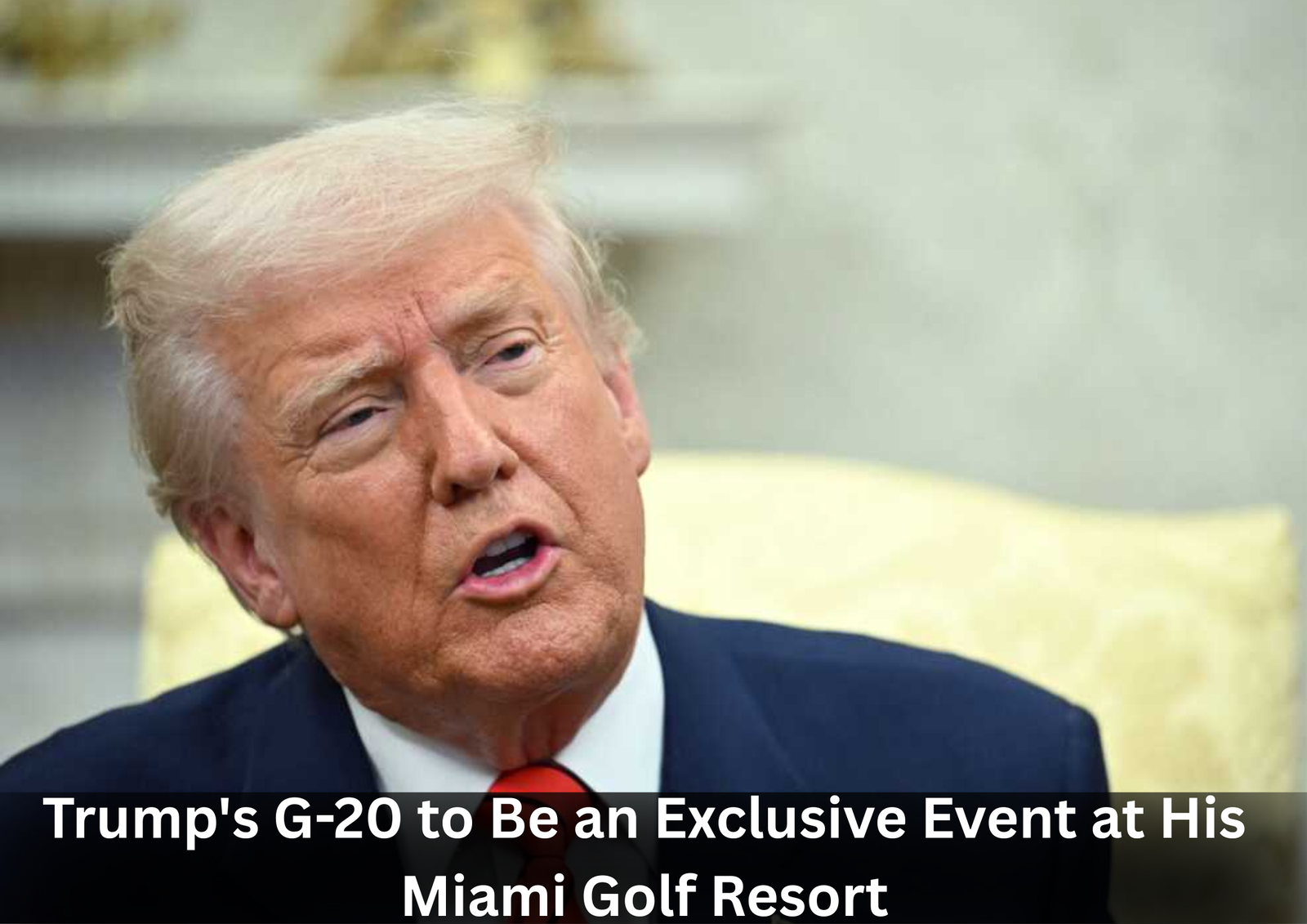
The White House has announced that the 2025 G20 summit will take place at Trump National Doral Miami, marking a major shift in both the format and tradition of the annual gathering of the world’s leading economies. The event, planned for the upcoming spring season, will be held on an invite-only basis, breaking from the customary practice of welcoming all G20 member nations without exception.
A New Format at a Familiar Venue
Hosting the summit at the Miami golf resort – a property owned by the president’s family trust – immediately revived long-running debates about ethics and conflict of interest. Administration officials defended the choice, saying the resort offers the infrastructure, security features, and logistical capacity necessary for a global conference of this scale.
Critics, however, argue that directing a significant government event to a property linked to the president raises legitimate concerns about public resources benefiting a private business. The White House maintains the selection complies with federal rules and that the focus remains on ensuring a smooth, secure summit.
South Africa Absent From Initial Invitations
The administration has also confirmed that South Africa is not on the preliminary invitation list, despite being an official G20 member. This would mark the first time a member nation is left out of the gathering.
Officials speaking on background said the decision reflects Washington’s frustration with what they regard as South Africa’s increasingly adversarial positions toward U.S. foreign policy. The most contentious issue is Pretoria’s case against Israel currently before the International Court of Justice – a move the U.S. strongly opposes. Inviting President Cyril Ramaphosa, one official said, would “signal support for policies we fundamentally reject.”
Tensions between the two nations have been simmering for months, particularly following a strained call in January in which President Trump reportedly pressed Ramaphosa to reconsider South Africa’s ICJ stance.
Global Concern Over Politicization
Reaction abroad has been swift. Diplomats and analysts warn that excluding a member could undermine the spirit of the G20, a forum designed to bring major economies together regardless of political disagreements. Observers note that the group has weathered ideological divides in the past without altering its core principle of universal participation.
If the omission moves forward, it would set an unprecedented precedent for future summits and raise questions about whether global economic cooperation is becoming increasingly shaped by shifting political alliances.
A Summit Already in the Spotlight
Even before the final guest list is complete, the event is drawing scrutiny for both its political implications and its venue. Supporters say the Miami location offers ideal conditions for hosting dozens of global delegations, while critics view it as a symbol of blurred lines between public responsibility and private gain.
As spring approaches, the international community will be watching closely – not only to see which leaders ultimately attend, but also to gauge how the U.S. intends to shape the direction of global economic dialogue under these new, unconventional rules.