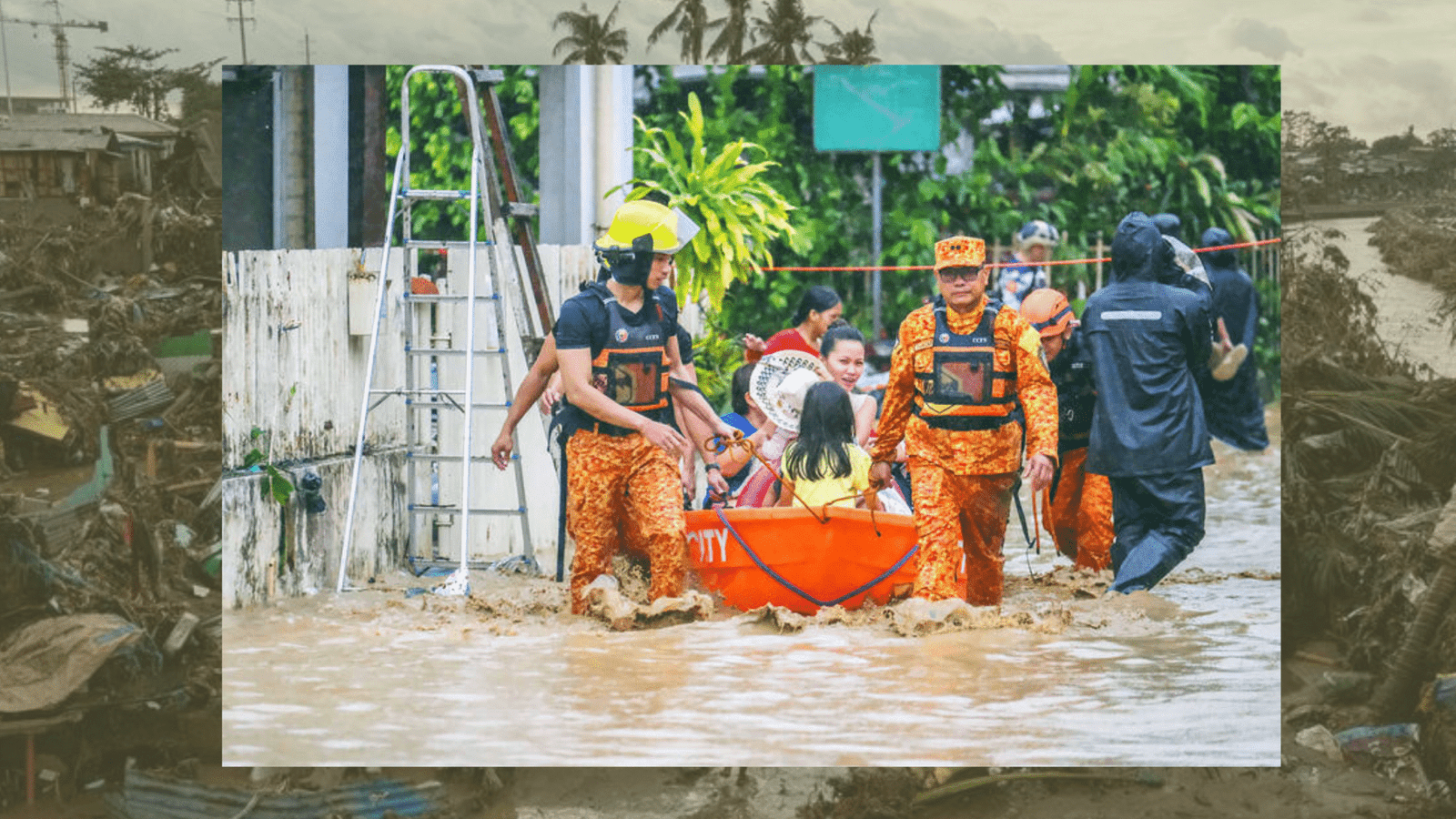
MANILA, Philippines – Typhoon Kalmaegi has brought widespread destruction across the central Philippines, claiming at least 58 lives and displacing thousands more as torrential rain triggered floods and deadly landslides. The storm has now exited Philippine territory and is moving westward, with forecasts indicating that it will reach Vietnam within the next 48 hours.
A Deadly Path Across the Central Philippines
The province of Cebu bore the brunt of the storm’s impact. In the city of Naga, a devastating landslide struck the mountain village of Tinaan, burying dozens of homes under mud and debris. Rescue workers have been laboring around the clock to find survivors, though officials warn that the death toll may still rise.
According to the Cebu Provincial Disaster Risk Reduction and Management Office (PDRRMO), many of the casualties were caused by landslides and flash floods that swept through low-lying areas as Kalmaegi dumped heavy rainfall for more than 24 hours.
“Our teams are continuing to dig through the mud with heavy equipment and by hand,” said a local rescue official. “We are doing everything possible to reach anyone still trapped.”
Lives Lost, Communities Shattered
Local authorities confirmed that entire families were among the victims, while hundreds of residents were evacuated to temporary shelters as floodwaters submerged roads and homes. Emergency services are struggling to restore access to isolated areas due to blocked roads and power outages.
In Cebu City, one of the country’s largest urban centers, strong winds downed power lines and uprooted trees, while residents reported roofs torn from homes and flooded streets.
Storm Heads Toward Vietnam
After sweeping through the Philippines, Kalmaegi has moved into the South China Sea, where it continues to gather strength. Meteorological agencies expect the typhoon to make landfall in Vietnam by Thursday, bringing heavy rainfall and the potential for flash flooding in coastal provinces.
Vietnamese authorities have issued early warnings to communities along the central coast, urging fishermen to stay ashore and residents to prepare emergency supplies.
A Nation Familiar With Storms
The Philippines experiences an average of 20 tropical cyclones each year, making it one of the world’s most disaster-prone countries. Experts say that increasing sea surface temperatures may be intensifying recent storms, causing heavier rainfall and faster storm surges.
Despite the frequency of such disasters, local rescue teams continue to show resilience and dedication. Volunteers, soldiers, and local residents have been working together to clear debris, deliver aid, and assist families who have lost their homes.
Government Response and Relief Efforts
The National Disaster Risk Reduction and Management Council (NDRRMC) has deployed additional personnel and resources to Cebu and nearby provinces. Food packs, clean water, and emergency medical assistance are being distributed to affected communities.
President Ferdinand Marcos Jr. expressed condolences to the victims’ families and vowed continued government support for rescue and recovery operations.
“We are ensuring that all affected residents receive immediate assistance,” a government spokesperson said in a press briefing. “Our priority remains saving lives and rebuilding communities.”
Looking Ahead
As Kalmaegi continues its path toward Vietnam, Philippine authorities remain on alert for potential aftereffects, including flooding and unstable slopes that may still collapse even after the rain has stopped.
For now, the focus remains on rescue, recovery, and relief, as the nation mourns yet another deadly natural disaster.