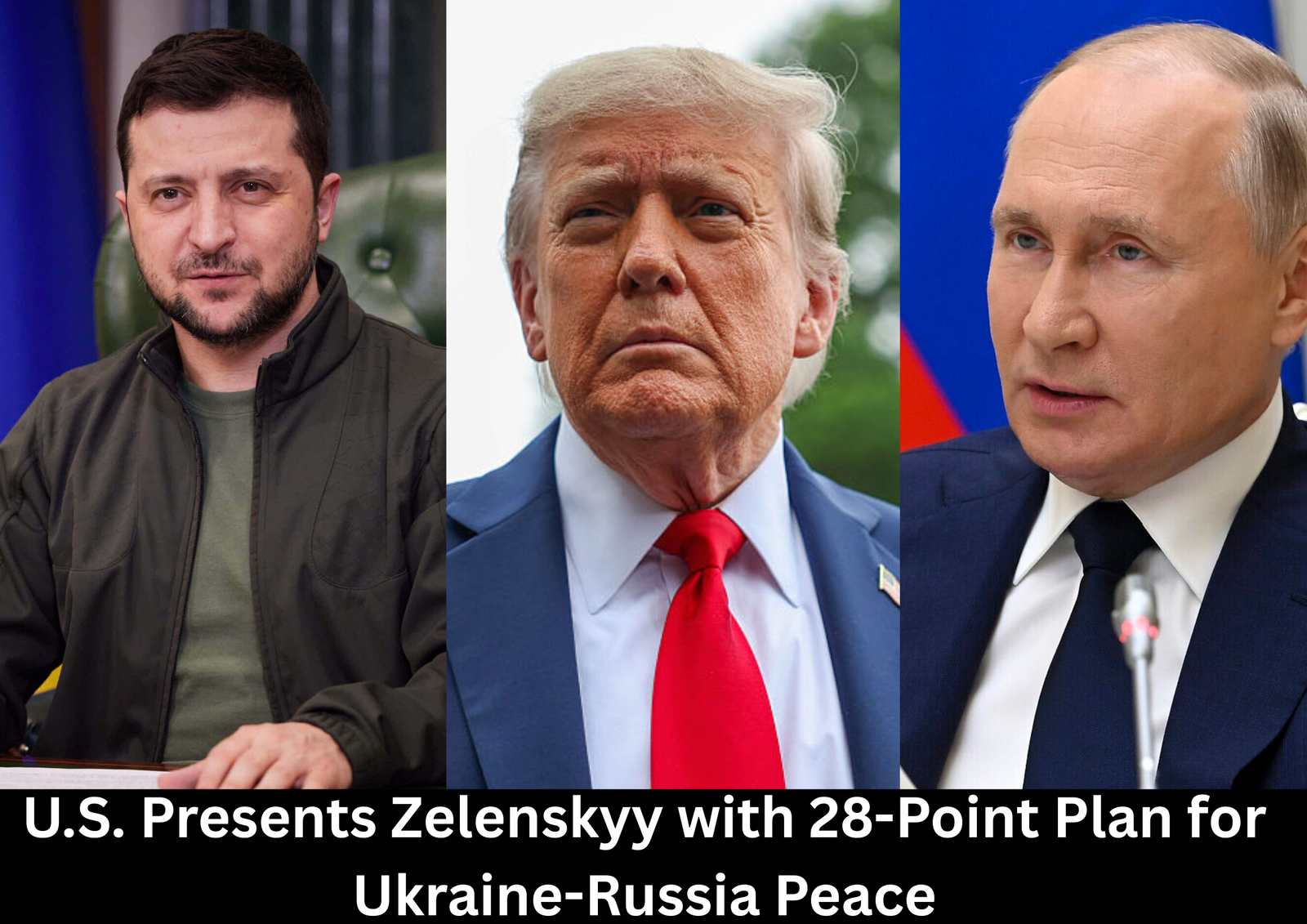
In a dramatic diplomatic move aimed at ending the long-running conflict between Russia and Ukraine, the Trump administration has circulated a detailed 28-point peace framework to Kyiv, European partners, and Moscow. The proposal, the most comprehensive plan put forward by Washington since the escalation of regional conflicts earlier in the decade, outlines a path to an immediate ceasefire paired with sweeping political concessions.
According to officials familiar with the document, the plan calls for Ukraine to formally relinquish the Donbas region to Russia as part of a negotiated settlement. The recognition of Russian control over the territory is described in the proposal as a foundational requirement for securing a broader peace agreement. In return, Moscow would commit to halting hostilities and withdrawing its military presence from occupied areas in southern Ukraine.
The draft also includes a set of security guarantees for Ukraine but firmly rules out the possibility of future NATO membership – a decision aligned with one of Russia’s longstanding strategic demands. While the framework suggests alternative security arrangements, the specifics of these mechanisms remain closely held.
Another element of the proposal would see the United States spearhead an international effort to unwind economic sanctions placed on Russia. These sanctions have shaped global energy markets, trade flows, and diplomatic relationships for more than a decade. Administration officials argue that sanctions relief would be conditional on Russia demonstrating verifiable compliance with the agreement.
A separate provision calls for the establishment of an international consortium to assume oversight of the Zaporizhzhia Nuclear Power Plant, ensuring a neutral governance structure for the facility, which has been at the center of global safety concerns since being seized by Russian forces early in the conflict.
The plan has been met with forceful rejection in Kyiv. Ukrainian leaders insist that relinquishing sovereign land is unacceptable and have reiterated that no peace agreement can legitimize territorial conquest. One senior Ukrainian official labeled the proposal a “surrender document,” signaling that Ukraine is unwilling to consider any arrangement involving the permanent loss of Donbas.
The reaction in Europe has been equally uneasy. Diplomats in several major EU capitals expressed deep apprehension, warning that endorsing territorial concessions could set a destabilizing global precedent. Some officials privately fear that acceptance of the plan would undermine decades of post-war international norms designed to prevent the use of force to alter borders.
In Washington, the proposal has triggered intense political debate. Democratic lawmakers sharply criticized the framework, arguing that the terms disproportionately reward Russian aggression and jeopardize the United States’ reputation as a defender of democratic nations. They also contend that the agreement would erode trust with allies who have supported Ukraine throughout the conflict.
The Trump administration, however, maintains that the plan offers a practical path to ending a costly and increasingly stagnant war. Officials argue that continued fighting is unlikely to return all lost territory to Ukrainian control and emphasize that the proposed deal could prevent further casualties and bring long-term stability to the region.
As discussions continue behind closed doors, the future of the proposal remains uncertain. What is clear is that the plan represents one of the boldest attempts by a U.S. administration to reshape the trajectory of the war – and a test of how far global leaders are willing to go in the pursuit of peace.