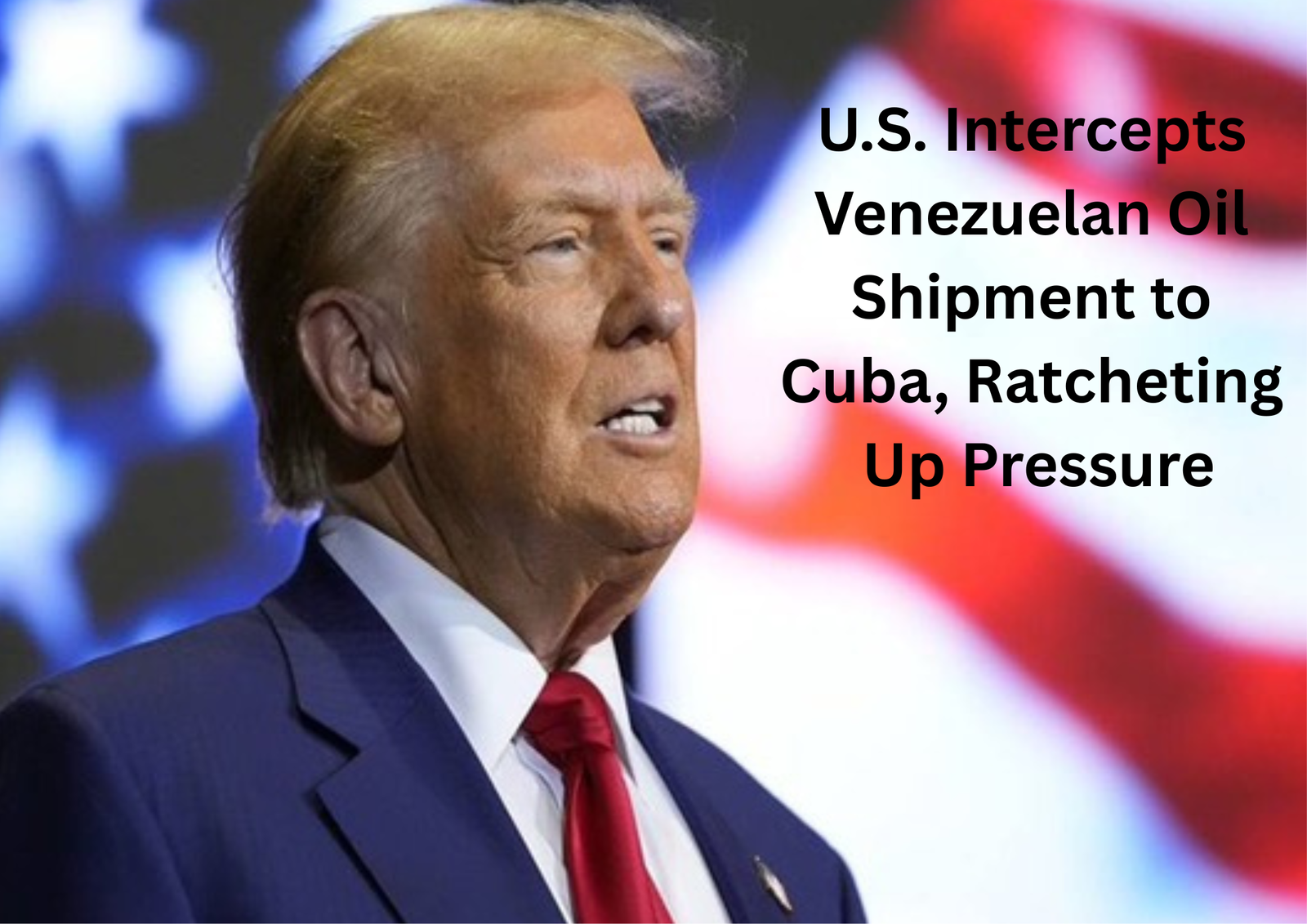
In a move signaling a sharp increase in U.S. pressure on Nicolás Maduro’s government, President Donald Trump confirmed Wednesday that American authorities have taken control of a large oil tanker traveling near Venezuela’s coastline. The vessel-identified by officials as the Panama-registered Skipper-was reportedly transporting sanctioned crude bound for Cuba when federal agencies executed a seizure warrant.
According to Attorney General Pam Bondi, the FBI, Homeland Security Investigations, and the U.S. Coast Guard jointly carried out the operation. She stated that the ship had long been linked to a covert transport network moving restricted Venezuelan and Iranian oil through international waters. Bondi also alleged the network had ties to groups previously designated by the United States as terrorist organizations.
U.S. Treasury records list the tanker’s operator, Triton Navigation of the Marshall Islands, as a sanctioned entity due to its role in global oil-smuggling routes supporting Iranian-backed groups. Analysts noted that the Skipper appeared to be functioning as a “shadow tanker,” a term used for ships that disable tracking systems to avoid commercial monitoring.
The interception occurred shortly after President Trump declined, in a recent interview, to rule out the possibility of sending U.S. forces to Venezuela. He accused Maduro’s administration of facilitating the movement of narcotics and criminals into U.S. territory and reiterated that Washington would continue using every available tool to pressure Caracas.
When pressed on what would happen to the confiscated crude, the president offered no specific details. “We’ll see where it ends up,” he said, leaving questions about the oil’s final destination unanswered. The White House later declined to comment further, and both Cuban diplomats and Venezuela’s state oil firm, PDVSA, could not be reached.
Energy specialists expressed differing views about the broader market implications. Jorge León of Rystad Energy said the move represented a shift from financial penalties to direct maritime action, likely contributing to a short-term firming in oil prices. U.S. crude rose roughly 1 percent, nearing $59 per barrel following the announcement.
Other analysts, including Clayton Seigle of the Center for Strategic and International Studies, argued that enforcement actions on sanctioned tankers are routine and unlikely to reshape global supply trends. Former State Department adviser David Goldwyn added that unless Washington chooses to target all Venezuelan crude shipments, the impact on the country’s overall exports-particularly those headed to Asia-should remain limited.
The incident recalls earlier U.S. maritime interventions, including a 2014 operation in which Navy SEALs boarded and secured the Morning Glory, a tanker carrying oil taken unlawfully from Libya’s government.
Chevron, the only remaining American energy company with active operations inside Venezuela, reported that its activities continue as normal and remain compliant with U.S. regulations. A company spokesperson directed all questions regarding regional security to federal authorities.