A major confrontation between Washington and Caracas escalated this week after U.S. forces intercepted a crude-carrying vessel near Venezuelan waters and imposed a fresh round of sanctions on individuals linked to President Nicolás Maduro. Newly examined satellite records suggest the tanker had been masking its true position for weeks while transporting Venezuelan oil in violation of U.S. restrictions.
Operation Off the Venezuelan Coast
American personnel boarded the tanker The Skipper in a coordinated maritime operation on Wednesday, describing the ship as part of a network engaged in unauthorized crude shipments. Footage released by U.S. officials showed troops descending from a helicopter and securing the vessel.
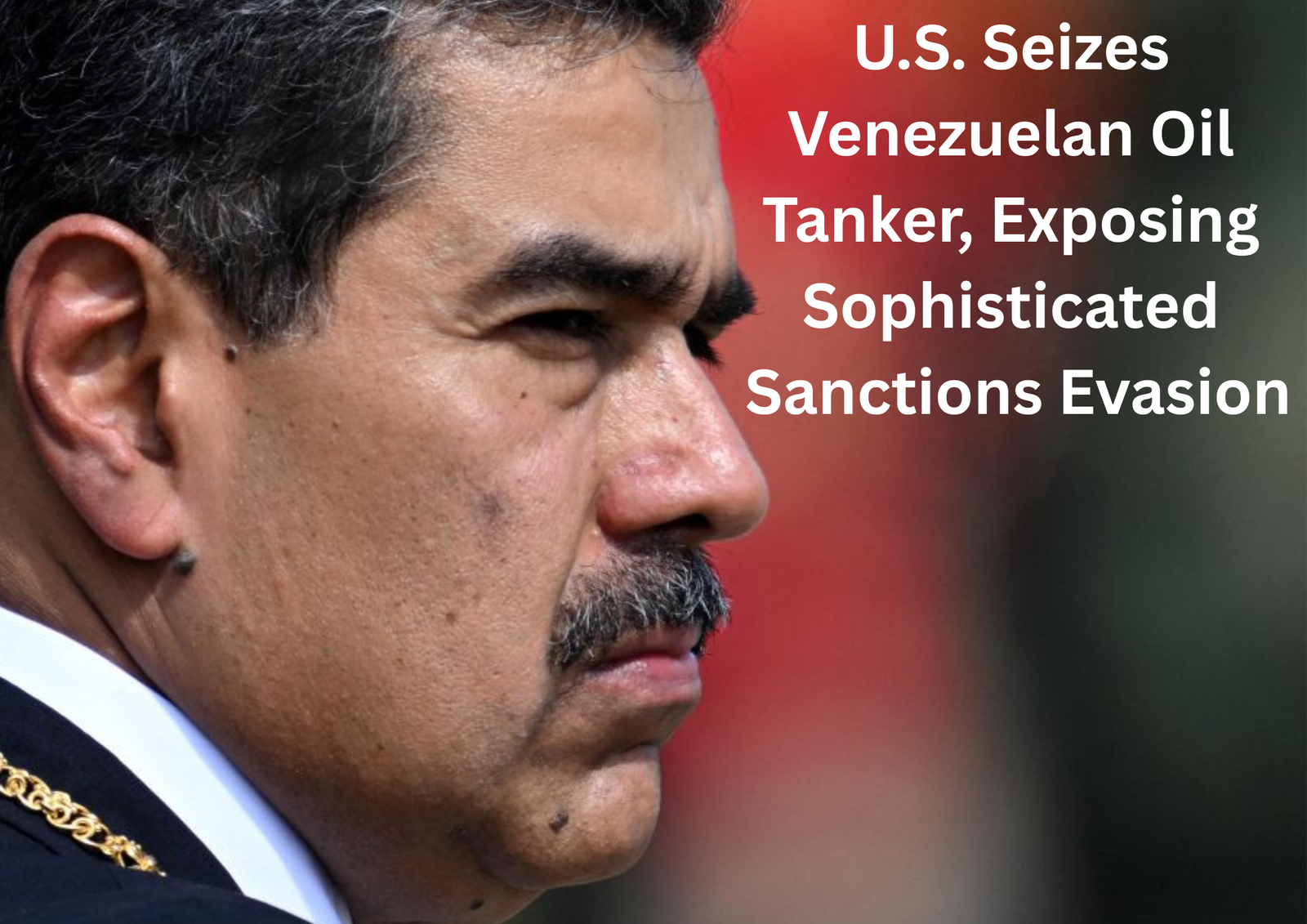
President Maduro condemned the action within hours, accusing the United States of “piracy on the high seas” and claiming that the crew was unlawfully detained. Washington countered that the tanker was supporting illicit financial flows tied to criminal and extremist groups and said the cargo would be confiscated after judicial review.
Broader Sanctions Target Ships and Maduro Allies
The seizure was followed by additional penalties against six vessels alleged to be transporting Venezuelan petroleum under covert arrangements. At the same time, the U.S. Treasury Department announced sanctions on three relatives of First Lady Cilia Flores, as well as several companies connected to them.
Officials said the measures were intended to disrupt networks that maintain Maduro’s political influence and economic reach. The Skipper itself had already appeared on U.S. sanctions lists since 2022 over claims it facilitated revenue streams benefiting Hezbollah and Iran’s IRGC-Quds Force.
Satellite Images Reveal Disguised Movements
Independent imagery analysts and maritime-tracking specialists reported that the tanker appeared to falsify its Automatic Identification System (AIS) data for over a month.
According to analytics firm Kpler, the vessel’s digital signals placed it hundreds of miles away from where satellite images later confirmed it actually operated. High-resolution photographs from two commercial providers showed The Skipper loading crude at Venezuela’s José Oil Terminal in mid-November, despite its transponder indicating it was near Guyana.
Investigators described the manipulation as part of a wider trend in which sanctioned ships intentionally broadcast misleading coordinates to avoid detection. Experts noted that the vessel had displayed a repeated pattern of “dark activity,” sailing for long intervals without a functioning transponder.
A Vessel With a Long History of Covert Transport
Analysts say The Skipper has been involved in shadow-shipping operations for years. Prior data reviewed by Kpler and TankerTrackers.com indicates the tanker moved large loads of Iranian crude to China earlier in 2025, including two voyages that each carried more than 1.8 million barrels.
Before heading across the Atlantic this fall, the ship was last photographed near Madagascar. Public maritime records list Triton Navigation Corporation as the registered owner and Thomarose Global Ventures as the beneficial owner-both sanctioned entities linked by the U.S. to previous oil-smuggling schemes. The ship once sailed under the name Adisa before receiving its current designation.
Growing Military Tensions in the Caribbean
The confrontation unfolds amid a rapid expansion of U.S. military assets in the Caribbean. In the week leading up to the raid, the Pentagon deployed the USS Gerald Ford carrier strike group and thousands of personnel closer to Venezuelan waters.
Maduro has accused Washington of seeking control over Venezuela’s oil sector, insisting the country would never become “an energy outpost for foreign powers.” His rhetoric intensified after a call with Russian President Vladimir Putin, who signaled political support for Caracas.
U.S. officials dismissed concerns over Moscow’s involvement, saying the operation against the tanker was strictly tied to sanctions enforcement. Venezuelan leaders, including Interior Minister Diosdado Cabello, responded with fierce criticism, labeling the U.S. actions as “criminal aggression.”
A Dispute With Global Implications
The incident marks one of the most significant maritime confrontations between the two nations in recent years. With both sides entrenched in their positions-and military assets now concentrated in the region-analysts warn the standoff could influence global oil markets and reshape diplomatic dynamics across the hemisphere.